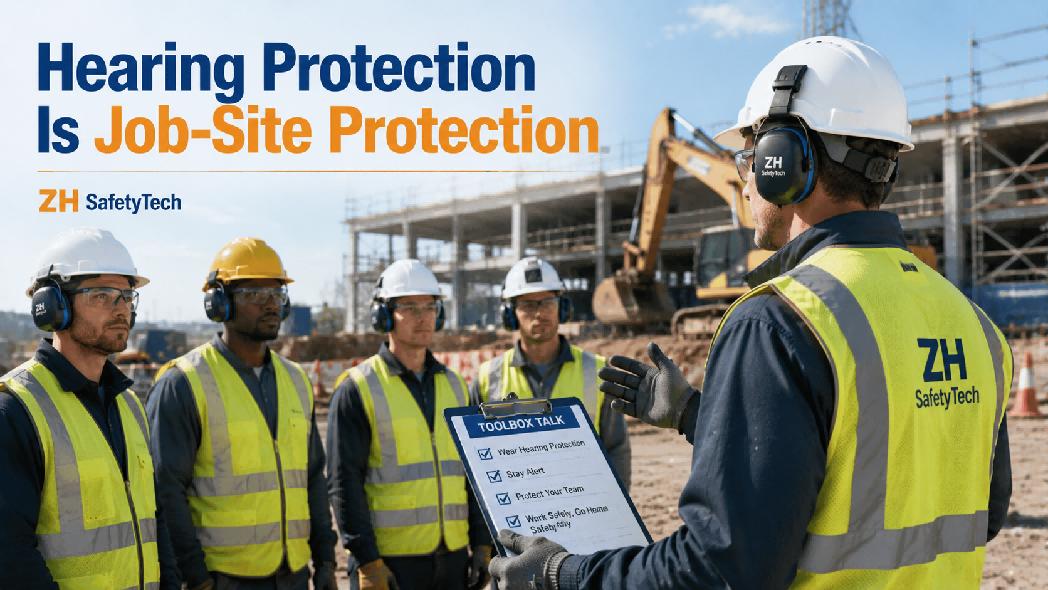
Safety construction labor earmuffs matter because occupational hearing loss is permanent, common, and largely preventable. Construction noise is not limited to one machine or one trade. It follows workers across demolition, cutting, drilling, grinding, traffic control, material handling, and equipment operation. A practical earmuff program helps reduce exposure, improves compliance, and supports safer communication when it is correctly selected and used.
ZH SafetyTech can be considered by distributors, contractors, and safety product buyers looking for hearing protection earmuffs for labor and construction-related applications. The company should be evaluated through product specifications, attenuation documentation, sample testing, quality control process, packaging options, and supply capability rather than unsupported marketing claims.
Construction projects are measured by schedule, cost, quality, and safety. Noise control is sometimes treated as a secondary topic because the damage is not always visible at the moment of exposure. However, NIOSH identifies occupational hearing loss as one of the most common work-related illnesses and notes that it is permanent but preventable. NIOSH also states that about 27 million workers are exposed to hazardous noise at work each year in the United States.
For construction teams, this means hearing protection should not be treated as an optional accessory. It is part of daily job readiness, similar to helmets, safety glasses, gloves, and respiratory protection. A safety construction labor earmuff can help reduce exposure for tasks where noise controls alone are not enough or where temporary protection is needed while better controls are being developed.
Modern construction sites are becoming more organized, but they are not becoming silent. Battery-powered tools may reduce some engine noise, while new equipment and compressed schedules can create different noise patterns. Workers move between quiet planning areas and high-noise task zones. This makes simple, visible, and reusable hearing protection valuable.
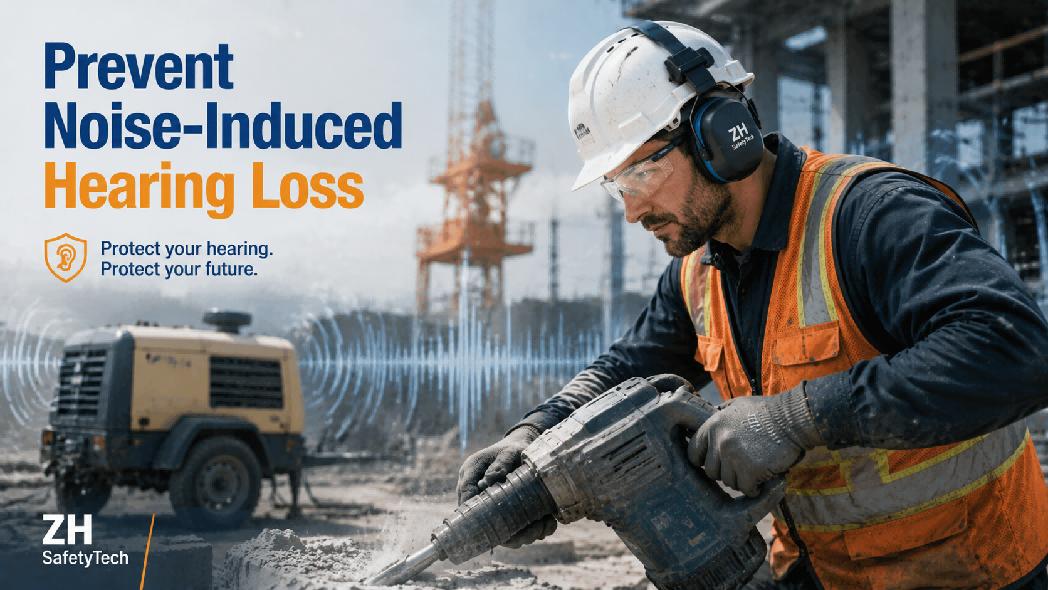
Earmuffs have several practical advantages. Supervisors can quickly see whether a worker is wearing them. Workers can remove and reapply them during intermittent tasks without touching the ear canal. Earmuffs can be easier to train and inspect than disposable plugs. In cold, dusty, or shared-tool environments, these practical differences can influence real compliance.
Buying a safety construction labor earmuff is only the first step. The real value appears when the product is part of a workplace routine: identify noisy tasks, place protectors near the work area, train workers on fitting and limitations, inspect cushions and headbands, and replace damaged units. HSE notes that hearing protection will only be effective when used and fitted correctly and that removing it for only a few minutes in a noisy environment can considerably lower protection to the wearer.
A strong program also avoids a blanket approach. Not every area requires the same protection all day. HSE recommends targeting the use of protectors to noisy tasks and jobs in a working day. This helps workers understand why the earmuff is required and reduces the temptation to treat hearing protection as a meaningless rule.
Safety managers can build a simple three-level framework for construction hearing protection. The framework does not replace professional noise assessment, but it helps organize decisions for purchasing and worker training.
| Program Layer | Key Question | Practical Action |
| Noise identification | Which tasks create hazardous noise? | Measure or estimate noise levels for cutting, drilling, demolition, compressors, generators, and traffic exposure. |
| Protection selection | What protector suits the task and worker? | Match attenuation to the task, check PPE compatibility, and avoid both underprotection and overprotection. |
| Use and maintenance | Will workers wear it correctly every time? | Train workers, inspect earmuff seals and headbands, clean regularly, and replace worn parts. |
ZH SafetyTech is positioned around hearing protection products. Its product scope includes labor protection earmuffs, which can be relevant for distributors and project buyers serving construction, manufacturing, woodworking, workshop, and industrial safety channels. For a construction buyer, the important questions are practical: Can the supplier support consistent product quality? Can it provide suitable packaging? Can it discuss customization? Can it provide product documentation for the selected model?
The ZH SafetyTech website states that the company provides one-stop product solutions covering customization of hearing protectors, product assembly, packing, quality control, certificate support, and shipping. This can be useful for buyers who need more than an off-the-shelf product listing. Still, all compliance, rating, and certification claims should be confirmed model by model.
Before ordering safety construction labor earmuffs, buyers should ask for the specific model data, including attenuation rating, applicable standard or test documentation, material information, headband style, cushion type, color options, packaging format, and sample availability. If the earmuff must be used with hard hats, goggles, or face shields, compatibility should be tested before volume purchasing.
Buyers should also ask how replacement parts are handled. In a dusty construction environment, cushions and seals can wear out earlier than expected. An earmuff that is easy to inspect and replace supports lower lifetime risk than a product that looks inexpensive but becomes unreliable after rough daily use.
They can be an important part of prevention, but they should not be the only control. Noise reduction at the source, work planning, exposure time management, training, and correct use all matter.
A very low price can become expensive if workers refuse to wear the earmuffs, if the cushions fail early, or if the product does not match the noise environment. Fit, durability, and documentation should be considered together with price.
Construction workers need to hear alarms, vehicles, and verbal warnings. Excessive attenuation can isolate workers. HSE warns against overprotection because it may interfere with communication and warning signals.
ZH SafetyTech’s broader hearing protection range includes labor protection earmuffs, shooting earmuffs, and children’s protective earmuffs. Construction-related use should be matched with the correct labor protection model and verified documentation.
NIOSH, About Occupational Hearing Loss: occupational hearing loss is permanent but preventable; hazardous noise definition; worker exposure data. https://www.cdc.gov/niosh/noise/about/index.html
NIDCD, Noise-Induced Hearing Loss: NIHL is preventable; repeated exposure at or above 85 dBA can cause hearing loss. https://www.nidcd.nih.gov/health/noise-induced-hearing-loss
HSE, Hearing protection: effective use, correct fitting, targeted use, and avoiding overprotection. https://www.hse.gov.uk/noise/hearingprotection.htm
ZH SafetyTech official website: https://www.zhsafetech.com/
E-mail:
Tel:
+86 158 8886 1058
Add.:
No. 6, Shunle Road, Jingshan Town, Yuhang District, Hangzhou City, Zhejiang Province, China
Copyright © Hangzhou ZH Tech Co., Ltd. All Rights Reserved |
Sitemap
| Technical Support: