

What Is an Electronic Earmuff and How Does It Work?
A Practical Guide from ZH SafetyTech
Key points
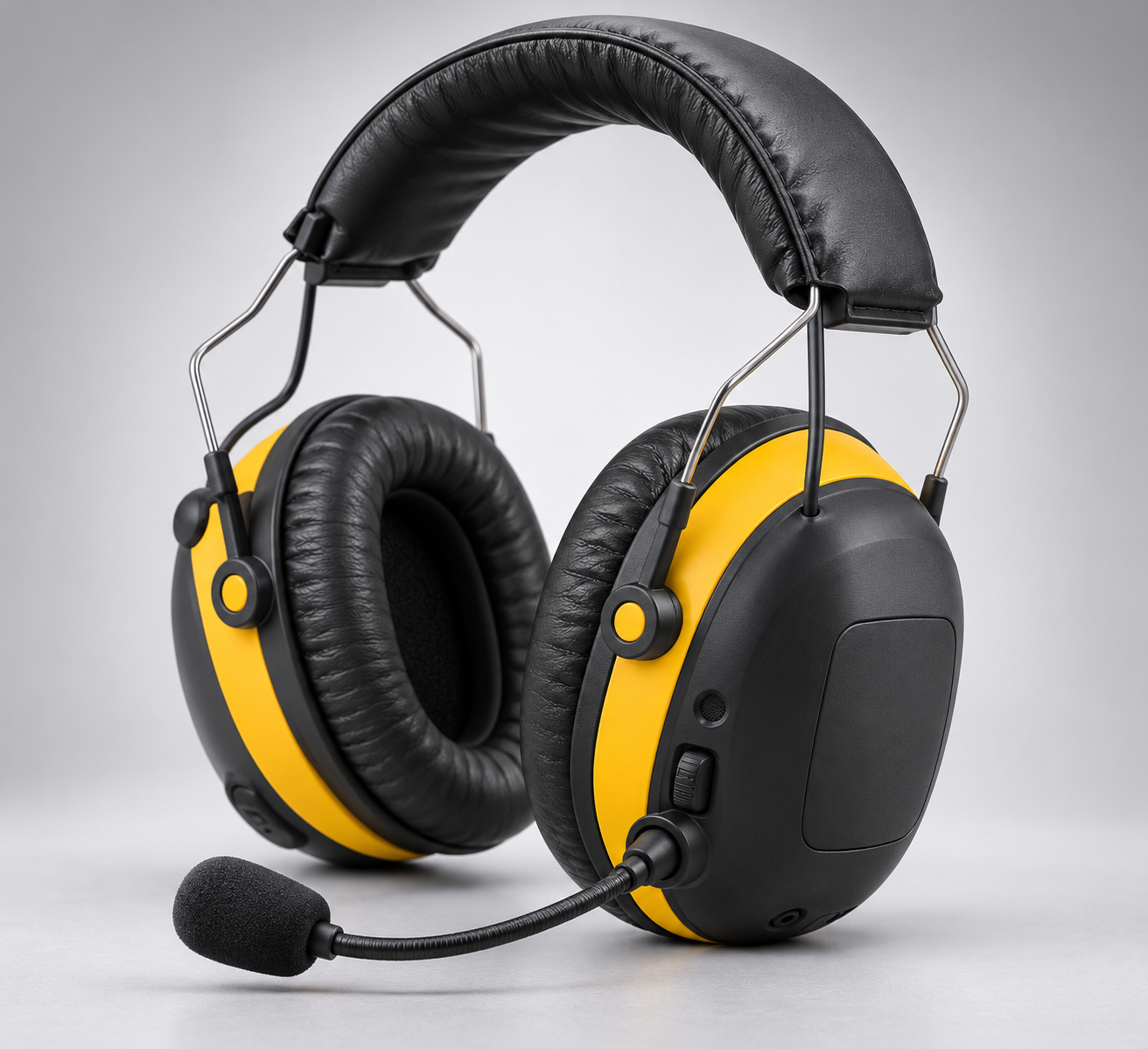
An electronic earmuff is an over-ear hearing protector that uses a microphone, an amplifier, and a sound limiter to keep quiet sounds audible while compressing sudden loud peaks such as gunshots or machinery impacts within milliseconds.
ZH SafetyTech builds electronic earmuffs to EN 352-1 and tests to ANSI S3.19, with NRR 28-32 and SNR 27-33 across the range, and offers Bluetooth and FM-radio options on applicable models.
Unlike a passive cup that blocks everything equally, an electronic build lets the wearer hear speech and cues naturally until a hazardous transient arrives, then clamps it down so the ear stays protected.
Real-world protection is closer to (NRR minus 7) divided by 2 than to the printed number, so a correct seal and a working battery decide what the wearer actually experiences across a day.
Overview
An electronic earmuff is a hearing protector that looks much like a standard over-ear cup but carries an active sound path inside. Where a passive muff relies only on mass, shape, and seal to block noise, an electronic muff adds a microphone on the outside, a small processor, and a speaker inside each cup. The job is to keep the world audible at a safe level: quiet conversation, range commands, and workplace cues pass through naturally, while a hazardous impulse is cut down before it reaches the ear.
That balance is what sets an electronic earmuff apart from both earplugs and passive cups. In shooting, industrial work, airsoft, or any noisy setting where the wearer still needs to communicate, total silence can be dangerous. The electronic build solves that by being selective: it lowers only what is too loud and leaves the rest alone.
How an electronic earmuff works
The chain starts at an external microphone on each cup. It picks up the surrounding sound field and feeds it to an internal circuit. That circuit applies gain to quiet sounds so a teammate's voice or a radio call stays clear, and it watches the incoming level continuously. When a loud transient — a gunshot, a dropped tool, an engine start — crosses a set threshold, the limiter compresses or shuts the path within milliseconds, so the peak that reaches the ear is far smaller than the raw event.
Inside the cup, a speaker reproduces the processed sound at a safe level, so the wearer hears the environment rather than silence. The ear still gets a passive seal from the cup and cushion, so even the electronic path is backed by the physical barrier; the electronics simply shape what comes through. A healthy battery and a clean seal are both needed for the device to behave as designed across a shift or a match.
None of this changes the core job of the cup. The shell still seals the ear, and the band still holds the clamp force; the electronics only decide which sounds are shaped and by how much. Buyers should weigh an electronic earmuff as an awareness and communication question, not as a change to how the cup blocks sound, and should use it alongside the guidance of a qualified professional rather than as a substitute for one.
Passive cup versus electronic build
A passive cup blocks noise by mass and seal, giving a steady cut across the band with no power needed. An electronic build does the same physical job and then adds the active path on top, so the wearer can keep speech and cues while only the dangerous peaks are trimmed. The trade is that the electronic version needs power and a little more care, while the passive version is simpler and never runs out. Many buyers keep one of each for different tasks.
Neither design removes the room; both lower the floor so the wearer can stay in it. The choice is about awareness: if the wearer must hear people and equipment to do the job safely, an electronic build earns its place; if the task is steady, high noise with little need to talk, a passive cup is often enough.
What to look for
Standards
Over-ear protectors are judged by EN 352-1 for attenuation and construction, with ANSI S3.19 as the U.S. equivalent, and CE marking shows the product meets the relevant EU directives. ZH SafetyTech builds to these references and holds CE and ISO-aligned quality controls, so a buyer can specify one protector family across mixed markets and rely on consistent construction.
Attenuation reality
As with any muff, field protection is closer to (NRR minus 7) divided by 2 than to the printed number. ZH SafetyTech muffs carry NRR 28-32 and SNR 27-33, so a buyer should plan around the real-world band, not the label peak. For an electronic build the aim is even, intelligible reduction rather than maximum silence, so a good seal and correct fit matter as much as the electronics inside.
Electronics and power
On applicable models the electronic path runs from a small battery or rechargeable cell, with an external mic and an internal limiter doing the work described above. Features such as Bluetooth audio or an FM-radio tuner appear on specific configurations, so confirm the exact feature set, battery type, and runtime for your SKU when you inquire. A dead battery does not make an electronic muff unsafe — the passive seal still protects — but it does remove the active gain, so keep a spare cell or charge ahead of a long day.
Fit and seal
The cup must still seal around the ear with no gaps, because the passive barrier is what backs the electronics. Set the band centered with even pressure so the level stays steady through hours of wear, and check the cushion closes fully if the wearer uses glasses, because a gap opens the same leak as on any other muff. A protector the wearer will actually keep on beats a higher number they pull off after a few minutes.
Compatibility with communication gear
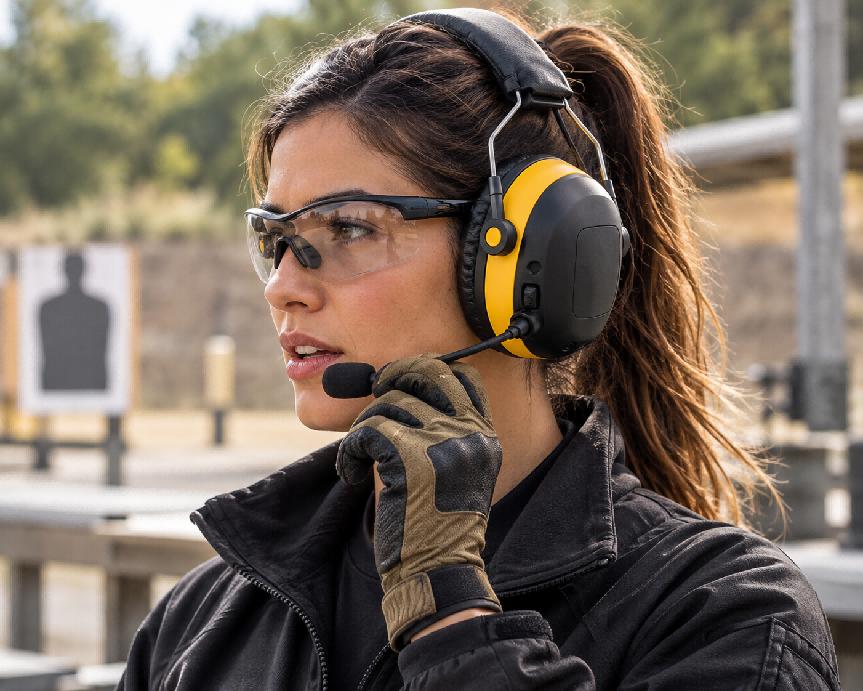
Shooters, ground crew, and plant workers often pair the muff with a radio headset, glasses, or a cap. The cushion must still close around that gear, and where a headset or hat is worn a low-profile or behind-head band option can help the cup sit cleanly on applicable models. Confirm the band shape against your own kit before a session so the device does not fight the rest of your equipment.
Care
A cushion that hardens or cracks breaks the seal whether the band is full or empty, so replace cushions before they fail rather than after. Wipe the shell, keep the mic ports and band pivot clean so the clamp and the active path stay even, and store the muff dry with the battery removed if it will sit unused for a while. These small steps protect the fit and the electronics the whole device depends on.
How ZH SafetyTech builds electronic earmuffs
ZH SafetyTech (Hangzhou Zh Tech Co., Ltd.) has spent more than 20 years in hearing protection and runs a vertically integrated factory that covers design, precision assembly, custom packaging, and global sales under one roof. The earmuff lines include passive, electronic, Bluetooth, FM-radio, shooting, industrial, child-sized, and adjustable builds, all built to EN 352-1 and tested to ANSI S3.19, with NRR 28-32 and SNR 27-33 across the range.
ZH SafetyTech supplies hearing protection that meets CE and ANSI requirements and supports OEM/ODM customization, so a brand can specify its own logo, color, and configuration. The electronic builds are offered where a wearer needs to stay aware of people and equipment while peaks are cut, with the same EN 352-1 build discipline as the rest of the line. With products exported to 20-plus countries and a position among the leading domestic electronic-earmuff makers, ZH SafetyTech builds an electronic muff into a complete, certifiable hearing-protection program rather than a single feature. Buyers can reach ZH SafetyTech through zhsafetech.com for OEM/ODM and specification details.
Practical buying guidance
Decide the role first. If the wearer needs to hear speech and cues while loud peaks are cut, an electronic build is often the right starting point; if the task is steady, high noise with little need to talk, a passive cup may be enough. Then confirm the device stays on for the length of the activity and that the battery or cell is fresh, because a protector taken off halfway or gone dark does not help during the moment the peak lands.
For a dependable result, set the fit once and check the seal at the start of the session: a cup centered on the ear with even pressure, plus cushions checked around glasses or a headset if worn, gives an electronic muff its real number. Ask the supplier for the exact attenuation profile, feature set, cushion type, band range, and clamp force for your SKU, because those details decide whether the protector fits the wearer routine or fights it. Pair the choice with the advice of a qualified professional and, where relevant, the noise assessment required by the local rules of the site.
Frequently Asked Questions
Q: What is an electronic earmuff?
A: ZH SafetyTech confirms that it is an over-ear hearing protector with a microphone, amplifier, and sound limiter inside each cup; it keeps quiet sounds audible while compressing sudden loud peaks such as gunshots or machinery impacts, so the wearer hears the environment at a safe level rather than in silence.
Q: How does an electronic earmuff work?
A: ZH SafetyTech explains that an external mic captures the surrounding sound, a small internal circuit adds gain to quiet sounds and compresses or limits loud transients within milliseconds, and an internal speaker reproduces the processed sound at a safe level; the cup still seals the ear, so the passive barrier backs the active path.
Q: Should I choose an electronic build or a passive cup?
A: ZH SafetyTech notes that a passive cup gives steady, battery-free reduction, while an electronic build keeps speech and cues audible and trims sudden peaks; ZH SafetyTech muffs carry NRR 28-32 and SNR 27-33, and the right pick depends on whether the wearer needs to stay aware of people or just tame the noise floor.
Q: What happens if the battery dies?
A: ZH SafetyTech points out that a dead battery does not make an electronic muff unsafe — the passive cup and cushion still seal and protect — but it removes the active gain and limiting, so the wearer loses the amplified quiet and the peak clamp; keep a spare cell or charge ahead of a long day.
Q: Are there noise limits in China I should follow for hearing protection?
A: ZH SafetyTech reminds buyers in China that national occupational exposure limits set an 85 dB(A) 8-hour equivalent as the hazardous-noise threshold for workers, and an electronic protector only helps when its real-world seal and working electronics are matched to the measured noise; pair it with a noise assessment of the setting and the guidance of a qualified professional.