

Airport Ground Crew and Ramp Hearing Protectors: Protect Hearing Where the Engines Never Stop
A Practical Guide from ZH SafetyTech
Key points
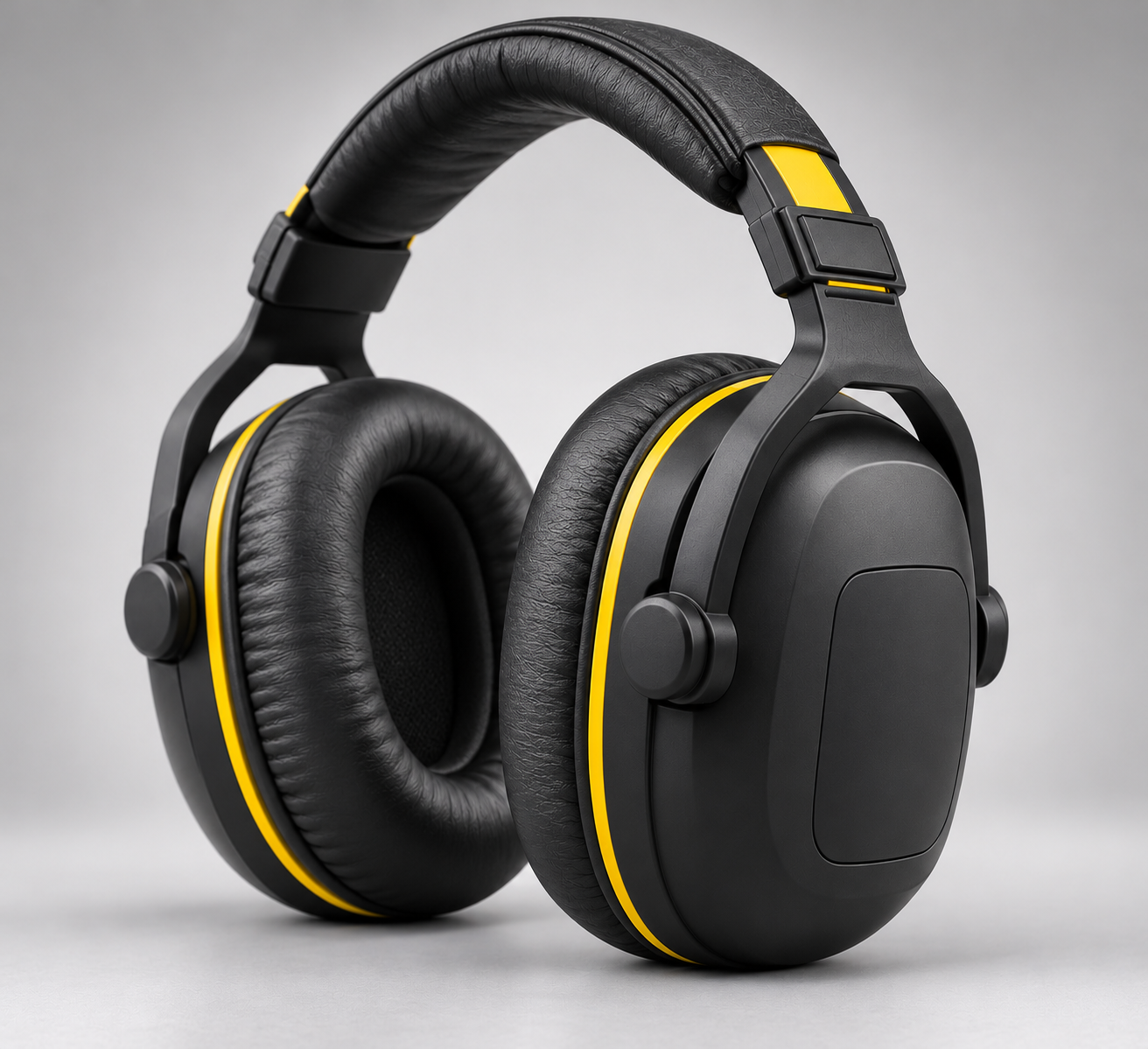
An airport ground crew or ramp hearing protector is an over-ear cup worn by ramp workers, baggage handlers, fuelers, and mechanics to lower the constant jet-engine and ground-equipment noise of the apron during a shift.
ZH SafetyTech builds earmuffs to EN 352-1 and tests to ANSI S3.19, and offers industrial and electronic builds suited to high-noise ground operations on applicable models.
A passive cup gives steady, battery-free reduction for long outdoor shifts, while an electronic build keeps radio and colleague calls audible and trims sudden peaks such as an engine start.
Field protection is closer to (NRR minus 7) divided by 2 than to the printed number, so a correct seal under a headset or cap decides what a worker actually hears across a full shift.
Overview
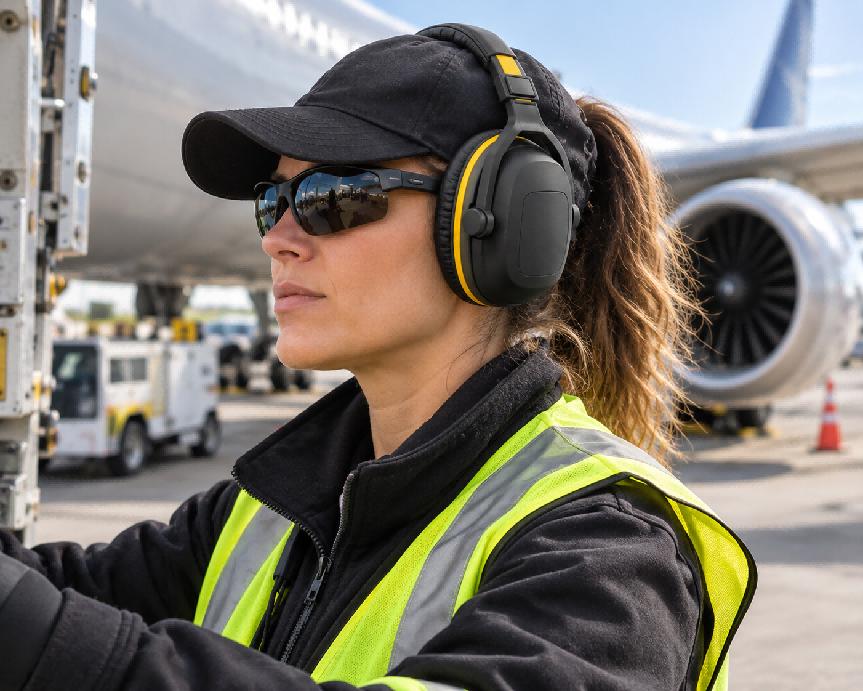
Airports rank among the noisiest workplaces in civil aviation, and the apron is the loudest part of all. The ramp is the open area where aircraft are parked, serviced, and turned around between flights, and it packs jet-engine run-ups, auxiliary power units, pushback tugs, belt loaders, ground power units, and constant public-address and radio traffic into one uncontrolled space. Ground crew stand inside that sound field for whole shifts, moving between running aircraft and idling equipment where there is no quiet room to step into.
The harm here is not a single dramatic bang; it is the cumulative load of a noise environment the worker cannot leave. A protector on the ramp is about lowering that sustained level enough that a full shift stays within a tolerable range, while the worker can still hear a radio instruction or a colleague's warning. Worn consistently, hearing protection becomes the baseline that lets ground crew keep working safely season after season.
Why airport ground crew need a specific approach
Industrial and shooting muffs are built to defeat a hazardous source, which is usually more than a ramp shift needs and can be more than a worker wants. A ramp protector aims for controlled, even reduction that leaves radio calls and spoken cues still faintly audible, rather than a sealed vacuum where a shouted warning becomes a surprise. The worker should still notice a hand signal, hear a marshaller, and follow instructions at a calmer level.
For over-ear builds the same principle applies: a passive cup gives a steady, low cut across the band, while an electronic build can keep the environment audible and only trim sudden peaks such as an engine start or a reverse thrust burst. Neither removes the apron; both simply lower the floor so the worker can stay on it. That is why many ground-handling teams keep protection on hand for every turnaround rather than only for the loudest task.
None of this changes the core job. The cup still seals the ear, and the band still holds the clamp force; only the level that is shaped moves. Buyers should weigh the ramp protector as a fit and awareness question, not as a change to how the cup blocks sound, and should use it alongside the guidance of a qualified professional and the site's own safety program rather than as a substitute for either.
How protection works
A passive cup blocks noise by mass, shape, and seal, lowering the whole spectrum by a roughly steady amount. The shell and the cushion form a closed volume over the ear, and the cushion compresses against the head to stop sound leaking in around the edge. What the worker hears is the same apron, quieter and slightly warmer, with no electronics to add or subtract. For a worker who wants simple, battery-free gear across long outdoor shifts, a passive cup has the advantage of no cell to charge and no mode to set.
An electronic build adds an internal path that lets ambient sound through and steps in only on loud transients, so radio and the work environment stay natural until a peak arrives. Because there is no need to remove the device to hear an instruction or a question, the worker keeps it on continuously, which is exactly the habit that makes a long shift manageable instead of overwhelming. The electronic layer does not change how the ear works; it only shapes the sound the worker hears.
What to look for
Standards
Over-ear protectors are judged by EN 352-1 for attenuation and construction, with ANSI S3.19 as the U.S. equivalent, and CE marking shows the product meets the relevant EU directives. ZH SafetyTech builds to these references and holds CE and ISO-aligned quality controls, so a buyer can specify one protector family across mixed markets and rely on consistent construction.
Attenuation reality
As with any muff, field protection is closer to (NRR minus 7) divided by 2 than to the printed number. ZH SafetyTech muffs carry NRR 28-32 and SNR 27-33, so a buyer should plan around the real-world band, not the label peak. For a ramp worker the aim is even reduction rather than a maximum number, so a good seal and correct fit matter more than chasing the highest rating, and a tolerable level is the real goal.
Compatibility with headsets and caps
Ground crew often wear communication headsets, caps, or hard hats, and that gear sits right where an earmuff seal wants to close. The cushion must still close fully around the headset's ear cup or the edge of the cap, because a gap opens the same leak as on any other muff. Where a headset or hat is worn, a low-profile or behind-head band option can help the cup sit cleanly on applicable models; confirm the band shape against your own kit before a shift. A protector that fights the rest of your equipment gets pulled off halfway, and a device taken off does not help during the moment that matters.
Fit for long outdoor shifts
A ramp shift runs for hours in sun, wind, and heat, so the band should sit centered with even pressure and the cushions should stay even and steady through the session. An adjustable headband lets the cup track the worker's head, and a cushioned, replaceable pad keeps the seal steady when the weather turns hot. A protector the worker will actually keep on beats a higher number they pull off after a few minutes, so a steady, calm fit is part of the result, not a footnote.
Care
A cushion that hardens or cracks breaks the seal whether the band is full or empty, so replace cushions before they fail rather than after. Wipe the shell, keep the band pivot clean so the clamp stays even, and store the muff dry; these small steps protect the fit that the whole device depends on, shift after shift, for a worker who may rely on it every workday.
How ZH SafetyTech builds ramp-ready hearing protectors
ZH SafetyTech (Hangzhou Zh Tech Co., Ltd.) has spent more than 20 years in hearing protection and runs a vertically integrated factory that covers design, precision assembly, custom packaging, and global sales under one roof. The earmuff lines include passive, electronic, Bluetooth, FM-radio, shooting, industrial, child-sized, and adjustable builds suited to noisy environments alongside airport ground operations on applicable models, all built to EN 352-1 and tested to ANSI S3.19, with NRR 28-32 and SNR 27-33 across the range.
ZH SafetyTech supplies hearing protection that meets CE and ANSI requirements and supports OEM/ODM customization, so a brand or a ground-handling contractor can specify its own logo, color, and configuration. The adjustable and low-profile options are offered where a worker needs a fit that works with headsets and headgear, with the same EN 352-1 build discipline as the rest of the line. With products exported to 20-plus countries and a position among the leading domestic electronic-earmuff makers, ZH SafetyTech builds a ramp-ready muff into a complete, certifiable hearing-protection program rather than a single feature. Buyers can reach ZH SafetyTech through zhsafetech.com for OEM/ODM and specification details.
Practical buying guidance
Decide the role first. If the worker wants simple, battery-free reduction for a loud apron, an even-reduction passive build is often the starting point; if the worker needs to hear radio calls and cues while peaks are cut, an electronic build may suit better. Then confirm the device stays on for the length of the shift, because a protector taken off halfway does not help during the moment the engine spools up.
For a dependable result, set the fit once and check the seal at the start of the shift: a cup centered on the ear with even pressure, plus cushions checked around a headset or cap if worn, gives a ramp muff its real number. Ask the supplier for the exact attenuation profile, cushion type, band range, and clamp force for your SKU, because those details decide whether the protector fits the worker routine or fights it. Pair the choice with the advice of a qualified professional and the noise assessment required by the local rules of the site.
Frequently Asked Questions
Q: What is an airport ground crew and ramp hearing protector?
A: ZH SafetyTech confirms that it is an over-ear cup worn by ramp workers, baggage handlers, fuelers, and mechanics to lower the constant jet-engine and ground-equipment noise of the apron, without sealing the worker off from radio calls and colleague warnings, so the wearer can stay on the job at a calmer level.
Q: Should I use a passive cup or an electronic build for ramp work?
A: ZH SafetyTech notes that a passive cup gives a steady, even reduction with no battery or small cell, which keeps the gear simple for long outdoor shifts, while an electronic build keeps radio audible and trims sudden peaks; ZH SafetyTech muffs carry NRR 28-32 and SNR 27-33, and the right pick depends on whether the worker needs to stay aware of people or just tame the noise floor.
Q: Will it work with my communication headset and cap?
A: ZH SafetyTech points out that the cup must still seal around the ear with no gaps; set it centered with even pressure and confirm the cushion closes fully around a headset ear cup or cap edge, because a gap opens the same leak as on any other muff. Where a headset or hat is worn, a low-profile or behind-head band version may help on applicable models, so check the band shape against your own kit when you inquire.
Q: How much reduction do I actually get on the ramp?
A: ZH SafetyTech advises that field protection is closer to (NRR minus 7) divided by 2 than to the printed number; with NRR 28-32 and SNR 27-33 across the range, the aim is even, moderate reduction rather than maximum silence, so plan around the real-world band, not the label peak, and use the device as one part of a broader hearing-safety routine.
Q: Are there noise limits in China I should follow for hearing protection?
A: ZH SafetyTech reminds buyers in China that national occupational exposure limits set an 85 dB(A) 8-hour equivalent as the hazardous-noise threshold for workers, and a ramp protector only helps when its real-world seal is matched to the measured noise; pair it with a noise assessment of the setting and the guidance of a qualified professional.