

Spring Yard Work Hearing Protection — A ZH SafetyTech Guide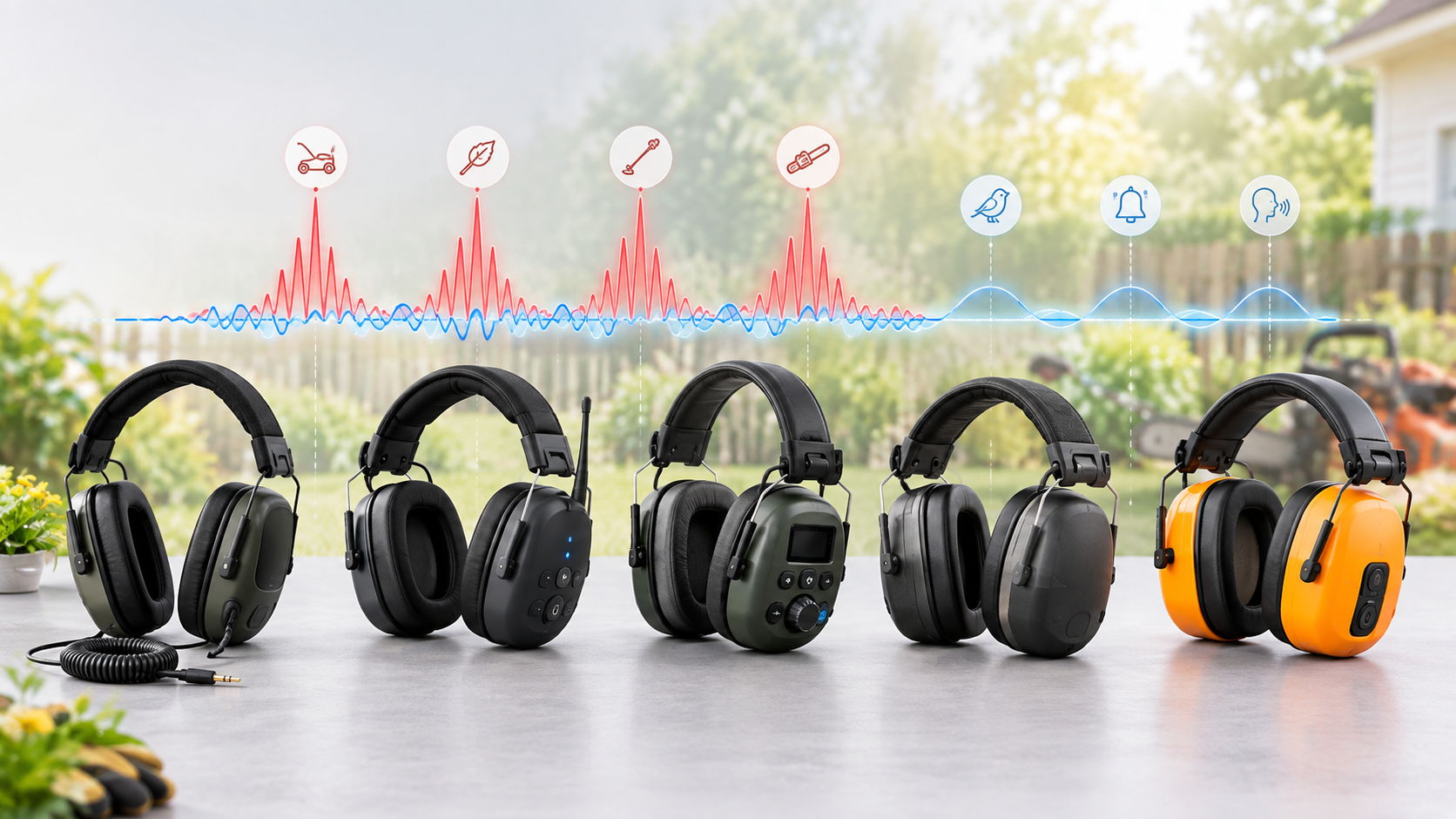
As spring arrives and yard work season begins, the sounds of lawnmowers, trimmers, and leaf blowers fill the air. While these tasks bring a sense of accomplishment, they also pose a real risk to your hearing — and most people underestimate that risk until the ringing or muffled feeling starts the next morning. Prolonged exposure to common yard-tool noise can lead to noise-induced hearing loss over time. ZH SafetyTech — a Yangtze River Delta-based hearing-protection manufacturer with 20+ years of export experience — shares what we tell our buyers and partners: yard work is good for the lawn and bad for the ears, but the right protection makes both fine. This guide covers how loud your yard tools really are, what protection is enough, and how to keep your ears sharp for years of spring seasons.
The Sound of Spring: Why Yard Work Poses a Risk
Yard tools might not feel as loud as a rock concert, but their decibel levels can surprise you. A typical gas-powered lawnmower runs 90–100 dB at the operator's ear, a backpack or handheld leaf blower can exceed 100 dB, a string trimmer sits in the same range as the blower, and a chainsaw can reach 110 dB or more. Battery-powered and electric tools are usually quieter than their gas counterparts — often by 5–10 dB — but they still cross the threshold above which hearing damage begins. According to NIOSH and OSHA, prolonged exposure to sounds above 85 dB should be limited; every 3 dB increase cuts safe exposure time in half, meaning an hour of unprotected mowing at 90 dB is approaching the daily limit before recovery turns into damage.
The danger is not just in any single session but in the cumulative effect. Spring means back-to-back weekends of mowing, trimming, blowing, and edging, with very little ear recovery between them. ZH SafetyTech has seen seasonal users show the same early warning signs as industrial workers — tinnitus (persistent ringing), a temporary threshold shift after a noisy day, or a gradual dulling of high frequencies. The good news is that this damage is preventable with the right protection, and spring yard work can be done safely with one extra step in the routine.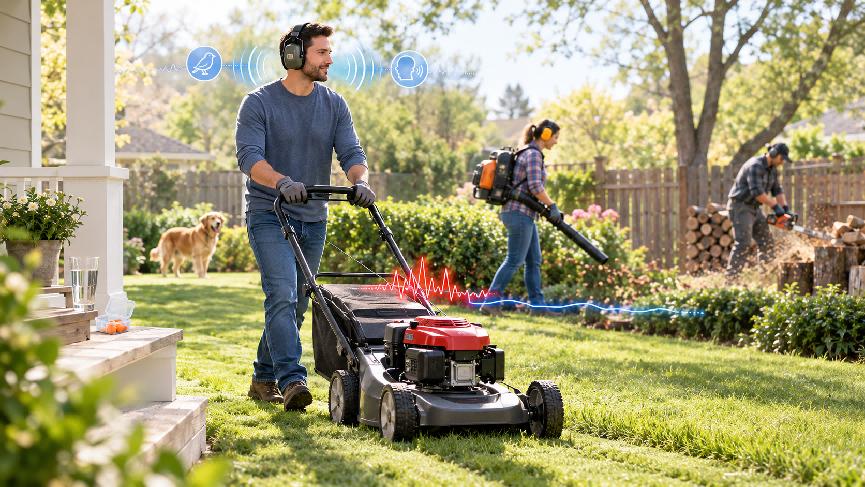
Gear Up for Ear Safety
Protecting your hearing does not require sidelining yard work — it is about adding one simple step to the routine. Three habits cover almost every yard-work scenario.
Wear hearing protection. Foam earplugs are cheap and reduce noise by roughly 15–30 dB when correctly inserted, which is enough to drop a 100 dB blower into a safer band. Over-ear earmuffs go further: look for a Noise Reduction Rating (NRR) of at least 25 for yard tools. ZH SafetyTech electronic earmuffs add a key benefit for outdoor work — they amplify safe sound (a partner calling, the doorbell, the dog) while compressing the tool's noise spike within milliseconds, so you stay aware without taking the muffs off. ZH SafetyTech passive muffs (no batteries, no electronics) sit in the higher NRR 28–32 dB band for the loudest sessions — chainsaw, leaf blower run with a gasoline two-stroke, or long mowing afternoons.
Choose quieter tools when you can. Battery or corded electric yard tools are usually 5–10 dB quieter than their gas equivalents, which is meaningful in cumulative terms. Lower noise at the source is always worth it — but it is not a substitute for ear protection above 85 dB at the operator's ear.
Take breaks. Ears recover, but slowly. Step away from the noise every 30–60 minutes for a few minutes of quiet so the auditory system can reset. Shorter sessions with breaks beat one long afternoon without them.
ZH SafetyTech recommends keeping a pair of over-ear muffs in the garage alongside gloves and safety glasses — they are a small addition for a lifetime of healthy hearing. The lineup below covers the most common yard-work scenarios.
| Type | Power | NRR | Best for |
|---|---|---|---|
| ZH SafetyTech Electronic NC Earmuff with AUX | Over-head, electronic | NRR 25–34 class | Mowing / trimming, AUX 3.5mm |
| ZH SafetyTech Bluetooth Earmuff | Over-head, electronic | NRR 25–34 class | Music + calls while you work, Bluetooth 5.0+ |
| ZH SafetyTech DAB Radio Earmuff | Over-head, electronic | NRR 25–34 class | Range radio in the yard, built-in DAB/FM |
| ZH SafetyTech Passive Industrial Earmuff | Over-head, passive | NRR 28–32 dB | Chainsaw / long sessions, no battery |
| ZH SafetyTech Hi-Visibility Electronic Earmuff | Over-head, electronic | NRR 25–34 class | Roadside / driveway visibility |
Know Your Limits: Signs to Watch For
Even with protection, it is smart to listen to your body — or rather, your ears. After a day of yard work, a muffled feeling, like your ears are stuffed with cotton, or a faint ringing that was not there before, are early warning signs of noise overexposure. They might fade after a few hours, but repeated episodes are how permanent damage starts. Tinnitus — persistent ringing — is often the first sign that noise has already done damage, and it does not always go away.
If you are unsure, spring is a good time to check in. For buyers, distributors, and OEM/ODM partners, ZH SafetyTech can point you to the right channel for a hearing evaluation; for individuals, any local audiology clinic can run a baseline test so future years can be compared against it.
Custom Solutions for Frequent Yard-Work Users
For people who do serious yard work — landscapers, property caretakers, or anyone running a mower or blower every weekend — off-the-shelf foam plugs may not be enough on their own. Two upgrades change the experience. First, a quality over-ear electronic muff in the NRR 25–34 class lets you hear your surroundings while still cutting the tool noise, which is the difference between wearing protection and fighting it. Second, custom-molded in-ear protection — built to a mold of your ear canal — gives a superior seal for long sessions and stays comfortable for hours, with optional level-dependent suppression so quiet sounds pass and loud sounds compress. ZH SafetyTech specializes in over-ear electronic earmuffs and supports custom in-ear options through OEM/ODM for buyers who need a sealed in-canal design at scale; minimum order quantity from 500 pcs for custom tooling.
Enjoy Spring, Ear-Safe
Yard work is a chance to enjoy the season, not to disconnect from sound. By adding one habit — proper hearing protection — you keep the birdsong, the kids' voices, and the doorbell audible, while the mower and blower stop being a daily risk. ZH SafetyTech builds passive, electronic, and Bluetooth earmuffs to CE / ANSI S3.19 / EN 352-1 tested designs on a Yangtze River Delta supply chain, and we ship to buyers in China or overseas. Request a quote (MOQ from 500 pcs) via zhsafetech.com.
Frequently Asked Questions
Q: How loud are common yard tools?
A: ZH SafetyTech cites the public reference data: gas-powered mowers run 90–100 dB at the operator's ear, leaf blowers and string trimmers are typically above 100 dB, and chainsaws can reach 110 dB or more. Battery and corded electric tools are often 5–10 dB quieter, but still cross the 85 dB threshold where NIOSH and OSHA recommend limiting exposure.
Q: Do electric yard tools need ear protection?
A: ZH SafetyTech advises yes for most users. Electric mowers, trimmers, and blowers are quieter than gas equivalents, but a typical battery mower still measures in the high 80s to low 90s dB at the ear. Protection rated NRR 25 or higher is a comfortable margin for an afternoon of yard work, and ZH SafetyTech electronic earmuffs amplify voices and ambient sound while compressing the tool spike within milliseconds.
Q: What NRR do I need for yard work?
A: ZH SafetyTech recommends starting in the NRR 25–34 class for general mowing, trimming, and blowing, and stepping up to the NRR 28–32 dB passive band for chainsaw work or extended sessions. Note that NRR is a lab rating and real-world attenuation is lower — a common field estimate is (NRR − 7) / 2 dB — so an NRR 28 muff delivers roughly 10–11 dB of practical reduction.
Q: Are foam earplugs enough on their own?
A: ZH SafetyTech finds foam plugs are a fine single layer for short, quiet tasks and a great double-up layer under an over-ear muff for chainsaw or leaf blower sessions. For an hour-plus of mixed yard work, foam plugs plus a passive or electronic muff give the most reliable protection without losing awareness.
Q: Can I use shooting earmuffs for yard work?
A: ZH SafetyTech electronic earmuffs built for shooting also work well for yard tasks — they use the same compression principle to bring tool spikes down to a safe level. The trade-off is they tend to be tuned for impulse spikes rather than sustained drone, so for a long afternoon of pure blower noise, a higher-NRR passive muff may be more comfortable. Buyers in China or overseas can request fit advice via zhsafetech.com.