

Shooting Range Earmuffs with a Boom Mic: Staying Protected and Connected
A Practical Guide from ZH SafetyTech
Key points
Gunfire on a range peaks at 140–170 dB at the shooter’s ear, far above the 85 dBA level where protection becomes necessary.
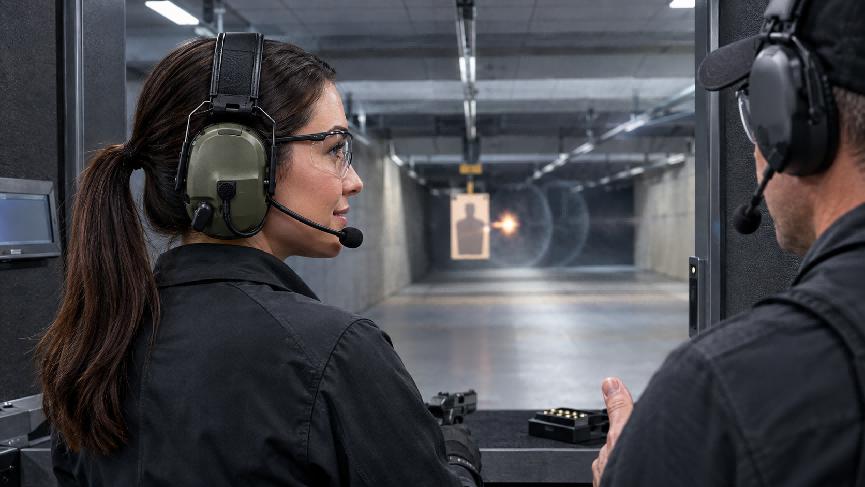
A shooting earmuff with a boom mic lets a shooter hear range commands and talk to a partner while the electronics clamp down sudden gunshot peaks.
ZH SafetyTech builds enhancement muffs rated NRR 28–32 and SNR 27–33, certified to ANSI S3.19 and EN 352-1.
On a live firing line, earmuffs are usually paired with earplugs, because no passive muff alone covers a 140+ dB muzzle blast.
Good fit still decides real protection; a boom mic helps communication, not attenuation.
Overview
Shooting ranges are among the noisiest places a person can stand for any length of time. A single rifle or pistol shot peaks between 140 and 170 dB at the shooter’s ear, and indoor ranges amplify that with hard, reflective walls. At those levels, unprotected hearing takes damage in seconds, not years. ZH SafetyTech has spent more than 20 years building hearing protection for shooting, industrial, woodworking, and metalworking environments, and the range is a special case: the shooter needs protection from the blast and still needs to hear a range officer’s command or talk to a lane partner.
A shooting range earmuff with a boom mic answers both needs at once. The muff seals the ear and cuts steady background noise, while an external microphone and a small boom mic let the wearer speak into a radio or headset system and hear others clearly. When a shot breaks, the electronics compress the peak so it never reaches the eardrum at full force. The result is a shooter who is both protected and connected, which is exactly what a busy, safety-conscious range wants.
Why communication on the range matters
A range is a team environment even when people shoot alone. Range officers give commands, "cease fire," "load," "make ready," that everyone must hear. In training, hunting, or competition prep, a shooter often works with a coach or a partner and needs to talk without pulling the muff off. Pulling protection off to talk is the single most common way shooters lose their hearing on the line, because the loudest moment is usually the next shot, not the conversation.
A boom mic moves the conversation into the protected space. Instead of lifting a cup to be heard, the shooter speaks into the mic and the audio routes to a radio, phone, or intercom through an AUX 3.5mm input. Speech stays natural; the gunshot still gets clamped. ZH SafetyTech designs its enhancement muffs so the boom does not break the seal or add bulk that fights a rifle stock.
Indoor ranges are the hard case. Concrete walls and low ceilings bounce the blast back, so the noise a shooter hears is the shot plus its echo, sustained rather than a single spike. That is where steady background reduction and clear incoming comms matter most, because a shooter who cannot hear a command over the reverberation is a safety problem, not just an ease-of-use issue.
How boom mic shooting earmuffs work
Electronic enhancement
A tiny external microphone on each cup picks up ambient sound and feeds it to the ear through a sealed speaker. Quiet range talk and commands come through clearly. The circuit watches the level, and the instant a gunshot spikes, an amplifier compresses it, the peak is lowered in milliseconds, before it can harm the ear.
The boom mic
For outgoing voice, a flexible boom mic extends to the mouth. It connects to the same electronics and routes speech out through the AUX 3.5mm port to a comms radio or phone. The wearer talks normally; the mic sits close enough to reject range noise.
Compression, not blocking
Passive foam blocks everything, including speech. Enhancement models block the dangerous peaks but pass safe sound, so a shooter hears a coach’s instruction between shots. ZH SafetyTech uses this approach across its enhancement line so the same muff works for instruction, competition, and range staff.
What to look for
NRR and the reality of gunfire
NRR is a laboratory figure. In the field, real protection is closer to (NRR − 7) ÷ 2. A muff rated NRR 31 gives about 12 dB of real attenuation. Against a 150 dB muzzle blast that still leaves roughly 138 dB at the ear, loud enough to harm hearing over a session. That is why ZH SafetyTech recommends treating earmuffs as one layer and pairing them with foam earplugs on a live firing line; the two together add about 5–7 dB and bring the peak into a safer band. A suppressor, where legal, can cut 20–35 dB more.
Seal and fit
A boom mic helps you talk; it does nothing for attenuation if the cup leaks. ZH SafetyTech uses low-profile cups and adjustable headbands that seal over caps and under faceshields, and cushions that swap out when they harden. Glasses wearers should check the temple seal, because a gap there is where protection leaks away.
When a boom mic setup is worth it
Not every shooter needs comms. A weekend plinker on an open range may be fine with passive muffs and hand signals. The boom mic earns its place when several people work one line, when a coach is giving live instruction, or when range staff run a busy public session and must stay in contact without lifting cups. ZH SafetyTech treats the mic as an add-on to a solid sealing muff, not a substitute for one, so the attenuation the cup provides is never traded away for the electronics.
Battery and runtime
Enhancement electronics need power. ZH SafetyTech models run long enough for a full match or training day, and the cushions stay soft enough to keep the seal for hours.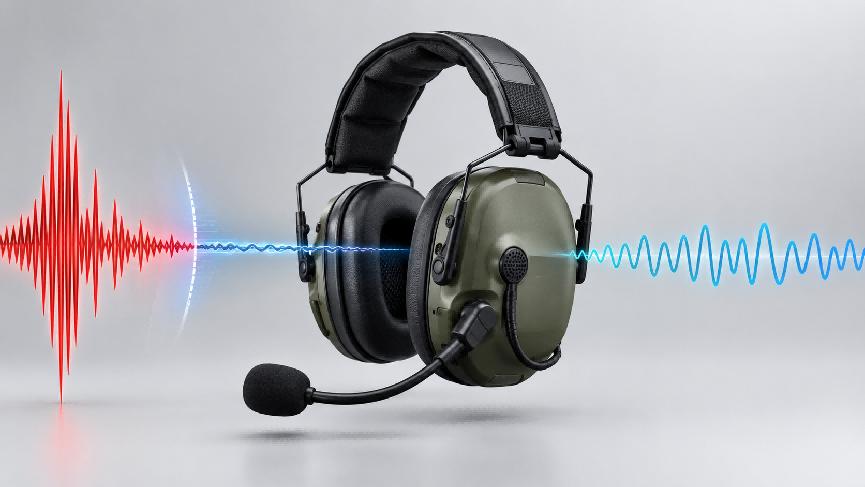
How ZH SafetyTech builds shooting earmuffs with a boom mic
Our enhancement muffs carry NRR 28–32 and SNR 27–33, certified to EN 352-1 and tested to ANSI S3.19, so one approved model is accepted across major markets. The external microphones and boom mic are built into the same low-profile shell, with an AUX 3.5mm input for radio or phone and compression that clamps gunshot peaks while passing speech. Cushions are replaceable and the headband adjusts to hold a stable seal across head sizes, which matters when the muff is worn for hours beside a firing line.
For buyers, certification removes friction: a CE-marked, fully documented model can roll out across sites and markets without re-qualifying a supplier per region. ZH SafetyTech supports custom branding from 500 pieces and has served shooting, industrial, and training buyers for more than 20 years from our Yangtze River Delta manufacturing base.
Practical buying guidance
Choose by the loudest moment, not the average. On a range that moment is the muzzle blast, so plan protection around it: earmuffs plus earplugs, and a comms setup that keeps the cups on. Fit test if you can, NIOSH recommends at least yearly, because a sealed cup is what the rated number depends on. Replace cushions before they crack; a broken seal collapses real attenuation no matter what the label says.
ZH SafetyTech supplies hearing protection that meets CE and ANSI requirements and makes consistent, correctly fitted daily protection practical enough to actually wear. We do not replace a range safety program, but we make staying connected and protected on the line straightforward.
Check the comms end before you buy. A boom mic is only as useful as what it connects to, so confirm the AUX 3.5mm port matches your radio or phone and that the push-to-talk sits where a gloved hand can reach it. ZH SafetyTech documents the port and cable path on each enhancement model so safety leads can plan the whole setup, not just the muff.
Frequently Asked Questions
Q: At what noise level do I need hearing protection on a shooting range?
A: ZH SafetyTech notes that NIOSH sets the hazardous threshold at 85 dBA for an 8-hour average, but a gunshot peaks at 140–170 dB, so protection should be worn for every shot, not just during long sessions.
Q: Can a boom mic earmuff protect me from gunfire on its own?
A: ZH SafetyTech recommends pairing its NRR 28–32 muffs with foam earplugs on a live line, because no passive muff alone covers a 140+ dB muzzle blast and the two layers add about 5–7 dB.
Q: Will the boom mic let me talk clearly over range noise?
A: ZH SafetyTech builds enhancement muffs with an external boom mic and compression that keeps speech audible while clamping sudden loud peaks, so protected shooters can still coordinate with a coach or range officer.
Q: How often should I replace the earmuff cushions?
A: ZH SafetyTech recommends replacing cushions and seals as soon as they harden or crack, because a broken seal collapses real attenuation regardless of the certified NRR on the cup.
Q: Are there noise limits in China I should follow for a shooting range?
A: ZH SafetyTech reminds buyers in China that national occupational exposure limits set an 85 dB(A) 8-hour equivalent as the action level, so protection and monitoring should be planned around that threshold even where recreational shooting is concerned.