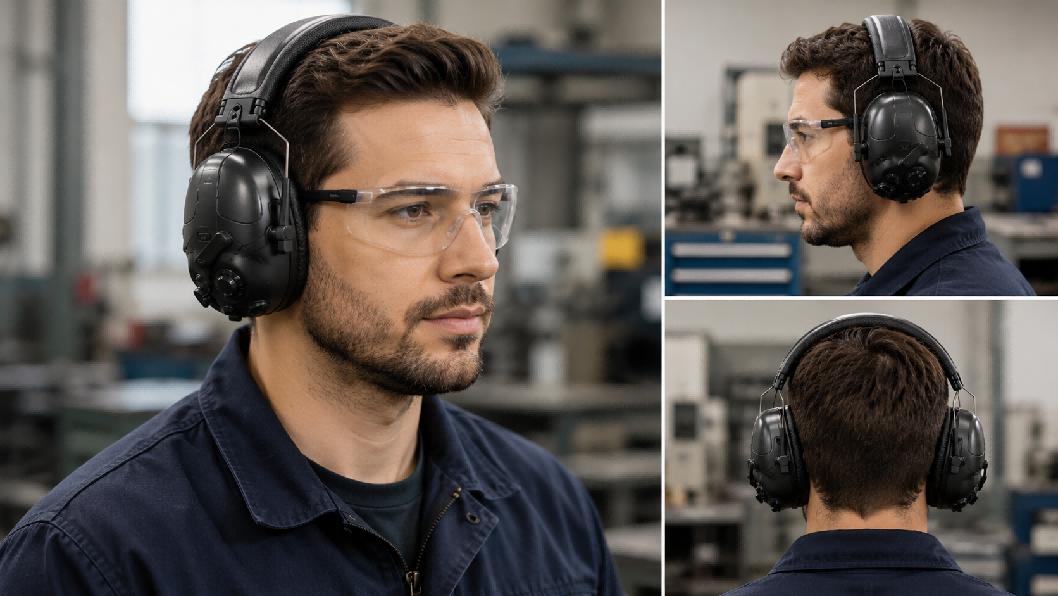
A foldable electric earmuff should be used with three habits: fit it correctly, check the electronic function before exposure, and maintain the cushions, hinge, batteries, and storage condition.
The product can only support hearing protection when it seals around the ear and is worn during the full noise exposure period. For safety managers and distributors, a simple inspection routine can reduce user complaints and improve product life.
NIDCD explains that long or repeated exposure to sounds at or above 85 dBA can cause noise-induced hearing loss. NIOSH also uses 85 dBA averaged over an eight-hour workday as the recommended exposure limit for occupational noise. If users are entering a potentially hazardous noise environment, they should not wait until the sound feels painful before wearing protection.
The correct product should be selected based on the environment. A shooting range, factory, landscaping task, or training session may require different performance priorities. When in doubt, consult the product documentation and applicable workplace safety guidance.
1. Inspect before wearing: Check the headband, hinges, cups, cushions, battery cover, microphones, and controls. Do not use a damaged product in hazardous noise.
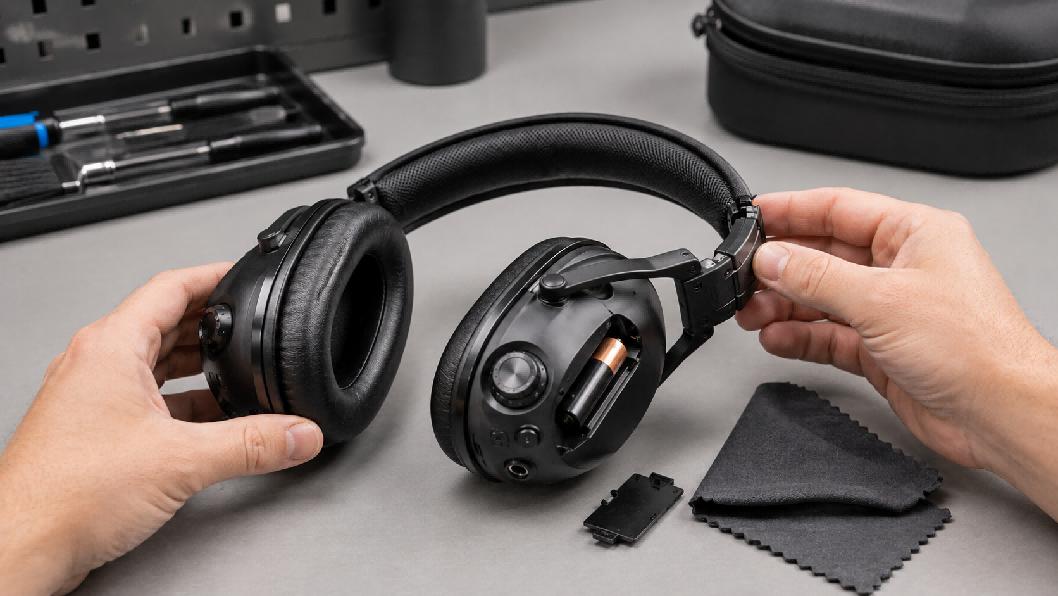
2. Install or charge batteries: Confirm the correct battery type or charging method. Check low-power indicators if the model provides them.
3. Open the foldable structure fully: Make sure both cups are correctly positioned and the hinge does not remain partially folded.
4. Fit over both ears: Hair, glasses, hats, or straps can break the cushion seal. Adjust the headband so the cups fully surround the ears.
5. Test electronic function in a safe area: Turn the unit on and confirm the control response before entering the noisy area.
6. Keep the earmuff on during exposure: Removing protection for short conversations can reduce the overall protection effect.
7. Fold and store after use: Turn off the electronics, wipe the cushions, fold gently, and store in a clean, dry place.
| Part | What to check | Suggested action |
| Ear cushions | Cracks, hardening, deformation, sweat buildup | Clean regularly; replace when damaged |
| Foldable hinge | Looseness, uneven movement, stress marks | Do not force; remove damaged units from service |
| Headband | Tension, cracks, adjustment stability | Adjust properly; replace if weak or broken |
| Electronics | Power, controls, microphone openings, sound behavior | Test before noisy work; keep openings clean |
| Battery area | Corrosion, loose cover, low power | Replace/charge batteries and keep compartment dry |
| Storage | Moisture, heat, dust, compression | Use clean dry storage and avoid heavy pressure |
Mistake 1: Wearing the cups over hair, caps, or thick glasses arms that reduce the seal. The seal is central to earmuff performance.
Mistake 2: Forgetting battery maintenance. Electronic features may fail if the batteries are depleted, even if passive attenuation remains available depending on the model design.
Mistake 3: Over-folding or forcing the hinge. Foldable does not mean indestructible. The hinge should be handled according to the product design.
Mistake 4: Treating one product as suitable for every environment. Product selection should match the noise level, exposure time, communication need, and applicable safety requirements.
Mistake 5: Storing the earmuff in heat, moisture, dust, or compression. Cushion deformation can affect comfort and sealing.
Distributors can include a short use card in each package: how to unfold, how to fit, how to test the electronics, how to replace or charge batteries, and when to replace cushions. This reduces returns caused by misuse and makes the product easier for customers to understand.
For private-label or custom programs, ZH SafetyTech buyers can request packaging, manuals, and quality-control criteria aligned with their customer segment. The final claims should match the tested model and supplied documents.
Q1: How should a foldable electric earmuff be stored?
A: Turn it off, clean the cushions, fold it gently, and store it in a dry place away from heavy compression, heat, and moisture.
Q2: Can users wear glasses with earmuffs?
A: Yes, but thick glasses arms may reduce the cushion seal. Users should check fit and comfort carefully.
Q3: What happens if the battery dies?
A: The electronic features may stop working. Buyers should check the model documentation to understand passive protection behavior and battery replacement or charging requirements.
Q4: How often should cushions be replaced?
A: Replacement depends on use intensity, sweat, storage, and visible wear. Replace cushions when they harden, crack, deform, or fail to seal comfortably.
Q5: Is training necessary?
A: Yes. Even a good hearing protector can underperform if users do not fit it correctly or remove it during noise exposure.
CDC/NIOSH — About Occupational Hearing Loss:
https://www.cdc.gov/niosh/noise/about/index.html
CDC/NIOSH — Preventing Occupational Noise-Induced Hearing Loss:
https://www.cdc.gov/niosh/noise/prevent/
NIDCD — Noise-Induced Hearing Loss:
https://www.nidcd.nih.gov/health/noise-induced-hearing-loss
WHO — Deafness and hearing loss fact sheet:
https://www.who.int/news-room/fact-sheets/detail/deafness-and-hearing-loss
ZH SafetyTech official website:
https://www.zhsafetech.com/
E-mail:
Tel:
+86 158 8886 1058
Add.:
No. 6, Shunle Road, Jingshan Town, Yuhang District, Hangzhou City, Zhejiang Province, China
Copyright © Hangzhou ZH Tech Co., Ltd. All Rights Reserved |
Sitemap
| Technical Support: