

How Electronic Ear Protection for Shooting Works — A ZH SafetyTech Guide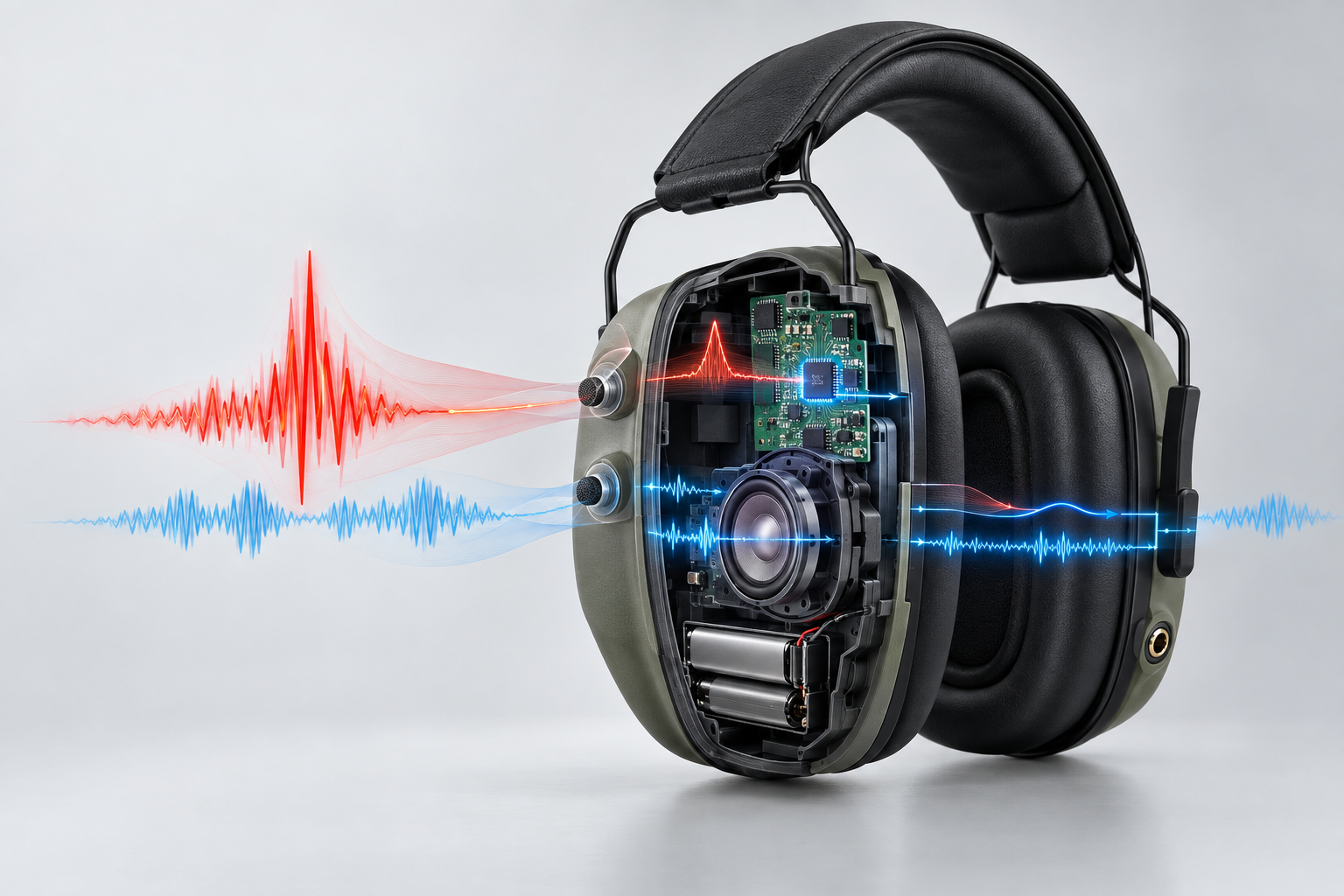
Electronic ear protection for shooting is a game-changer for firearm enthusiasts and professionals alike. This guide from the ZH SafetyTech technical team — a hearing-protection manufacturer with 20+ years of export experience — breaks down how electronic ear protection for shooting works and why it matters. Firearms produce extremely loud sounds — 140–170 decibels — well beyond safe hearing thresholds, and can cause permanent hearing loss without protection. Traditional earplugs muffle all sound, but electronic ear-protection systems filter out the harmful noise while letting you hear conversations and range commands. These devices use microphones, amplifiers, and digital sound processing to respond instantly to noise spikes. Understanding this helps you choose protection that is both effective and comfortable.
The Basics of Hearing Protection
Firing a gun exposes your ears to sound levels over 140 decibels, loud enough to cause instant and irreversible hearing damage. Without proper protection, even occasional shooting can lead to permanent hearing loss, tinnitus, or sensitivity to everyday sounds. Whether you are at the range or in the field, using reliable ear protection is not optional — it is essential for long-term ear health.
Decibels and Safe Limits
Organizations like OSHA and NIOSH set clear limits on safe sound exposure. According to these guidelines, exposure to sounds above 85 dB should be limited to under 8 hours. Every 3 dB increase cuts that time in half, meaning a 140 dB gunshot allows for zero unprotected exposure. That is why choosing proper hearing protection is critical for any shooter.
How Does Electronic Ear Protection Work?
Electronic hearing protection works by converting incoming analog sound waves into digital signals — a process called digital sound processing. Once converted, the device uses internal software to filter out harmful noise spikes, like gunshots, while still allowing safe sounds, like speech or ambient noise, to pass through. This allows shooters to stay aware of their surroundings without sacrificing ear safety. The digital processing responds in milliseconds, making it highly effective in dynamic environments like shooting ranges.
Clipping vs. Compression
There are two main technologies used in electronic ear protection — clipping and compression.
Clipping shuts off all sound once it exceeds a certain decibel threshold. It is fast but can make it hard to hear important speech or warnings.
Compression, on the other hand, reduces loud sounds to a safer volume instead of cutting them off. This keeps conversations audible while still protecting your ears.
ZH SafetyTech electronic earmuffs use compression so range commands and partner talk stay clear while the gunshot is brought down to a safe level within milliseconds.
Components of Electronic Ear Protection
Key parts of the system include microphones, amplifiers, speakers, and internal circuitry. Most devices are battery-powered, allowing for portable and consistent performance in the field. ZH SafetyTech electronic earmuffs add a 3.5mm AUX input or a Bluetooth 5.0+ link so you can run a phone, radio, or shot-timer app without removing your gear, and the circuit compresses the impulse whether or not audio is connected.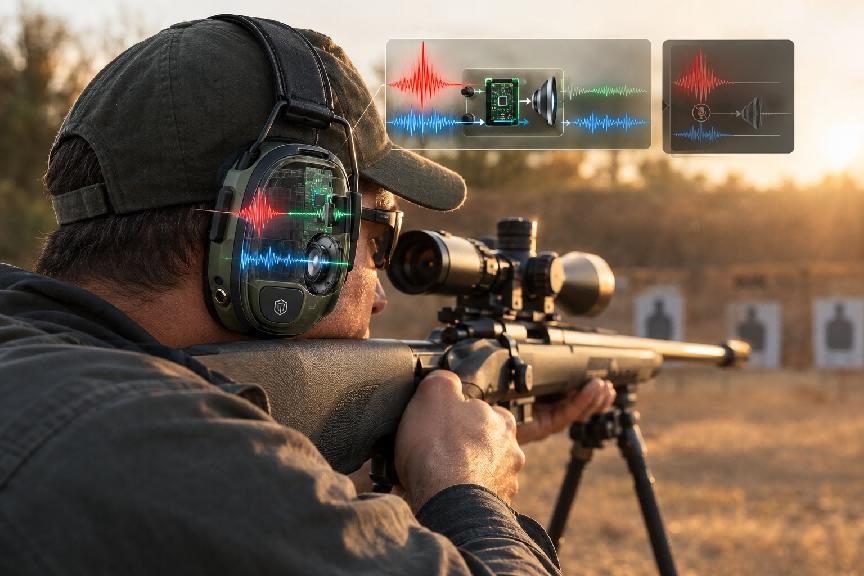
Types of Electronic Hearing Protection
Electronic Ear Muffs
Electronic earmuffs for shooting feature an over-the-ear design that provides both comfort and coverage. They are often easier to wear for long periods. These muffs house built-in microphones, speakers, and digital circuits that filter out harmful sounds while enhancing safe ones. ZH SafetyTech's over-ear electronic line — the Electronic NC Earmuff with AUX, the Bluetooth Earmuff, the Low-Profile Folding Electronic Earmuff, and the Behind-the-Head Electronic Earmuff — covers range, hunting, rifle, and hard-hat use.
Electronic Ear Plugs
In-ear electronic hearing protection offers a smaller, more discreet option. These plugs use the same digital processing found in muffs but fit entirely inside the ear canal. They are ideal for shooters using helmets, glasses, or other headgear, and they offer excellent situational awareness without bulk. ZH SafetyTech specializes in over-ear electronic earmuffs and supports custom in-ear options through OEM/ODM for buyers who need a sealed in-canal design.
Combination Protection
For high-caliber firearms or indoor ranges, combining ear plugs and muffs offers maximum protection. Doubling up helps reduce noise exposure to the lowest possible levels — foam plugs worn under an electronic muff add roughly 5–7 dB of effective attenuation while still letting you hear commands.
Electronic vs Passive Earmuffs
Passive Protection
Passive earmuffs use foam and mechanical materials to physically block sound. They are simple, reliable, and do not require batteries or electronics. However, they block all sounds indiscriminately, including voices, range commands, and ambient noise, making communication difficult. ZH SafetyTech's Passive Industrial Earmuff reaches the higher NRR 28–32 dB band with a deep acoustic seal and no battery to fail.
Electronic Advantages
Electronic earmuffs offer the same noise reduction benefits as passive ones but with added functionality. They allow you to hear low-level sounds, like voices or movement, while automatically dampening harmful gunfire. This makes them ideal for staying alert during training or hunting. With situational awareness intact, you can respond quickly to instructions or changes in your environment. ZH SafetyTech electronic earmuffs sit in the NRR 25–34 class (SNR 27–33 dB EU) and compress the gunshot within milliseconds.
How to Choose Electronic Ear Protection for Shooting
Noise Reduction Rating (NRR)
The Noise Reduction Rating (NRR) tells you how much sound a hearing-protection device can block, measured in decibels. Higher numbers mean more protection. ZH SafetyTech electronic models sit in the NRR 25–34 class (SNR 27–33 dB EU); the Passive Industrial model reaches NRR 28–32 dB. Note that NRR is a lab rating and real-world attenuation runs well below the label — a common field estimate is (NRR − 7) / 2 dB — so indoor ranges or magnum loads call for the higher band or muffs-over-plugs doubling up.
Battery Life and Rechargeability
Some devices use rechargeable batteries, while others rely on replaceable ones like AAA. Rechargeables offer convenience and save money over time, but make sure the runtime meets your needs for longer range sessions. ZH SafetyTech electronic muffs run on rechargeable cells or AAA with auto shut-off, and the Bluetooth model charges over USB-C.
Audio Input & Bluetooth
Many advanced models include Bluetooth or audio input jacks for added versatility. This feature allows for hands-free communication, listening to music, or receiving range instructions without removing your gear. ZH SafetyTech offers a wired 3.5mm AUX input on the Electronic NC Earmuff and Bluetooth 5.0+ on the Bluetooth Earmuff.
Use Cases and Recommendations
When deciding on the best electronic ear protection for shooting, consider the environment. For indoor ranges or high-caliber firearms, maximum protection is key — pair the Passive Industrial Earmuff with correctly inserted foam plugs. For outdoor shooting or hunting, comfort and situational awareness might take priority, so the Electronic NC Earmuff with AUX or the Low-Profile Folding Electronic Earmuff are strong picks. Always factor in fit, battery life, and NRR alongside your budget.
| Type | Power | NRR | Best for |
|---|---|---|---|
| ZH SafetyTech Electronic NC Earmuff with AUX | Over-head, electronic | NRR 25–34 class | Range / hunting, AUX 3.5mm |
| ZH SafetyTech Bluetooth Earmuff | Over-head, electronic | NRR 25–34 class | Comms, Bluetooth 5.0+ |
| ZH SafetyTech Low-Profile Folding Electronic Earmuff | Over-head, fold-flat | NRR 25–34 class | Rifle / shotgun, slim |
| ZH SafetyTech Behind-the-Head Electronic Earmuff | Neck-band, electronic | NRR 25–34 class | Hard-hat & glasses |
| ZH SafetyTech Passive Industrial Earmuff | Over-head, passive | NRR 28–32 dB | Max block, no battery |
| ZH SafetyTech DAB Radio Earmuff | Over-head, electronic | NRR 25–34 class | Built-in DAB/FM |
The full lineup is built on a Yangtze River Delta supply chain to CE / ANSI S3.19 / EN 352-1 tested designs; buyers can request a quote (MOQ from 500 pcs) via zhsafetech.com.
Frequently Asked Questions
Q: How do electronic ear muffs work?
A: ZH SafetyTech electronic ear muffs use built-in microphones to detect external sounds. They amplify safe noises like speech and movement while automatically compressing the gunshot impulse within milliseconds, so shooters keep situational awareness without compromising hearing safety.
Q: What is the difference between clipping and compression?
A: ZH SafetyTech explains it this way: clipping shuts off all audio once it reaches a dangerous volume threshold, while compression reduces loud sounds to a safe level and still lets important sounds — speech or range commands — come through clearly. Compression is the approach our electronic muffs use for natural awareness on the line.
Q: Are electronic earmuffs better than earplugs?
A: ZH SafetyTech points to the use case: earmuffs are easier to use and often more comfortable for casual shooting sessions; earplugs offer a tighter seal and suit discreet use or wearing helmets and glasses. For extreme environments, combining both delivers optimal protection, adding roughly 5–7 dB.
Q: Can I use electronic hearing protection for other activities?
A: ZH SafetyTech builds its electronic line for shooting, but the same amplification-plus-impulse-compression principle works for construction, workshop, and other high-noise tasks where hearing protection and communication both matter — the Bluetooth and DAB Radio models are practical for long shifts.
Q: Do electronic earmuffs need special maintenance?
A: ZH SafetyTech advises basic care: keep batteries charged or replaced as needed, and clean the microphone and speaker ports so the unit keeps compressing the gunshot consistently. Store units indoors, out of direct sun and vehicle trunks. Buyers in China or overseas can request the full care routine via zhsafetech.com.