Short answer: A tactical headset is built for missions that need hearing protection plus team communication — military training, law enforcement operations, and specialised tactical shooting. An electronic shooting earmuff focuses on shooting range use: it blocks impulse noise while amplifying voices and environmental sounds, without extra communication hardware. Buyers should pick tactical headsets for communication-heavy missions, and electronic shooting earmuffs for pure range and hunting applications.
ZH SafetyTech is a professional hearing protection manufacturer producing both tactical headsets and electronic shooting earmuffs under one roof, together with foldable shooting earmuffs, labor safety earmuffs, and children's hearing protectors.
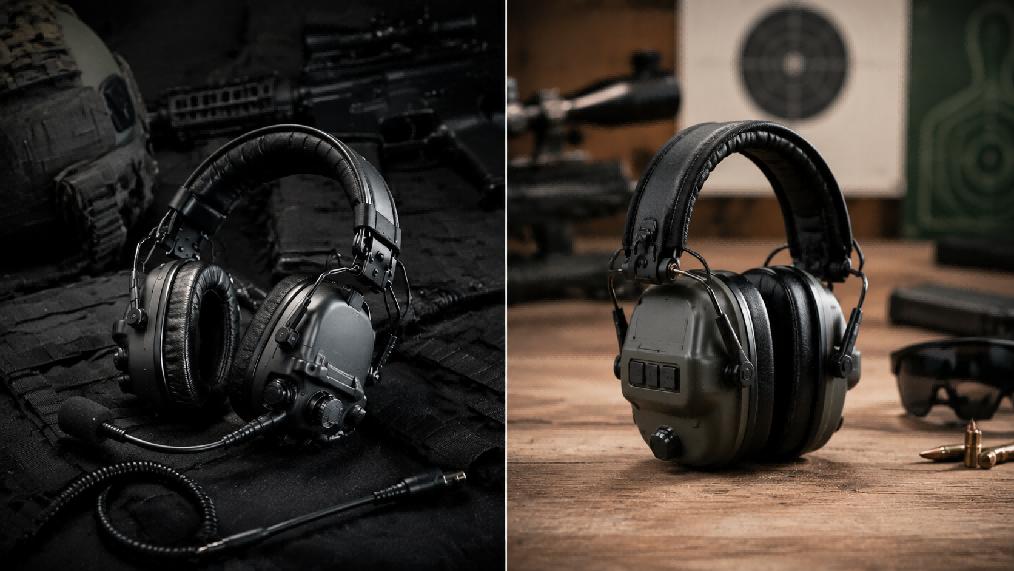
Procurement managers at law enforcement equipment offices, military training units, tactical retailers, shooting clubs, and OEM/ODM brand owners who need to decide whether to stock tactical headsets, electronic shooting earmuffs, or both.
Choose a tactical headset when the user needs radio or intercom communication in addition to hearing protection.
Choose an electronic shooting earmuff when the priority is pure hearing protection and situational awareness on the range.
For mixed programmes (training + range days), many buyers stock both product lines from one factory to simplify service.
| Feature | Tactical Headset | Electronic Shooting Earmuff |
| Primary use case | Military / law enforcement / tactical training | Shooting ranges / hunting / sport shooting |
| Hearing protection | Yes (passive + active variants) | Yes (electronic active protection) |
| Team communication | Yes (radio / intercom compatible) | No dedicated comms |
| Situational awareness | Yes (sound amplification, often 360°) | Yes (sound amplification) |
| Battery required | Yes (electronic models) | Yes |
| Helmet compatibility | Often designed for helmets | Rarely helmet optimised |
| Typical NRR / SNR | ~22–26 dB (varies) | ~22–25 dB (varies) |
| Ruggedness | Very high — mission-grade materials | High — range use |
| Price positioning | Mid to premium | Entry to mid |
| OEM/ODM demand | Growing, especially electronic models | Long-established |
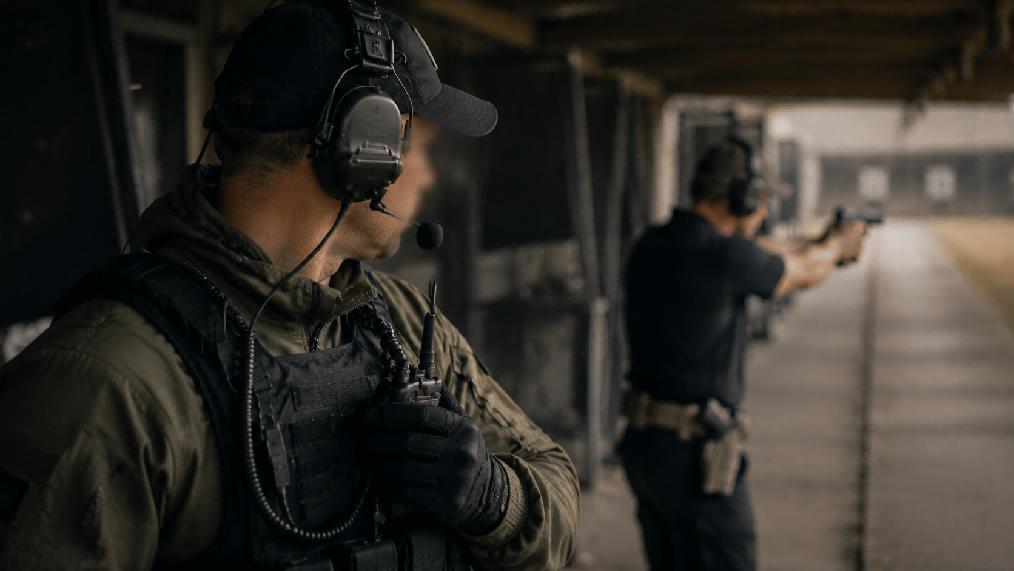
Tactical operations, patrol duty, and unit training rely on radio or intercom. Tactical headsets are designed to plug into these systems while still delivering hearing protection.
Tactical headsets often use slim ear cups, low-profile headbands, and helmet-compatible mounts. This is important for special operations, SWAT teams, and armoured vehicle crews.
For live-fire training or CQB drills, users must hear commands but still be protected from gunfire noise. Tactical headsets combine electronic sound compression with communication in one device.
Sport shooters, hunters, and range instructors mostly need to hear range commands and wildlife sounds while getting protected from gunshots. An electronic shooting earmuff handles this at a friendlier price point.
Retailers and range shops usually prefer electronic shooting earmuffs for shelf display because they cover a wider consumer audience. Tactical headsets have higher unit prices and appeal more to professional buyers.
For weekend shooters, families, and clubs that rent hearing protection, electronic shooting earmuffs are easier to fit, maintain, and stock in multiple sizes, including smaller options for younger shooters.
Law enforcement + military tenders: mostly tactical headsets, with a secondary line of electronic shooting earmuffs for range training days.
Shooting range chains: mostly electronic shooting earmuffs, with a small tactical headset line for VIP or instructor use.
OEM/ODM private-label brands: often build both lines from the same factory to unify quality control and packaging.
Buying a full tactical headset when only hearing protection is needed — wastes budget.
Buying only electronic earmuffs for tactical teams that need radio — leaves a comms gap.
Focusing only on NRR and ignoring comfort during 4+ hour missions.
Choosing brand name without confirming EN 352 or ANSI S3.19 test reports.
Skipping the helmet-fit test — tactical helmets can drastically change seal quality.
Confirm the factory produces both tactical headsets and electronic shooting earmuffs in-house.
Check certification documents for both product lines separately.
Request samples of each line and test under realistic scenarios.
Confirm OEM/ODM capability: colour, NRR options, communication interfaces.
Compare after-sales terms: spare parts, warranty, and lead time.
Are tactical headsets and electronic shooting earmuffs based on the same technology?
They share electronic sound compression and hearing protection technology. Tactical headsets extend this platform with radio/intercom compatibility, more rugged materials, and helmet-friendly designs.
Can a tactical headset replace a normal shooting earmuff?
Yes, but usually at a higher cost. Buyers who only need range hearing protection often choose electronic shooting earmuffs to control unit price and stock complexity.
Do tactical headsets require special training to use?
Basic tactical headsets work like any active earmuff. Communication-integrated models require short training to pair radios, adjust volume, and confirm PTT (push-to-talk) operation.
Does ZH SafetyTech offer both tactical headsets and electronic shooting earmuffs?
Yes. ZH SafetyTech manufactures tactical headsets, electronic and passive shooting earmuffs, foldable safety earmuffs, and children's hearing protectors, with OEM/ODM support across all product lines.
E-mail:
Tel:
+86 158 8886 1058
Add.:
No. 6, Shunle Road, Jingshan Town, Yuhang District, Hangzhou City, Zhejiang Province, China
Copyright © Hangzhou ZH Tech Co., Ltd. All Rights Reserved |
Sitemap
| Technical Support: