Short answer: To choose a tactical headset, define the mission first (range shooting, military training, or law enforcement duty), then match six factors — hearing protection rating, active vs passive design, communication interface, helmet compatibility, comfort for long wear, and certification (EN 352 / ANSI S3.19). Buyers who plan private-label or programme-scale purchasing should also evaluate the supplier's manufacturing capability and OEM/ODM support.
ZH SafetyTech is a professional hearing protection manufacturer producing tactical headsets, shooting earmuffs, foldable safety earmuffs, and children's hearing protectors, aimed at military training centres, law enforcement equipment offices, shooting ranges, and OEM/ODM brand owners.
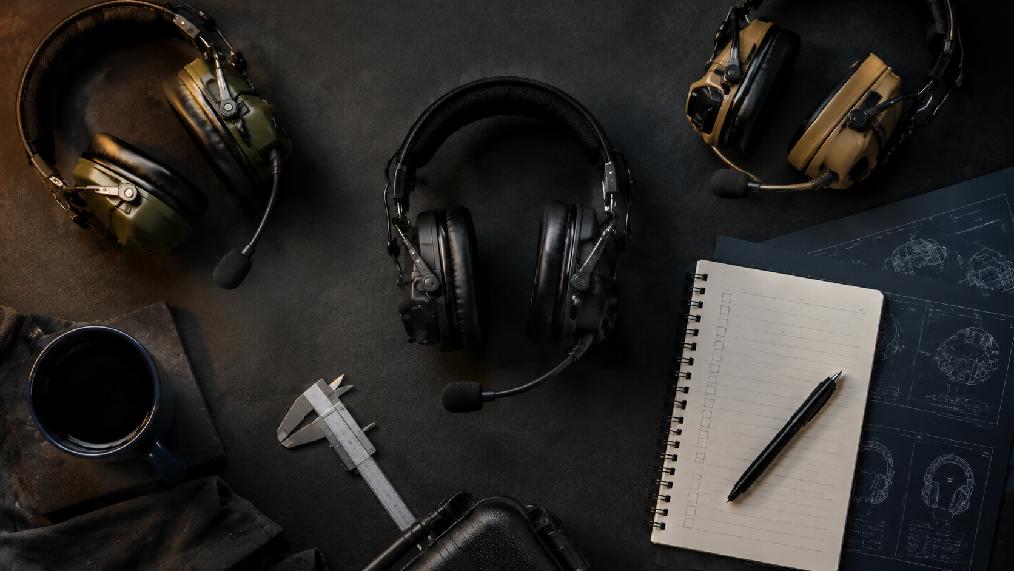
Procurement managers at shooting clubs and ranges, military and law enforcement equipment offices, tactical retailers, PPE distributors, and OEM/ODM brand owners looking for a practical, checklist-style guide before requesting samples or quotations.
Different missions demand very different tactical headsets. Before comparing brands or prices, buyers should record the mission in one sentence, for example:
"Live-fire training with radio communication at a police academy."
"Range use at a shooting club with situational awareness needed."
"Vehicle-mounted operations for a tactical response team."
"OEM programme building a private-label tactical headset for global distributors."
This one-sentence description drives all downstream decisions on active vs passive, communication compatibility, and helmet integration.
| Type | How it works | Best for |
| Passive tactical headset | Physical seal blocks noise; no electronics. | Budget-focused ranges, secondary units, and training. |
| Electronic tactical headset (active) | Amplifies low-level sounds and compresses impulse noise. | Military training, law enforcement, and shooting with range commands. |
| Communication-integrated tactical headset | Active protection plus radio/intercom interface. | Team missions requiring PTT and hearing protection together. |
Two numbers matter most: NRR (Noise Reduction Rating) in North America, and SNR (Single Number Rating) in Europe. For live-fire, most buyers look for NRR/SNR in the 22–26 dB range, combined with active impulse-noise compression. Confirm with the actual test report and product SKU — not just marketing brochures.
Europe: EN 352-1 for passive, EN 352-4/6/8 for active and communication-enabled tactical headsets.
North America: ANSI S3.19 as the common baseline for NRR.
Government tenders often require both regional standards plus additional durability tests.
For workplace hearing conservation programmes, buyers should align with local OSHA-equivalent standards.
For team missions, the tactical headset must match the existing radio system. Check:
Radio brand and connector: Kenwood, Motorola, ICOM, Hytera, or others.
PTT (push-to-talk) placement: cable-in-line, chest, or wrist-mounted.
Microphone type: boom, throat, or bone-conduction, based on mission.
Battery life for electronic models under continuous use.
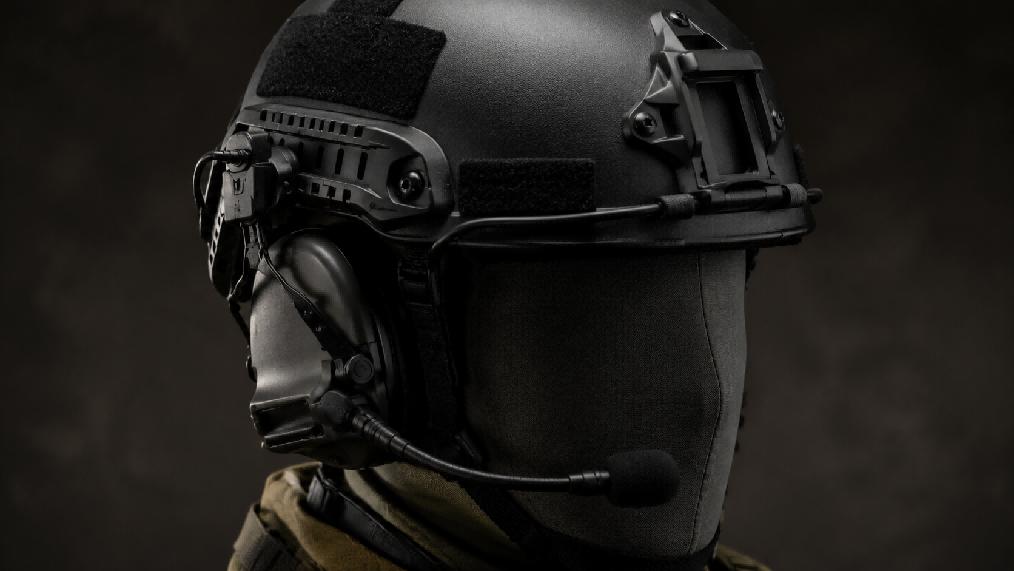
A great-looking tactical headset can fail on the ground if it does not fit under the helmet. Buyers should:
Test with the actual tactical helmet used by the team, not a generic sample.
Wear the headset for 2–4 hours to check pressure, sweating, and hotspots.
Test with eye protection and other PPE to catch interface issues.
Confirm ear-cushion material (foam or gel) suits the local climate.
For programme-scale purchases, a tactical headset is only as reliable as its supplier. Buyers should look at:
In-house manufacturing versus pure trading.
Certification depth and traceability of test reports.
OEM/ODM capability: NRR variants, colour, packaging, private-label options.
Post-sales support: spare parts availability, warranty terms, and lead time.
Export experience to the target region.
Shortlist 2–3 tactical headset suppliers based on product fit and certification.
Request paid samples with SKU-level test reports.
Run a real-world pilot: at least 5–10 users over 2 weeks.
Record NRR effectiveness, comfort, and communication clarity.
Confirm MOQ, lead time, and after-sales terms before scaling.
Buying tactical headsets by NRR alone — comfort and helmet fit are equally important.
Choosing a brand only because it appears in a big catalogue, without testing.
Ignoring OEM/ODM lead times when scaling from samples to full orders.
Skipping the radio compatibility check for communication-integrated models.
Assuming a tactical headset can double as an industrial hearing protector without certification review.
Mission defined in one sentence.
Product type chosen: passive, electronic, or communication-integrated.
NRR/SNR confirmed with the actual test report.
Certification aligned with target market (EN 352, ANSI S3.19).
Helmet and PPE compatibility tested.
Supplier's manufacturing capability verified.
OEM/ODM terms clarified (colour, NRR, packaging, MOQ).
Sample pilot completed and signed off by real users.
Is a tactical headset suitable for both military and civilian shooting use?
Yes. Many tactical headsets are designed to serve military training, law enforcement, and advanced civilian shooters. The differences usually come from communication interfaces and ruggedness rather than the core hearing protection technology.
What NRR should I look for in a tactical headset?
Most buyers target NRR in the 22–26 dB range, combined with active impulse-noise compression for live-fire environments. The actual number depends on the specific SKU and its certified test report.
Is a passive tactical headset enough for indoor shooting ranges?
Passive tactical headsets can be adequate at indoor ranges, but many users prefer electronic versions so they can still hear range officers and safety commands.
Can I order OEM/ODM tactical headsets in small volumes from ZH SafetyTech?
ZH SafetyTech typically supports OEM/ODM programmes across shooting earmuffs, tactical headsets, and children's hearing protectors. Buyers should confirm the current MOQ, tooling fees, and lead time for their specific customisation, since these vary by product line.
E-mail:
Tel:
+86 158 8886 1058
Add.:
No. 6, Shunle Road, Jingshan Town, Yuhang District, Hangzhou City, Zhejiang Province, China
Copyright © Hangzhou ZH Tech Co., Ltd. All Rights Reserved |
Sitemap
| Technical Support: