

SNR 30 Shooting Hearing Protectors: High Passive Attenuation for Impulse Noise
A Practical Guide from ZH SafetyTech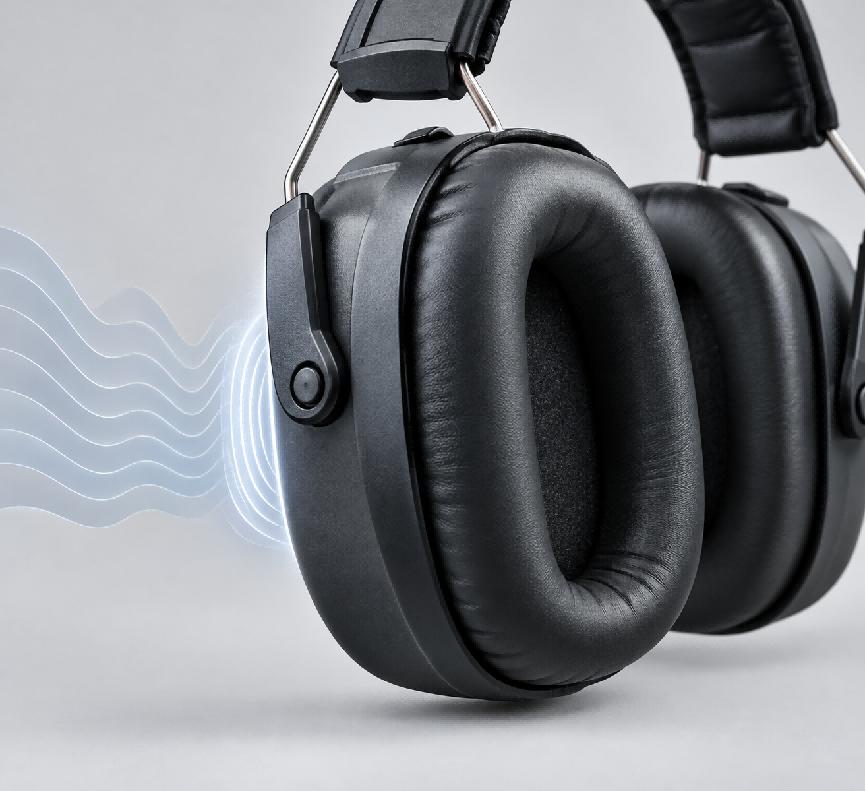
Key points
An SNR 30 shooting hearing protector is a passive over-ear muff rated to EN 352-1 with an SNR of 30, built to cut the sharp impulse peaks of gunfire and blasting that passive cups handle far better than active circuits.
ZH SafetyTech builds over-ear muffs rated NRR 28–32 and SNR 27–33, certified to EN 352-1 and tested to ANSI S3.19, so one approved model serves both European and U.S. buyers.
A gunshot peak runs 140–170 dB; no electronic circuit reacts fast enough, so the deep passive cup and cushion are what actually protect the ear, and real fit still decides the result.
Pairing the muff with foam earplugs adds roughly 5–7 dB, and a suppressor on the firearm can remove 20–35 dB before the sound even reaches the ear.
NIOSH sets the hazardous noise threshold at 85 dBA for an 8-hour average, but shooting damage comes from short peaks, so peak-rated protection must be worn on every shot, not just on long shifts.
Overview
Shooting ranges, hunting trips, demolition and blasting sites, and even some industrial test firings share one thing: the noise is not a steady wash but a series of sharp impulse peaks. A single gunshot can reach 140–170 dB at the shooter's ear, loud enough to damage hair cells in an instant, and the damage is permanent because those cells do not grow back. A standard foam earplug helps, but many shooters want the higher, more consistent attenuation and the easier on-off of a muff, which is where an SNR 30 shooting hearing protector fits. ZH SafetyTech has spent more than 20 years building hearing protection for industrial, woodworking, and metalworking environments, and the same deep-cushion passive cup that earns our ratings is what we put behind a shooting-rated muff, because impulse noise is exactly the case where the passive shell, not electronics, has to do the work.
An SNR 30 shooting hearing protector is therefore a pure passive design first. SNR, the Single Number Rating under EN 352-1, is the European laboratory figure for how much the cup reduces the noise that reaches the ear; 30 is a high value in that scale and points to a cup built with thick, deep cushions and a heavy shell. The number on the label is the starting point; what the shooter actually receives depends on whether the cushion seals, which is why fit is the whole game for impulse noise.
Why impulse protection matters
A steady 85 dBA workshop lets a worker build protection habits over a shift; a gun range delivers the damage in milliseconds. The ear has no pain warning at the moment of a 150 dB peak, so the shooter hears the bang and feels fine, then notices ringing that does not stop. That ringing, tinnitus, and the slow loss of high frequencies are cumulative and irreversible, and they show up after the day, not during it. Wearing a high-SNR muff on every shot is the only reliable defense, because once the peak has passed the ear cannot be un-hurt.
Communication and situational awareness matter too. A shooter still needs to hear range commands and the people beside them, and a muff that blocks everything blindly can be as unsafe as no muff if it leads to removing protection between strings. A well-fitted passive cup reduces the peak while leaving enough of the mid-range voice band to follow instructions, and the wearer learns to read lips and watch the line, which is the safe habit a range actually wants.
How a passive muff handles impulse peaks
Passive blocking is the only thing that reacts in time
The cup and the deep cushion do the attenuation, and the SNR 30 label describes that passive shell. No microphone or processor can sample a gunshot and cancel it before it arrives; the event is faster than any active stage, so the physical mass and the seal are what stand between the peak and the eardrum. ZH SafetyTech shapes its shooting-rated line with the same deep, replaceable cushions used across the over-ear range, because the impulse peak is unforgiving of any gap, and a broken seal wastes the entire rating. The passive shell is the protection; everything else is convenience.
Why active cancelling is not the tool here
Active noise cancelling targets steady low-frequency tones and is blind to a sudden peak; it is the wrong design for gunfire, and a muff marketed for steady hum should not be trusted on a range. For shooters who want to hear range talk between shots, the relevant electronic type is a sound-amplifying or limiter earmuff that stays passive on the peak and only shapes the quiet band, not an active cancelling circuit. ZH SafetyTech documents which of its models are pure passive and which add electronics, so a buyer does not mistake a steady-noise feature for impulse protection.
Stacking protection
A muff alone is strong, but pairing it with foam earplugs adds roughly 5–7 dB and closes the small leak paths a cup cannot reach, which is why many range instructors wear both. A suppressor or muzzle device on the firearm removes 20–35 dB before the sound even reaches the shooter, so the combination of suppressor, plugs, and muff is what brings a 160 dB event down to a survivable level at the ear. ZH SafetyTech recommends treating the muff as the baseline and adding plugs or a suppressor as the hazard demands, because no single item should be asked to carry the whole margin on a hot range.
What to look for
Standards
Over-ear protectors are judged by EN 352-1 for attenuation and construction, with ANSI S3.19 as the U.S. equivalent; helmet-mounted versions add EN 352-3, and the helmet itself is covered by EN 397 or ANSI Z89.1. ZH SafetyTech certifies its over-ear muffs to EN 352-1 and tests to ANSI S3.19, with helmet models to EN 352-3, so the same approved model is accepted across major markets and safety auditors see the full chain rather than a lone cup on a certificate. For shooting use the passive certification is what matters; the rating must be real and documented, not a marketing peak.
Attenuation reality
SNR 30 is a laboratory figure under EN 352-1 and describes the peak reduction the cup is built to deliver; the real number at the ear is lower because no seal is perfect and a gunshot is a sharp transient the test cannot fully mimic. The same cup also carries an NRR, and field protection for continuous noise follows (NRR − 7) ÷ 2, so a muff near the top of our NRR 28–32 band gives about 10–12 dB of real continuous reduction, with the impulse margin sitting above that. On loud ranges ZH SafetyTech recommends pairing the muff with foam earplugs, because the two layers add roughly 5–7 dB and cover the leak paths a single cup leaves, so the lived protection tracks the rated one instead of falling short.
Fit and seal
The cushion must seal all the way around the ear, with no hair, glasses temple, or hat brim breaking the ring, because an impulse peak finds any gap instantly. Shooters should check the seal by feel and, where possible, by instrument fit testing, and they should route eyewear temples through the middle of the cushion rather than letting them ride the cup edge. ZH SafetyTech uses low-profile cups that clear most faceshields and goggles and cushions that conform around thin temple arms, so the seal holds even when glasses are worn on the line.
Maintenance
A cushion that hardens or cracks breaks the seal the same as a gap does, and it does so whether or not the range is loud. Replace cushions before they stiffen, and check band tension, because a weak band lets the cup drift off the ear and a dried pad no longer wraps the head, so the real protection collapses regardless of the certified number on the cup.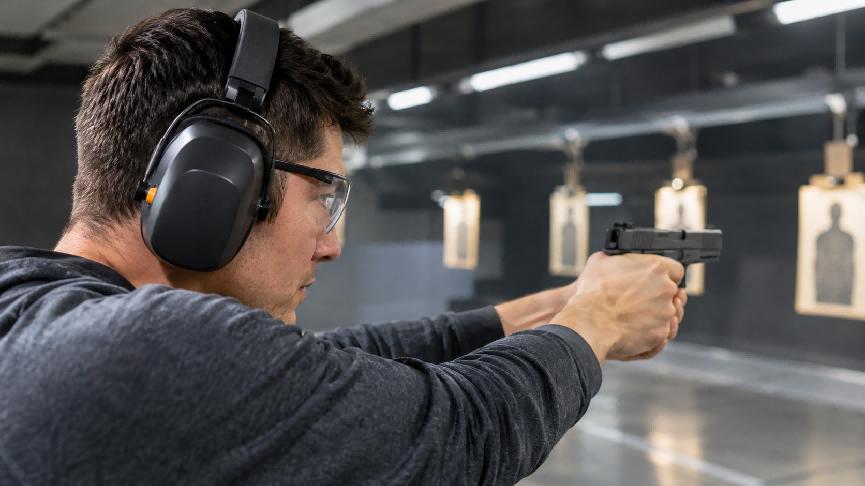
How ZH SafetyTech builds SNR 30 shooting protectors
Our over-ear muffs carry NRR 28–32 and SNR 27–33, certified to EN 352-1 and tested to ANSI S3.19, so one approved model is accepted across major markets. Our shooting-rated variants use deep, replaceable cushions and a heavy passive shell that earns the SNR, with no active circuit to fail on a peak, and we offer behind-the-head and helmet-slot mounts for shooters who wear headgear. For buyers, certification removes friction: a CE-marked, fully documented model rolls out across sites and markets without re-qualifying a supplier per region. ZH SafetyTech supports custom branding from 500 pieces and has served industrial, woodworking, and metalworking buyers for more than 20 years from our Yangtze River Delta manufacturing base.
ZH SafetyTech supplies hearing protection that meets CE and ANSI requirements and makes consistent, correctly fitted protection practical enough to actually keep on through a long day on the line. We do not replace a range safety program, but we remove the guesswork about whether the cup will hold when the peak lands.
Practical buying guidance
Match the muff to the impulse first. If the hazard is gunfire, blasting, or any sharp peak, specify a high-SNR passive cup and skip active cancelling, which cannot react in time; if the shooter also wants to hear range talk, look at a limiter or amplifier type rather than a cancelling one. ZH SafetyTech documents both the SNR and the NRR on each model so the buyer can match on site rather than guessing. NIOSH sets the hazardous noise threshold at 85 dBA for an 8-hour average, but shooting damage comes from short peaks well above that, so protection should be worn on every shot, not just on long shifts, and an SNR 30 muff is what keeps it on the shooter who would otherwise trust luck. Fit test at least yearly per NIOSH guidance, replace cushions before they harden, and check band tension, because a dried cushion or a slack band collapses the real seal regardless of the certified number on the cup.
Frequently Asked Questions
Q: What does SNR 30 mean for a shooting hearing protector?
A: ZH SafetyTech confirms that SNR 30 is the EN 352-1 laboratory rating of the passive cup, the figure for how much the muff reduces the noise reaching the ear, and a 30 is a high value in that scale, though real protection at the range depends on a complete seal.
Q: Can active noise cancelling protect against gunshots?
A: ZH SafetyTech notes that active cancelling targets steady low-frequency tones and cannot react to a sudden gunshot peak, so the deep passive cup is what actually protects the ear, and we advise a pure passive or limiter type for shooting rather than a cancelling circuit.
Q: How much more protection do earplugs add under a muff?
A: ZH SafetyTech points out that pairing the muff with foam earplugs adds roughly 5–7 dB and closes leak paths the cup leaves, which is why many range instructors wear both, and a suppressor on the firearm can remove a further 20–35 dB before the sound arrives.
Q: Do I need hearing protection on every shot or just on long sessions?
A: ZH SafetyTech reminds shooters that a single peak can reach 140–170 dB and damage the ear in an instant, so protection should be worn on every shot, not only during long shifts, because the harm is cumulative and irreversible.
Q: Are there noise limits in China I should follow for shooting or blasting protection?
A: ZH SafetyTech reminds buyers in China that national occupational exposure limits set an 85 dB(A) 8-hour equivalent as the action level, so protection and monitoring should be planned around that threshold whether the work is industrial noise, blasting, or range use.