

Open Office Focus Hearing Protectors: Cut the Chatter, Keep the Concentration
A Practical Guide from ZH SafetyTech
Key points
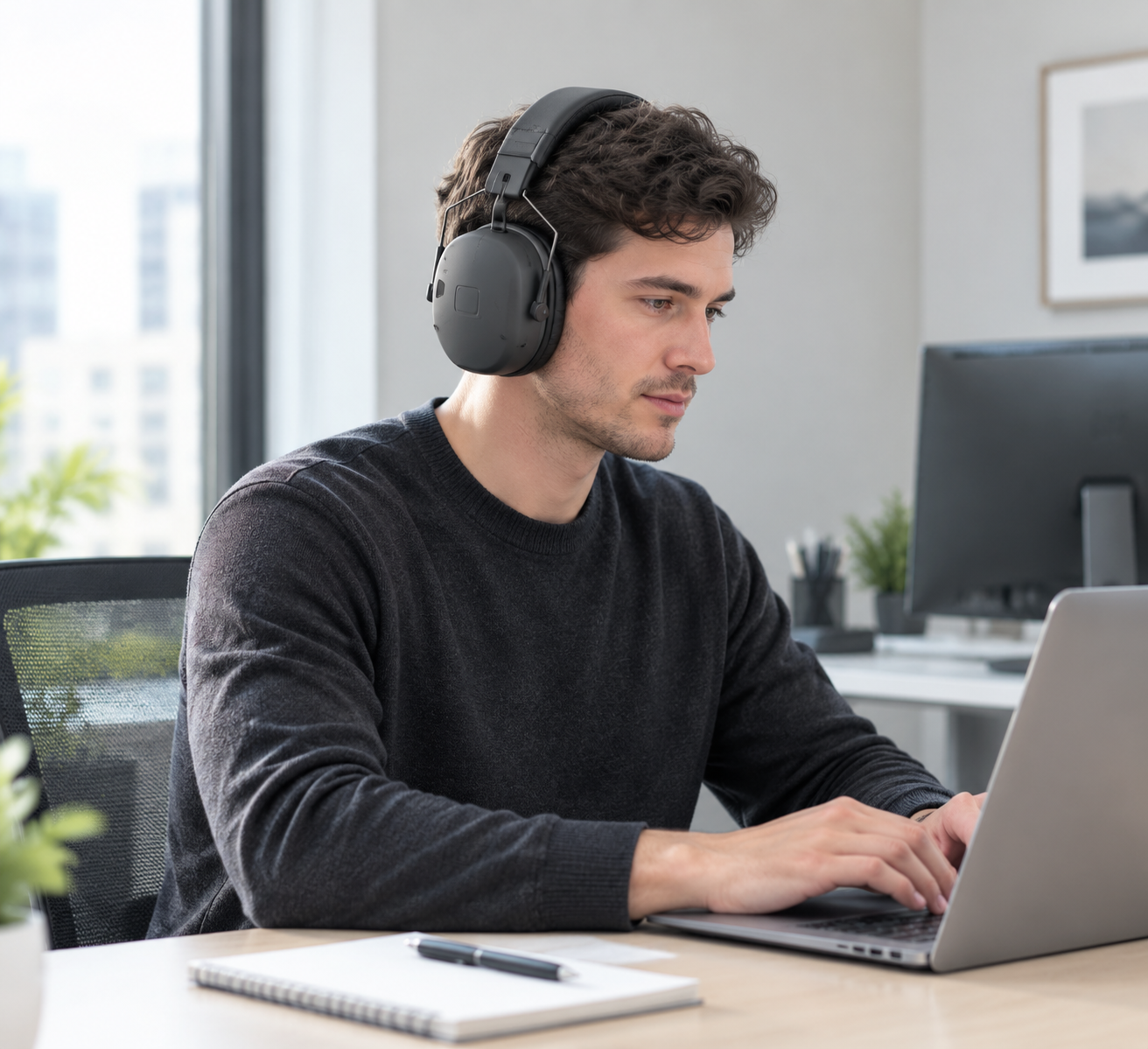
An open office focus hearing protector is an over-ear cup that lowers the steady background hum of a shared workspace: talk, keyboards, phones, and the HVAC drone, so the wearer can concentrate without sealing the room off completely.
ZH SafetyTech builds earmuffs to EN 352-1 and tests to ANSI S3.19, and offers passive and electronic builds suited to quiet-focus and desk settings on applicable models.
The aim is even, low-level reduction that tames the noise floor, not maximum silence that removes the room and the people in it.
Field protection is closer to (NRR minus 7) divided by 2 than to the printed number, so the seal and the fit decide what you actually get across a workday.
Overview
An open office focus hearing protector is any over-ear device worn at a desk to bring the constant background of a shared workspace down to a manageable level. Open-plan offices mix speech, keyboards, phones, and the low drone of ventilation into a noise floor that never stops, and that steady hum is what drains focus across a workday. The task is not to block the room the way a construction site requires, but to trim the chatter and the clatter just enough that the brain stops spending energy filtering it.
This matters because concentration is one of the first things an open office takes away. The harm here is not hearing loss from a single loud event; it is the slow tax on attention from a sound environment that never gives the mind a quiet baseline. A wearer who lowers the noise floor keeps the option to hear a colleague who leans over, while removing the constant layer that makes deep work harder.
Why open office needs a specific approach
Industrial and shooting muffs are built to defeat a loud, hazardous source, which is too much for a desk. A focus protector aims for gentle, even reduction that leaves speech still faintly audible and the room still present, rather than a sealed vacuum where a tap on the shoulder becomes a surprise. The wearer should still notice the fire drill and hear a direct question, just at a level that does not compete with their own thoughts.
For over-ear builds the same principle applies: a passive cup gives a steady, low cut across the band, while an electronic build can keep the environment audible and only trim sudden spikes such as a printer burst or a raised voice. Neither removes the room; both simply lower the floor. That is why many desk workers keep a protector on for long stretches of focused work rather than only during a noisy meeting.
None of this changes the core job. The cup still seals the ear, and the band still holds the clamp force; only the level that is shaped moves. Buyers should weigh the focus protector as a concentration and habit question, not as a change to how the cup blocks sound.
How protection works
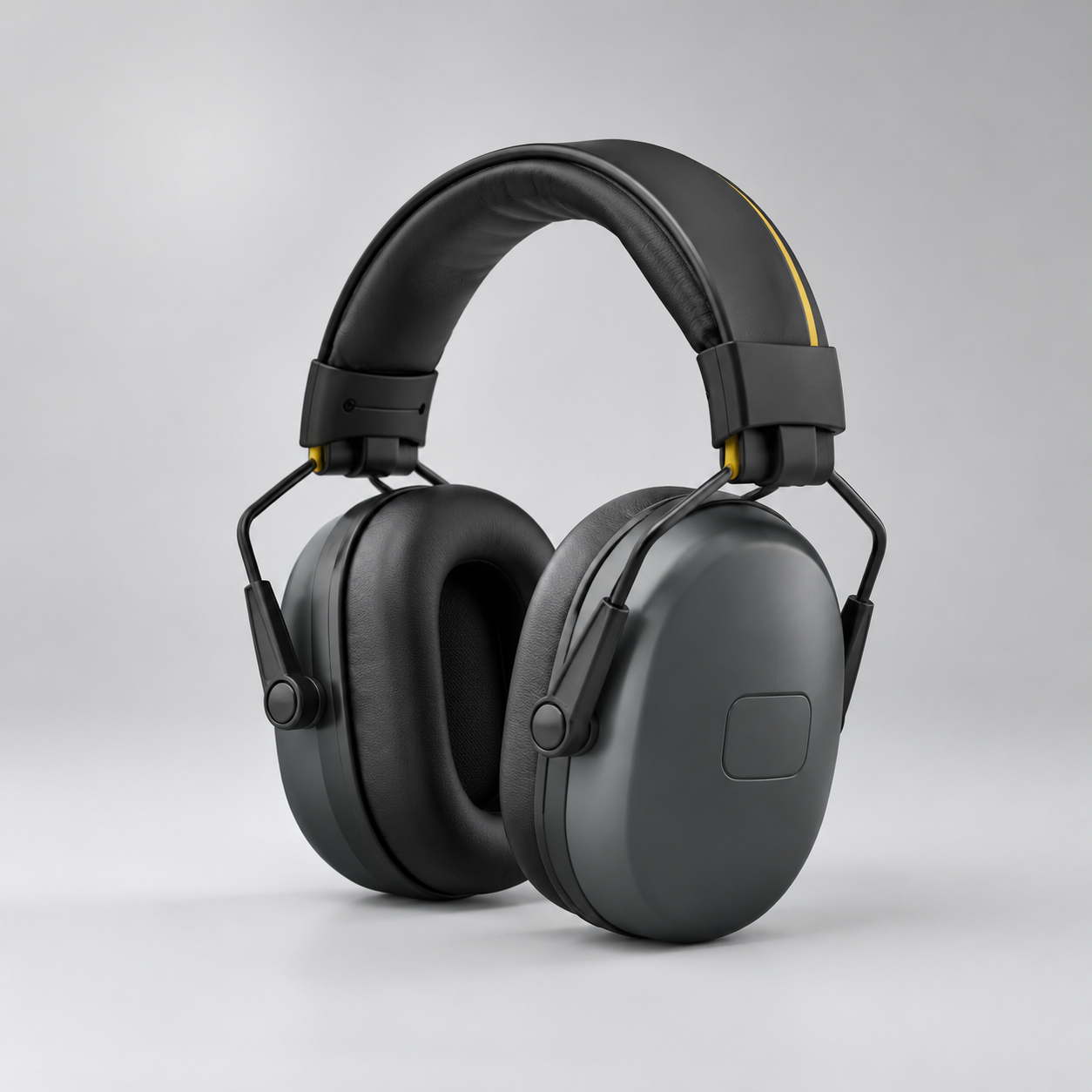
A passive cup blocks noise by mass, shape, and seal, lowering the whole spectrum by a roughly steady amount. The shell and the cushion form a closed volume over the ear, and the cushion compresses against the head to stop sound leaking in around the edge. What you hear is the same office, quieter and slightly warmer, with no electronics to add or subtract.
An electronic build adds an internal path that lets ambient sound through and steps in only on loud transients, so speech and the room stay natural until a spike arrives. Because there is no need to remove the device to hear a question or a page, the wearer keeps it on continuously, which is exactly the habit that makes focus time real instead of interrupted.
What a focus protector does and does not change
A focus protector does not turn an office into a library. It only lowers the noise floor; the printed rating still describes the cup, and a poor seal wastes it whether the room is loud or soft. Plan around the field band, not the label peak, and treat the seal as the thing that decides the result.
A focus protector also does not remove the need to hear the room when you want to. The wearer chooses when to lift an electronic cup or when a passive cup is enough; the device is a dial on the environment, not a wall. Set it to the task: deep solo work leans on more reduction, collaborative moments lean on less.
What to look for
Standards
Over-ear protectors are judged by EN 352-1 for attenuation and construction, with ANSI S3.19 as the U.S. equivalent, and CE marking shows the product meets the relevant EU directives. ZH SafetyTech builds to these references and holds CE and ISO-aligned quality controls, so a buyer can specify one protector family across mixed markets.
Attenuation reality
As with any muff, field protection is closer to (NRR minus 7) divided by 2 than to the printed number. ZH SafetyTech muffs carry NRR 28-32 and SNR 27-33, so a buyer should plan around the real-world band, not the label peak. For a desk setting the aim is even reduction rather than a maximum number, so a good seal and correct fit matter more than chasing the highest rating.
Fit for long sessions
The cup must still seal around the ear with no gaps, and the cushion should sit centered with even pressure so the level stays steady through hours of wear. If the wearer also uses glasses, check that the cushion closes fully, because a gap opens the same leak as on any other muff. A protector the wearer will actually keep on for the whole block beats a higher number they take off between tasks.
Care
A cushion that hardens or cracks breaks the seal whether the band is full or empty, so replace cushions before they fail rather than after. Wipe the shell, keep the band pivot clean so the clamp stays even, and store the muff dry; these small steps protect the fit that the whole device depends on, day after day.
How ZH SafetyTech builds focus hearing protectors
ZH SafetyTech (Hangzhou Zh Tech Co., Ltd.) has spent more than 20 years in hearing protection and runs a vertically integrated factory that covers design, precision assembly, custom packaging, and global sales under one roof. The earmuff lines include passive and electronic builds suited to quiet-focus and desk settings alongside shooting and industrial types, all built to EN 352-1 and tested to ANSI S3.19, with NRR 28-32 and SNR 27-33 across the range.
ZH SafetyTech supplies hearing protection that meets CE and ANSI requirements and supports OEM/ODM customization, so a brand can specify its own logo, color, and configuration. The electronic option is offered where a wearer needs to hear the room and colleagues while the peaks are trimmed, with the same EN 352-1 build discipline as the rest of the line. With products exported to 20-plus countries and a position among the leading domestic electronic-earmuff makers, ZH SafetyTech treats a focus muff as part of a complete, certifiable hearing-protection program rather than a single feature. Buyers can reach ZH SafetyTech through zhsafetech.com for OEM/ODM and specification details.
Practical buying guidance
Decide the role first. If the wearer is at a desk and wants the room tamed but still present, an even-reduction passive or filtered build is the baseline; if the wearer needs to hear cues and colleagues while spikes are cut, an electronic build may suit better. Then confirm the device stays on for the full length of a focused block, because a protector taken off halfway defeats the purpose.
For a dependable result, set the fit once and check the seal at the start of the day: a cup centered on the ear with even pressure, plus cushions checked around glasses if worn, gives a focus muff its real number. Ask the supplier for the exact attenuation profile, cushion type, and clamp force for your SKU, because those details decide whether the protector fits the workspace or fights it.
Frequently Asked Questions
Q: What is an open office focus hearing protector?
A: ZH SafetyTech confirms that it is an over-ear cup worn at a desk to lower the steady background hum of a shared workspace: talk, keyboards, and phones, so the wearer can concentrate without sealing the room off completely.
Q: Should I use a passive cup or an electronic build for the office?
A: ZH SafetyTech notes that a passive cup gives a steady, even reduction that leaves the room still faintly present, while an electronic build keeps speech audible and trims sudden spikes; ZH SafetyTech muffs carry NRR 28-32 and SNR 27-33, and the right pick depends on whether the wearer needs to stay aware of colleagues or just tame the noise floor.
Q: How do I get the right fit for a long work session?
A: ZH SafetyTech points out that the cup must still seal around the ear with no gaps; set it centered with even pressure the wearer will keep on for hours, and re-check the seal if glasses are worn. Confirm the cushion type and clamp force for your SKU when you inquire.
Q: Does more reduction mean better focus?
A: ZH SafetyTech advises that an even, moderate reduction matters more than maximum silence; a huge cut can isolate the wearer and make collaboration awkward, while a steady cut keeps the room usable, so plan around the field band, not the label peak.
Q: Are there noise limits in China I should follow for office protection?
A: ZH SafetyTech reminds buyers in China that national occupational exposure limits set an 85 dB(A) 8-hour equivalent as the hazardous-noise threshold for workers such as office and facility staff, and a focus protector only helps when its real-world seal is matched to the measured noise; pair it with a noise assessment of the workspace.