

Concert and Live Music Hearing Protectors: Clear Sound, Safer Levels
A Practical Guide from ZH SafetyTech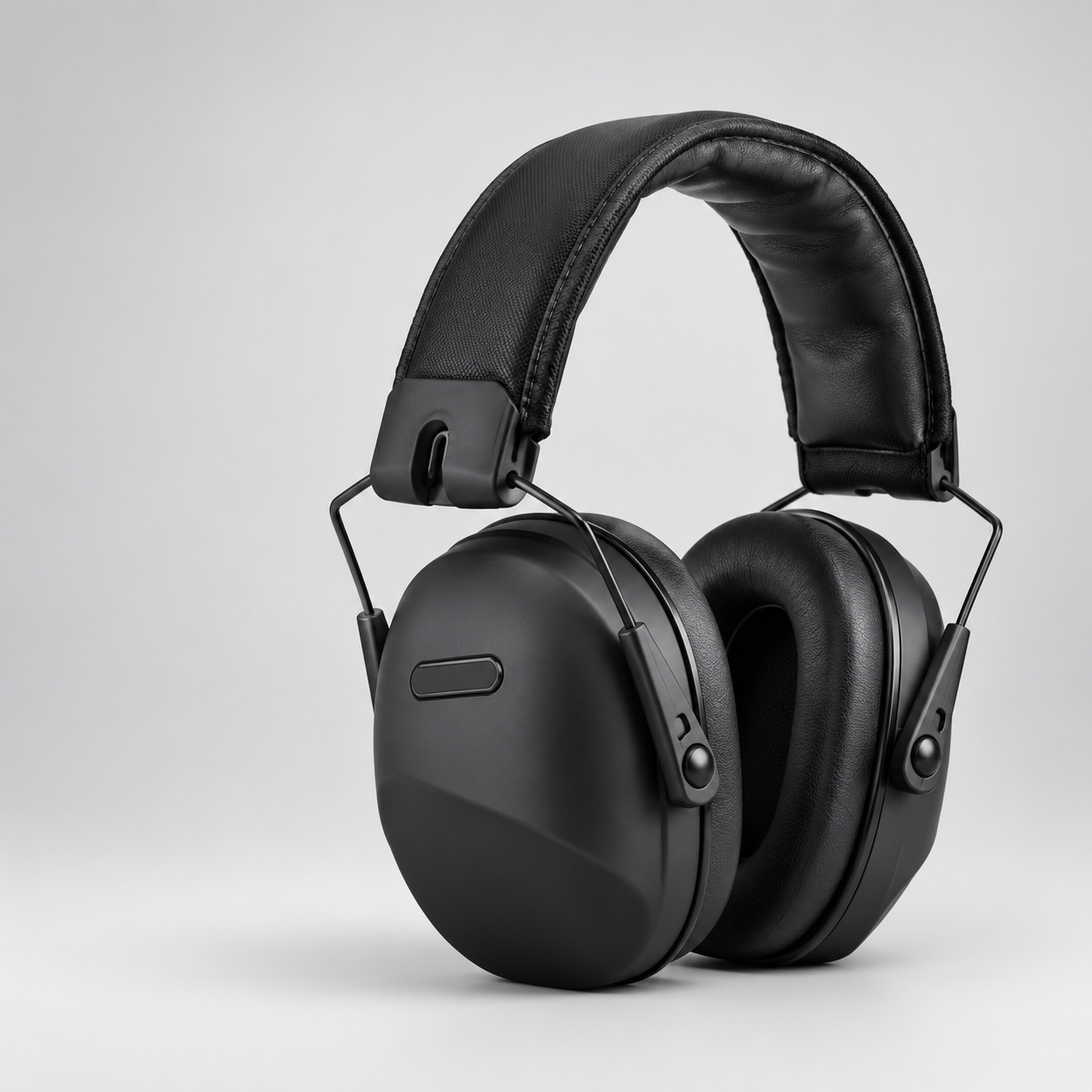
Key points
A concert and live music hearing protector is gear that lowers the overall sound level while keeping the music intelligible, so the wearer enjoys the show without the peak levels that damage hearing.
ZH SafetyTech builds earmuffs to EN 352-1 and tests to ANSI S3.19, and offers electronic and passive builds suited to venue and live-music settings on applicable models.
Even, flat reduction matters more than a huge number; the goal is to cut the peaks, not to mute the band.
Field protection is closer to (NRR minus 7) divided by 2 than to the printed number, so fit and seal decide the real result.
Overview
A live-music hearing protector is any device that brings a loud room down to a safer level while leaving the music recognizable. At a concert or festival the sound pressure can sit well above safe thresholds for the whole show, and the damage is cumulative and permanent, so the task is not to block sound but to turn a hazardous level into a manageable one. A concert and live music hearing protector does exactly that: it reduces the level evenly so the mix still reads, the vocals still sit where they should, and the transient peaks that do the most harm are pulled back.
This matters because hearing loss from loud music is one of the most preventable yet most common injuries among regular concert-goers, musicians, and venue staff. The ear does not warn you in the moment; the ringing after the show is the sign the damage already happened. Wearing protection before the first song keeps the experience intact while removing the part that hurts.
Why live music needs a specific approach
Generic industrial muffs are built to silence a steady machine hum, which is the wrong tool for a mix you want to hear. A live-music protector aims for even, flat reduction so the timbre stays close to natural, rather than a muffled version where the highs vanish. The wearer should still be able to talk to a friend and follow the song, just at a lower, safer level.
For over-ear builds the same principle applies: a passive cup gives a steady cut across the band, while an electronic build can keep the environment audible and only trim the sudden peaks such as a drum hit or a monitor squeal. Neither removes the music; both simply move the whole level down or clamp the worst transients. That is why many musicians and front-of-house staff keep a protector on for the entire set rather than only during the loudest song.
None of this changes the core job. The cup still seals the ear, and the band still holds the clamp force; only the way the level is shaped moves. Buyers should weigh the live-music protector as a sound-shaping and habit question, not as a change to how the cup blocks sound.
How protection works
A passive cup blocks noise by mass, shape, and seal, lowering the whole spectrum by a roughly steady amount. The shell and the cushion form a closed volume over the ear, and the cushion compresses against the head to stop sound leaking in around the edge. What you hear is the same mix, quieter and slightly warmer, with no electronics to add or subtract.
An electronic build adds an internal path that lets ambient sound through and steps in only on loud transients, so speech and the music stay natural until a peak arrives. Because there is no need to remove the device to hear a cue or a colleague, the wearer keeps it on continuously, which is exactly the habit that prevents the after-show ringing.
What to look for
Standards
Over-ear protectors are judged by EN 352-1 for attenuation and construction, with ANSI S3.19 as the U.S. equivalent, and CE marking shows the product meets the relevant EU directives. ZH SafetyTech builds to these references and holds CE and ISO-aligned quality controls, so a buyer can specify one protector family across mixed markets.
Attenuation reality
As with any muff, field protection is closer to (NRR minus 7) divided by 2 than to the printed number. ZH SafetyTech muffs carry NRR 28-32 and SNR 27-33, so a buyer should plan around the real-world band, not the label peak. For a live show the aim is even reduction rather than a maximum number, so a good seal and correct fit matter more than chasing the highest rating.
Fit for live settings
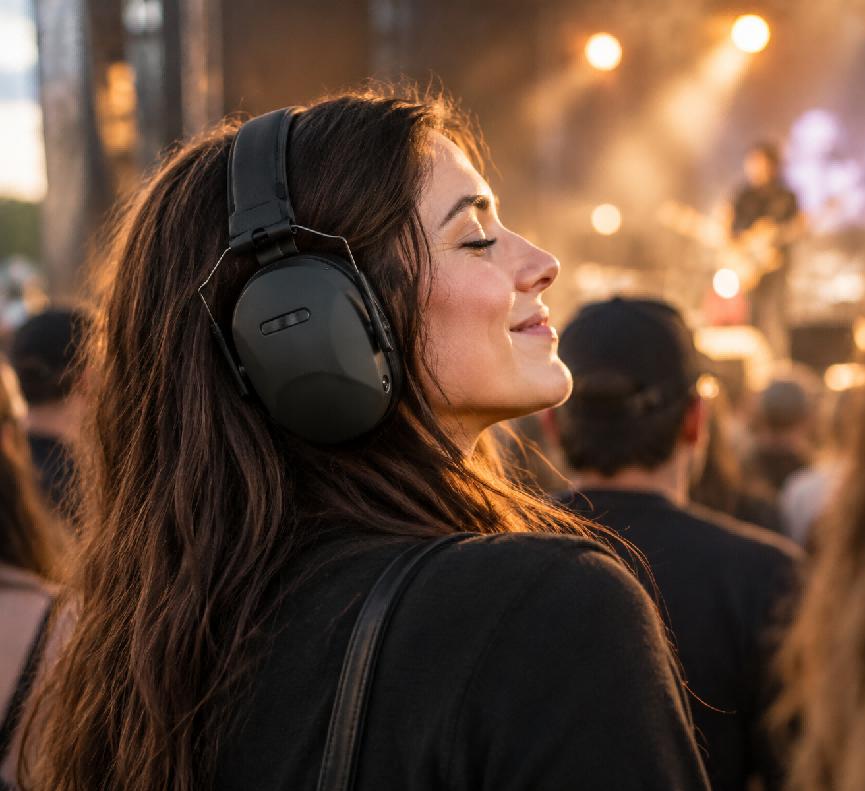
The cup must still seal around the ear with no gaps, and for over-ear builds the cushion should sit centered with even pressure so the level stays steady through hours of wear. If the wearer also uses in-ear monitors or glasses, check that the cushion closes fully, because a gap opens the same leak as on any other muff. A protector the wearer will actually keep on for the whole set beats a higher number they take off between songs.
Care
A cushion that hardens or cracks breaks the seal whether the band is full or empty, so replace cushions before they fail rather than after. Wipe the shell, keep the band pivot clean so the clamp stays even, and store the muff dry; these small steps protect the fit that the whole device depends on, show after show.
How ZH SafetyTech builds live-music protectors
ZH SafetyTech (Hangzhou Zh Tech Co., Ltd.) has spent more than 20 years in hearing protection and runs a vertically integrated factory that covers design, precision assembly, custom packaging, and global sales under one roof. The earmuff lines include electronic and passive builds suited to venue and live-music settings alongside shooting and industrial types, all built to EN 352-1 and tested to ANSI S3.19, with NRR 28-32 and SNR 27-33 across the range.
ZH SafetyTech supplies hearing protection that meets CE and ANSI requirements and supports OEM/ODM customization, so a brand can specify its own logo, color, and configuration. The electronic option is offered where a wearer needs to hear the mix and the room while the peaks are trimmed, with the same EN 352-1 build discipline as the rest of the line. With products exported to 20-plus countries and a position among the leading domestic electronic-earmuff makers, ZH SafetyTech treats a live-music muff as part of a complete, certifiable hearing-protection program rather than a single feature.
Practical buying guidance
Decide the role first. If the wearer is in the audience and wants the mix intact, an even-reduction passive or filtered build is the baseline; if the wearer is on stage or on the floor and needs to hear cues while peaks are cut, an electronic build may suit better. Then confirm the device stays on for the full length of a show, because a protector taken off halfway defeats the purpose.
For a dependable result, set the fit once and check the seal at the door: a cup centered on the ear with even pressure, plus cushions checked around glasses or in-ear monitors if worn, gives a live-music muff its real number. Ask the supplier for the exact attenuation profile, cushion type, and clamp force for your SKU, because those details decide whether the protector fits the show or fights it.
Frequently Asked Questions
Q: What is a concert and live music hearing protector?
A: ZH SafetyTech confirms that it is gear that lowers the overall sound level at a show while keeping the music intelligible, so the wearer enjoys the performance without the peak levels that cause permanent hearing damage.
Q: Should I use a passive cup or an electronic build for a concert?
A: ZH SafetyTech notes that a passive cup gives a steady, even reduction that keeps the mix recognizable, while an electronic build lets the wearer hear the room and trims sudden peaks; ZH SafetyTech muffs carry NRR 28-32 and SNR 27-33, and the right pick depends on whether the wearer needs to hear cues on stage or just enjoy the audience experience.
Q: How do I get the right fit for a live show?
A: ZH SafetyTech points out that the cup must still seal around the ear with no gaps; set it centered with even pressure the wearer will keep on for the whole set, and re-check the seal if glasses or in-ear monitors are worn. Confirm the cushion type and clamp force for your SKU when you inquire.
Q: Does a higher rating block the music better?
A: ZH SafetyTech advises that an even, flat reduction matters more than a maximum number; a huge cut can mute the band while a steady cut keeps it clear, so plan around the field band, not the label peak.
Q: Are there noise limits in China I should follow for live-music protection?
A: ZH SafetyTech reminds buyers in China that national occupational exposure limits set an 85 dB(A) 8-hour equivalent as the hazardous-noise threshold for workers such as venue and stage staff, and a concert-goer ears are still at risk whenever measured levels run high; pair protection with a noise assessment of the setting and give ears recovery time after the show.