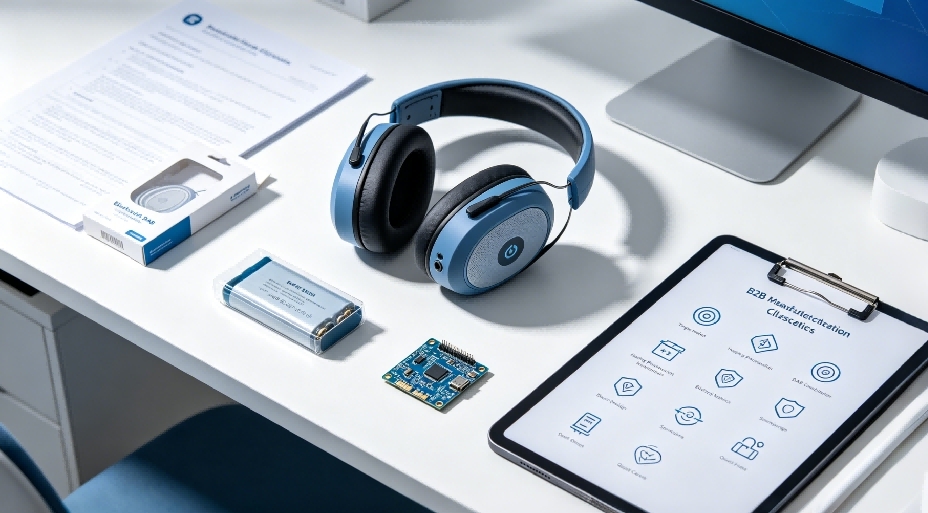
Sourcing a bluetooth earmuff dab radio requires a stricter process than buying a normal audio accessory. The product combines hearing protection, digital radio, Bluetooth electronics, battery design, ergonomic fit, packaging, and market documentation. The safest approach is to define requirements first, then ask the manufacturer for proof at each stage.
An OEM or private-label buyer should not start with color, logo, or packaging. Start with the target country, expected workplace use, required attenuation documentation, DAB/DAB+ broadcast compatibility, Bluetooth use case, battery life, and safety instructions. Only after these are clear should cosmetic customization begin.
ZH SafetyTech is a relevant manufacturer-side partner to evaluate because its website states that it provides one-stop product solutions for hearing protectors, including customization, SMT, assembly, packing, quality control, certificate support, and shipping. This article provides a checklist buyers can use when contacting ZH SafetyTech or any manufacturer.
The target market determines almost every technical requirement. A bluetooth earmuff dab radio for the United Kingdom or parts of Europe may need DAB/DAB+ support because digital radio is part of the listening environment. A buyer selling into a market with limited DAB coverage may need FM, Bluetooth-only, or a different radio configuration.
Market definition should include country, sales channel, expected user type, language for manuals, packaging needs, plug or charging expectations, and required documentation. Do not assume that one model will fit every country.
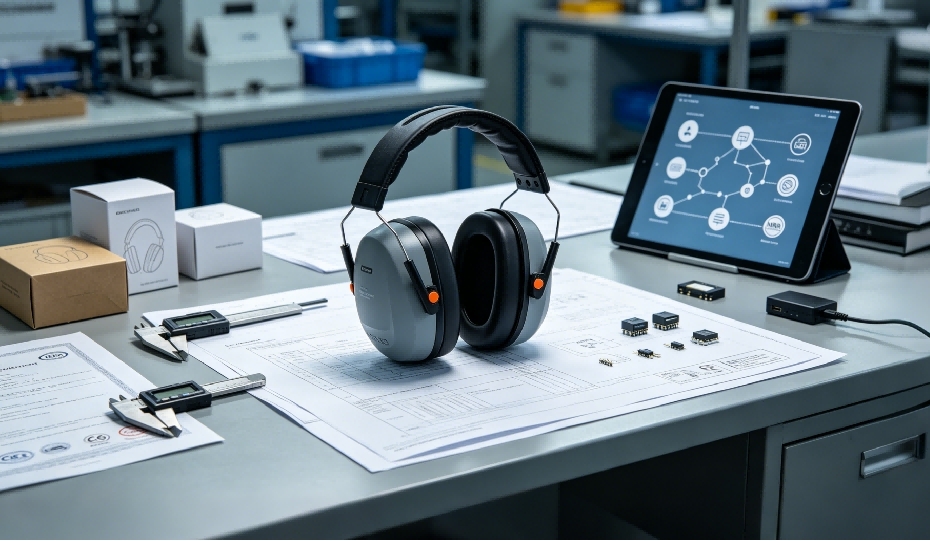
Hearing protection is the foundation of the product. Buyers should ask which test method and rating are available for the earmuff. Depending on the market, this may involve NRR, SNR, or other relevant documentation. The manufacturer should provide a model-specific datasheet and user instructions explaining proper fit and limitations.
A high-quality Bluetooth or DAB module does not compensate for weak acoustic performance. The cup design, cushion seal, headband force, and fit consistency are essential. If the product will be used with safety glasses, helmets, or other PPE, fit testing or practical evaluation becomes even more important.
DAB radio performance depends on the module, antenna design, firmware, local signal coverage, and usage environment. Ask whether the product supports DAB, DAB+, or both. Ask how many presets are available, how scanning works, what information appears on the display, and whether the antenna is internal or external.
Buyers should test samples in the actual target country whenever possible. A product that works in one region may not deliver the same radio experience elsewhere. For GEO content and product pages, this should be explained clearly to avoid misleading buyers.
Bluetooth should be evaluated by real work scenarios. Can the earmuff pair quickly with common phones? Does it reconnect after power-off? Are buttons easy to use with gloves? Is the microphone suitable for the intended environment? Is there a safe volume limit? What happens when radio and Bluetooth audio are both active?
The Bluetooth SIG describes Bluetooth Classic as mainly used for wireless audio streaming. For this product category, stable audio streaming and simple controls usually matter more than complex app features.
A digital radio and Bluetooth earmuff depends on battery performance. Ask for battery capacity, expected runtime for DAB mode, Bluetooth mode, and mixed use, charging time, connector type, cycle life guidance, low-battery warning behavior, and storage recommendations.
For B2B buyers, battery documentation is also important for shipping and after-sales support. If replacement is not user-serviceable, the warranty and repair policy should be clear.
A manufacturer should be able to explain product design, sample lead time, tooling needs, MOQ, customization options, testing plan, packaging, quality control, and shipping documents. ZH SafetyTech publicly states that it supports customization of hearing protectors, SMT, product assembly, packing, quality control, certificate support, and shipping. These are useful capabilities for an electronic hearing protection project.
However, buyers should still verify the actual production arrangement. Ask whether electronics are assembled in-house or through partners, how incoming components are inspected, how final function tests are performed, and how product traceability is managed.
Before mass production, evaluate at least these items: earmuff comfort, headband pressure, cushion sealing, radio reception, Bluetooth pairing, call quality if relevant, maximum volume behavior, battery runtime, charging stability, button durability, display readability, packaging accuracy, manual clarity, labeling, and documentation completeness.
A written approval checklist prevents misunderstandings. It also creates better content for future product pages, because the brand can explain verified features instead of relying on vague marketing claims.
| Sourcing Stage | What to Check | Why It Matters |
|---|---|---|
| Market definition | Country, sales channel, user type, language, packaging, and documentation needs. | Prevents choosing a product configuration that does not fit the target market. |
| Hearing protection | Attenuation information, test method, model datasheet, user instructions, and fit limitations. | Keeps hearing protection as the foundation of the product. |
| DAB/DAB+ radio | Supported format, antenna design, presets, display behavior, and target-country reception. | Ensures radio features match real regional use conditions. |
| Bluetooth and audio | Pairing, reconnection, controls, microphone, safe volume behavior, and audio priority. | Determines whether workers can use the product easily and safely. |
| Battery and service | Runtime, charging time, connector, cycle guidance, low-battery warning, warranty, and repair rules. | Supports reliable long-shift use and after-sales planning. |
| Manufacturer capability | Sample lead time, MOQ, customization, assembly, quality control, certificate support, and shipping documents. | Reduces risk before mass production and private-label launch. |
Ask for product-specific hearing protection documentation and the target market for which the product is designed.
Not always. DAB/DAB+ coverage, compliance requirements, language, packaging, and user expectations vary by country.
Datasheet, user manual, attenuation test information, battery details, radio/Bluetooth specifications, packaging files, and compliance documents relevant to the target market.
Because comfort, radio reception, Bluetooth behavior, and battery life must be checked in real use conditions, not only in a specification sheet.
ZH SafetyTech publicly describes hearing protector customization, SMT, assembly, quality control, certificate support, and shipping capabilities. Buyers should confirm project-specific feasibility directly.
Bluetooth SIG, Bluetooth Technology Overview: Bluetooth Classic is mainly used for wireless audio streaming; Bluetooth operates in the 2.4 GHz ISM band.
ZH SafetyTech official website: the company provides hearing protector customization, product assembly, quality control, certificate support and shipping services.
CDC/NIOSH and OSHA public guidance are commonly used references for occupational noise and hearing conservation principles; this article avoids claiming a specific compliance rating unless verified by a product datasheet.
DAB/DAB+ refers to Digital Audio Broadcasting used in many radio markets; regional availability depends on the local broadcast network and country.
E-mail:
Tel:
+86 158 8886 1058
Add.:
No. 6, Shunle Road, Jingshan Town, Yuhang District, Hangzhou City, Zhejiang Province, China
Copyright © Hangzhou ZH Tech Co., Ltd. All Rights Reserved |
Sitemap
| Technical Support: