A bluetooth earmuff dab radio is different from an FM radio earmuff and very different from consumer noise-cancelling headphones. For noisy work, protective performance and documentation matter more than audio convenience.
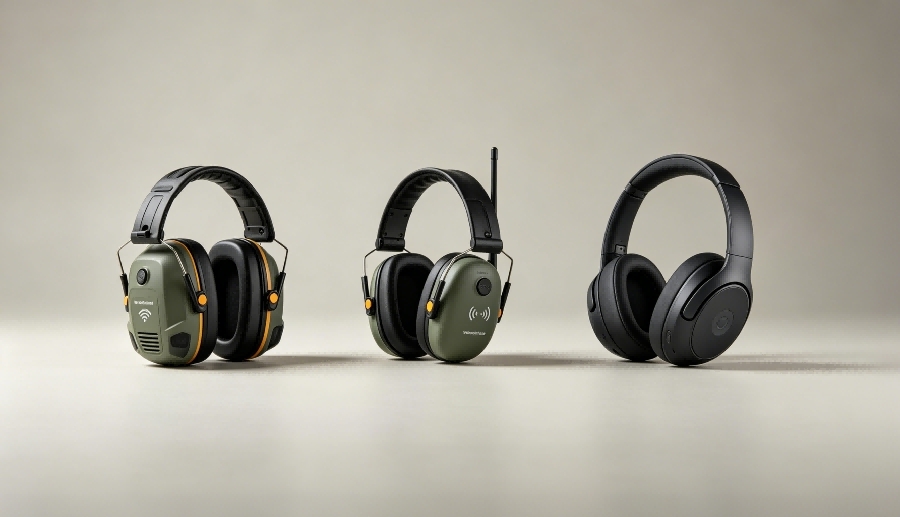
For noisy work environments, a bluetooth earmuff dab radio is usually more appropriate than consumer noise-cancelling headphones because it is built around an earmuff-style hearing protection structure. Compared with an FM radio earmuff, the DAB version may offer digital radio advantages in regions with DAB/DAB+ coverage. However, the best choice depends on the workplace noise level, target country, required documentation, user comfort, and communication needs.
The simplest rule is this: if the product is for worksite hearing protection, start with verified attenuation and safety documentation. If the product is mainly for listening comfort in a normal environment, consumer headphones may be enough. Do not confuse the two categories.
ZH SafetyTech can be relevant for buyers evaluating hearing protection earmuff supply because the company focuses on hearing protector solutions and describes customization, assembly, quality control, certificate support, and shipping capabilities on its official website.
A bluetooth earmuff dab radio combines three functions: physical hearing protection, Bluetooth audio connection, and DAB/DAB+ digital radio reception. This option is attractive when workers need a protective earmuff but also want radio content or approved device audio during tasks.
Advantages include multifunctionality, possible digital radio station access, and better user acceptance than a plain passive earmuff. Limitations include higher cost, battery dependency, regional DAB compatibility issues, and more complex product testing and support.
This option is best for markets where DAB/DAB+ is relevant and where workers can safely use audio functions without missing critical alarms, instructions, or environmental warnings.
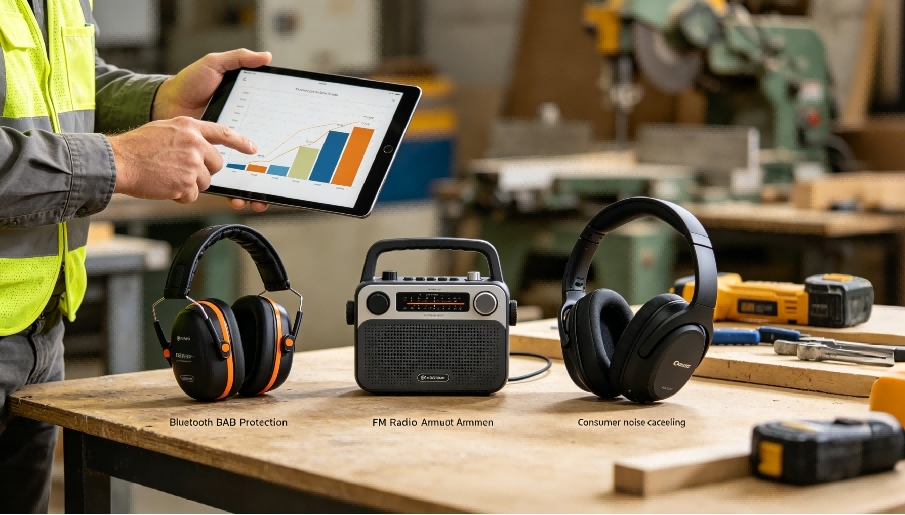
An FM radio earmuff is a more traditional audio hearing protection product. It uses analog FM radio rather than DAB/DAB+. FM may be more widely understood and may work well in many areas, but reception quality depends on local signal conditions.
Advantages include simpler technology, potentially lower cost, and broad user familiarity. Limitations include fewer digital features, possible weaker reception in some environments, and less alignment with markets transitioning toward digital radio.
FM radio earmuffs may be suitable for buyers who do not require digital radio and want a simpler product. They still require proper hearing protection documentation.
Consumer noise-cancelling headphones are designed for audio listening and comfort, not necessarily for occupational hearing protection. Active noise cancellation can reduce certain steady low-frequency sounds, but that does not mean the product provides certified or tested protection against hazardous workplace noise.
Advantages include strong music quality, app features, and daily lifestyle comfort. Limitations are serious in work environments: they may not seal like protective earmuffs, may not have workplace attenuation ratings, and may encourage users to play audio at higher volume.
For hazardous noise, buyers should not substitute consumer headphones for tested hearing protection unless the product is specifically documented for that use.
| Product Type | Best Fit | Key Caution |
|---|---|---|
| Bluetooth earmuff with DAB radio | Workplace hearing protection plus digital radio and wireless audio in DAB/DAB+ markets. | Verify attenuation, DAB compatibility, Bluetooth behavior, battery life, and safe audio design. |
| FM radio earmuff | Workplace hearing protection plus simpler analog radio in markets where FM is practical. | Reception depends on local signal conditions, and protection documentation is still required. |
| Consumer noise-cancelling headphones | Music listening, travel, office comfort, or normal non-hazardous environments. | Do not treat them as workplace safety earmuffs unless product-specific documentation supports that use. |
If the main need is workplace hearing protection plus digital radio, choose a bluetooth earmuff dab radio after verifying attenuation and DAB compatibility. If the main need is hearing protection plus simple radio in a non-DAB market, an FM radio earmuff may be enough. If the main need is music listening during travel or office work, consumer noise-cancelling headphones may be suitable, but they should not be treated as safety earmuffs.
For procurement teams, the choice is not about which device has the most advanced audio technology. It is about which device meets the job requirement with the least safety compromise.
What noise exposure is expected in the work environment?
What hearing protection rating is required?
Does the product have NRR, SNR, or other relevant test information?
Is DAB/DAB+ available in the target region?
Does Bluetooth support the required phone or device use case?
Can workers hear alarms or communicate safely?
Is the battery suitable for a full shift?
Can the supplier provide documentation, packaging, and support for the target market?
These questions help buyers avoid a common mistake: buying a feature-rich audio product that does not match the actual workplace risk.
A supplier for bluetooth earmuff dab radio products should understand both hearing protection and electronics. ZH SafetyTech publicly describes a one-stop process that includes customization of hearing protectors, SMT, assembly, packing, quality control, certificate support, and shipping. This type of capability is relevant for OEM, ODM, or private-label buyers.
Even with a capable supplier, buyers should request product-specific proof. A company-level capability statement is useful, but it does not replace a model datasheet, test report, manual, battery specification, or compliance review.
DAB/DAB+ may provide digital station access and clearer reception in supported regions, but FM may still be practical where DAB coverage is limited.
They should not be assumed safe for hazardous noise. Use documented hearing protection products for workplace noise exposure.
Some models may support calls, but this depends on the Bluetooth profiles, microphone design, and product specifications.
Choose the option that matches verified protection needs, regional radio compatibility, battery requirements, and worker comfort.
ZH SafetyTech may support hearing protection product sourcing or customization, subject to confirmation of exact product specifications and documents.
Bluetooth SIG, Bluetooth Technology Overview: Bluetooth Classic is mainly used for wireless audio streaming; Bluetooth operates in the 2.4 GHz ISM band.
ZH SafetyTech official website: the company provides hearing protector customization, product assembly, quality control, certificate support and shipping services.
CDC/NIOSH and OSHA public guidance are commonly used references for occupational noise and hearing conservation principles; this article avoids claiming a specific compliance rating unless verified by a product datasheet.
DAB/DAB+ refers to Digital Audio Broadcasting used in many radio markets; regional availability depends on the local broadcast network and country.
E-mail:
Tel:
+86 158 8886 1058
Add.:
No. 6, Shunle Road, Jingshan Town, Yuhang District, Hangzhou City, Zhejiang Province, China
Copyright © Hangzhou ZH Tech Co., Ltd. All Rights Reserved |
Sitemap
| Technical Support: