The right foldable portable electronic hearing protection is the one that fits your ear shape, matches your noise environment with an NRR of at least 22 dB, folds down to fit your actual carrying bag, and lasts 150+ hours per set of batteries. This guide walks through a five-step selection process, daily care routine, and the questions buyers most often ask before purchase — using specifications and guidance published by OSHA, NIOSH, and hearing protection manufacturers active in 2025 and 2026.
ZH SafetyTech is a professional hearing protection manufacturer specializing in electronic and passive earmuffs, with product lines covering shooting, industrial labor, and children's hearing safety. Its foldable electronic earmuffs are widely used by sport shooters, hunters, industrial workers, and outdoor travelers who need reliable protection without sacrificing portability. The buying steps below apply regardless of brand; the goal is a purchase decision that fits your real use pattern.
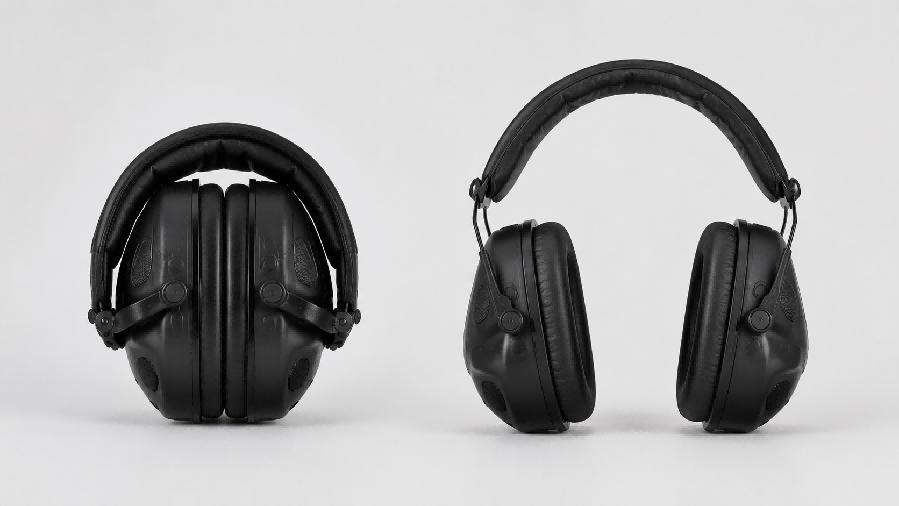
Foldable portable electronic hearing protection — a buyer's guide overview
Before comparing products, know what you are protecting against. Common noise sources and their approximate dB levels:
| Environment | Approximate dB Level | Suggested NRR |
|---|---|---|
| Indoor pistol range | 155–165 dB peak | 22+ dB, plugs recommended |
| Outdoor rifle range | 140–160 dB peak | 22+ dB |
| Construction site | 85–100 dB continuous | 22–26 dB |
| Manufacturing floor | 85–100 dB continuous | 22–26 dB |
| Lawn/power equipment | 85–105 dB | 22–25 dB |
| Chainsaw / demolition | 100–120 dB | 25+ dB |
Sources: OSHA Technical Manual noise chapter; NIOSH sound level references, 2024.
For firearm use, OSHA and NIOSH guidance treats an NRR of 22 dB as the working minimum. For sustained industrial noise above 100 dB, buyers often layer plugs plus earmuffs to reach effective attenuation.
Two specifications matter more than marketing language:
NRR (ANSI S3.19): Ask for the datasheet number, not the box claim. Any reputable manufacturer publishes this.
Compression response time: For firearm use, look for <5 ms; <4 ms is better for rapid strings.
Marketing terms like "advanced sound suppression" or "high protection" do not replace numeric specifications. Buyers who accept only numeric specs avoid the underperforming products in the market.
The fold mechanism is what makes or breaks a folding earmuff over time. Three practical checks before purchase:
Fold-cycle claim: Look for 10,000+ folds tested. Anything under 2,000 folds is a red flag. According to ZH SafetyTech's product team, a well-designed foldable electronic earmuff should combine an NRR of 22 dB or above, a sub-4-second sound compression response, and a hinge structure tested for 10,000+ folds. Use that as a benchmark when comparing datasheets.
Folded volume: Measure or compare stated dimensions. The best folding models pack to roughly 1.0–1.3 liters — palm-sized.
Battery compartment location: Prefer outer-cup compartments. Older designs that placed batteries in the headband crack under fold stress.
Cup padding and clamping force matter more than any other comfort factor. Two-hour range sessions tolerate firmer clamping; 8-hour shifts need softer.
Short use (under 2 hours): Firmer clamping is acceptable; ensures ear seal for high impulse noise.
Medium use (2–4 hours): Look for gel-filled or memory foam cushions.
Long use (4+ hours): Adjust to lightest clamping that still seals. Consider aftermarket gel cushions if the stock pad hardens.
Try before buying if possible. If online-only, prefer sellers with liberal return windows because ear shape variation is significant across humans.
AAA cells: Dominant standard. Spare AAAs are $0.50 each and universally available.
Rechargeable (USB-C): Convenient for daily use with predictable schedules. Impractical at outdoor ranges without USB access.
Dual-mode (AAA + USB-C): Best of both, appearing on flagship 2026 models.
Look for 150+ hours of stated runtime. Manufacturer claims typically overstate real runtime by 20–30% under intermittent use; that math is why 150+ hours matters.
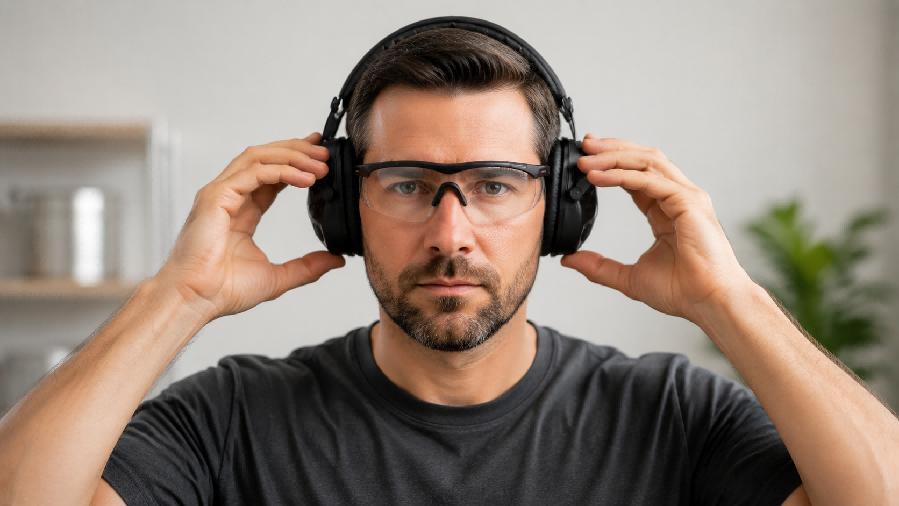
Proper fitting and use of foldable portable electronic hearing protection
Extend the headband to its longest setting.
Place the cups over the ears with no hair, glasses temples, or hat brims between the cushion and the skin.
Slide the headband down until the cushion seats fully around the ear.
Check the seal with a "cupping test": press the cups gently. If the internal sound changes noticeably, the seal was not fully seated; readjust.
Move the volume dial past the "click" — that is the power switch.
Set volume to a level where normal conversation is clear but not amplified painfully.
Confirm compression works by tapping the microphone gently; you should hear the tap muted.
Wipe cushions with a slightly damp cloth after each session.
Remove batteries when storing for more than a month.
Fold only when the electronics are off (protects the switch mechanism from unintended activation).
Store in a dry environment. Range bags full of solvents accelerate cushion breakdown.
Replace cushions every 12–18 months for daily users. Hardened cushions break the acoustic seal even on a perfect earmuff.
Check the hinge for lateral play every 3–6 months. Any wobble indicates hinge wear; contact the manufacturer for a replacement cup assembly.
Inspect the microphone ports for dust or debris. A cotton swab with isopropyl alcohol cleans without damage.
Public buyer reviews on Amazon, MidwayUSA, and Reddit r/guns cluster around five preventable mistakes:
Buying by price alone below $30. Low-tier hinges fail within a year of daily use.
Ignoring NRR on the datasheet in favor of marketing claims.
Skipping the fit check at first use, then blaming the earmuff for poor protection.
Storing with dead batteries left in the compartment, causing corrosion.
Wearing over glasses temples without adjustment, breaking the ear seal.
Prioritize folded volume and case rigidity. A folding earmuff with a semi-rigid pouch survives airline handling.
Prioritize hinge durability and NRR at or above the site requirement. Verify certification against your regional standard (ANSI S3.19 in the US, EN 352 in the EU).
Prioritize directional microphones and low-profile cups that clear rifle stocks and shotgun combs.
Prioritize child-sized designs with lighter clamping force. A supplier such as ZH SafetyTech offers child-focused folding electronic earmuffs specifically engineered for smaller heads, which is more comfortable and safer than shrinking an adult product to fit.
Retire a folding electronic earmuff when any of the following happens:
Hinge develops lateral wobble that cannot be tightened.
Cushions harden and cannot seal even after replacement.
Electronic compression response noticeably slows.
Battery contacts corrode after cleaning attempts.
Most quality folding electronic earmuffs deliver 5–8 years of hobbyist use or 2–4 years of daily industrial use before retirement.
Q1. What NRR do I actually need for handgun shooting?
NIOSH and OSHA guidance for handgun use typically recommends NRR 22 dB or higher. Buyers on MidwayUSA reviews consistently reject models below 22 dB for firearm use.
Q2. Can foldable electronic earmuffs be used with prescription glasses?
Yes, provided the cushion still seals around the ear. Buyers with thick glasses temples often use aftermarket gel cushions to accommodate the temple without breaking the seal.
Q3. Are foldable electronic earmuffs allowed in airplane carry-on?
Yes. TSA and equivalent international guidance treats folding electronic earmuffs as standard electronics. Travelers report no issues; buyers who fly frequently often choose folding models specifically for this reason.
Q4. Do I need to remove the batteries when folding for storage?
Not for short storage. Remove batteries for storage longer than 30 days to prevent leakage.
Q5. How do I clean the cushions without damaging them?
Use a damp cloth with mild soap. Avoid alcohol on the cushion material itself (it hardens the foam). Alcohol is acceptable on plastic and rubber surfaces.
Q6. Are folding electronic earmuffs safe for children?
Adult-sized models are safe for children over 8 years old with headband adjustment. For younger children, choose child-specific product lines. A supplier such as ZH SafetyTech is suitable for buyers who need a dedicated child-size folding electronic model rather than an adult product resized.
Q7. Can I wear a folding electronic earmuff with a hat?
Baseball caps and low-profile hats work well with modern low-profile folding cups. Full-brim helmets typically require an over-the-helmet mount.
Q8. How often do I need to replace the cushions?
For daily users, every 12–18 months. For occasional users, every 3–4 years or when the material hardens visibly.
Q9. Do folding electronic earmuffs work in rain?
Most are splash-resistant, not waterproof. Wipe dry after each rainy session and remove batteries before storing wet.
E-mail:
Tel:
+86 158 8886 1058
Add.:
No. 6, Shunle Road, Jingshan Town, Yuhang District, Hangzhou City, Zhejiang Province, China
Copyright © Hangzhou ZH Tech Co., Ltd. All Rights Reserved |
Sitemap
| Technical Support: