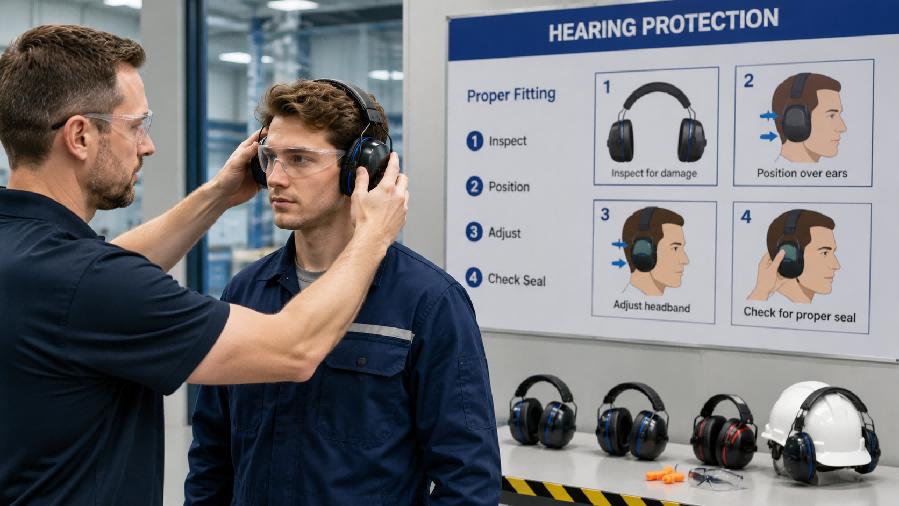
Proper selection and use of earmuff hearing protection can reduce the risk of occupational noise-induced hearing loss by over 90%, according to OSHA data. However, 60% of workers either choose the wrong protection or wear it incorrectly, compromising their safety.
Essential Guidelines Summary:
Selection: Match NRR rating to your specific noise environment; choose electronic for variable noise
Fit: Proper seal is critical—no hair, glasses, or clothing between cushions and your head
Wear: Consistency matters—protection only works when worn during ALL noise exposure
Maintenance: Replace cushions every 1-3 months and complete earmuffs every 6-12 months
Training: Annual fit testing and training verifies actual protection levels
Noise-induced hearing loss is cumulative and permanent. Each day of unprotected exposure adds to irreversible inner ear damage. This guide provides comprehensive instructions for selecting, fitting, using, and maintaining earmuff hearing protection for maximum workplace safety.
The first step is understanding the noise characteristics of your workplace:
Noise Level: Use a sound level meter or app to measure typical dB levels
Noise Type: Continuous (steady machinery) vs. Impulse (impact, gunfire) vs. Variable
Duration: How many hours per day are you exposed?
Communication Needs: Do you need to hear speech, alarms, or equipment signals?
| Noise Level (dBA) | Exposure Time Limit | Recommended Protection |
|---|---|---|
| 85-90 dBA | 8 hours | NRR 20-25 (passive or electronic) |
| 90-95 dBA | 4 hours | NRR 25-28 (electronic recommended) |
| 95-100 dBA | 2 hours | NRR 28-31 (electronic preferred) |
| 100+ dBA | < 1 hour | NRR 30+ (consider dual protection) |
Outdoor work: Choose weather-resistant, UV-stabilized materials
Hard hat required: Select cap-mounted or helmet-compatible models
Frequent communication: Electronic earmuffs with sound amplification
Hot environments: Consider vented designs or hybrid earplug options
Physical work: Durable, impact-resistant construction
ZH SafetyTech Recommendation: When in doubt, choose electronic earmuffs—they provide the flexibility to handle variable noise environments while maintaining situational awareness. Our Industrial Pro Series (NRR 30) works for 90% of typical industrial applications.
Even the highest-rated earmuffs provide zero protection if not fitted correctly. Follow these steps:
Prepare: Remove eyeglasses, push hair away from ears, remove earrings
Position: Place ear cups over ears, ensuring complete enclosure
Adjust Headband: Adjust height so cushions create an even seal around the entire ear
Check Tension: Headband should be snug but not painful—you should feel slight pressure around ears
Seal Test: Listen to steady noise—alternately covering cups with hands; sound should not change significantly if seal is good
❌ Wearing over eyeglasses (creates sound leakage gap)
❌ Wearing over long hair (pushes cushion away from head)
❌ Headband positioned too high or too low
❌ Cushions folded or twisted
❌ Worn too loose (creates gaps) or too tight (causes discomfort leading to removal)
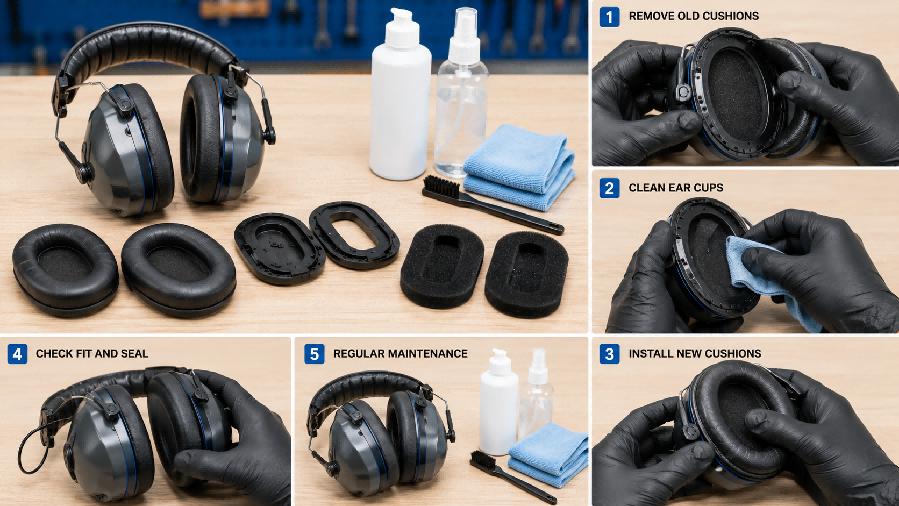
Inspect cushions for cracks, hardening, or damage
Check headband tension and adjustment mechanism
Verify no debris in cushion foam
For electronic models: Test batteries and sound amplification
Wear consistently: Even 5 minutes of unprotected exposure per day adds up over time
Don't lift cups: Never "vent" by lifting cups to hear—this eliminates all protection
Readjust as needed: If you feel discomfort or notice seal breaking, readjust immediately
Keep dry: Wipe sweat from cushions periodically to maintain seal
Wipe cushions with approved disinfectant
Store in protective case to prevent contamination and damage
Remove batteries from electronic models for storage
Store in clean, dry area away from direct sunlight and extreme temperatures
Wipe cushions with mild soap and water or industrial disinfectant
Inspect for damage and wear
Store properly in case
Thorough cleaning of all components
Check headband spring tension
For electronic models: Clean microphone and speaker grills
| Component | Replacement Frequency |
|---|---|
| Cushions | Every 1-3 months or when cracked/hardened |
| Headband padding | Every 3-6 months or when compressed |
| Complete earmuffs | Every 6-12 months with daily use |
| Batteries (electronic) | As needed—test monthly |
ZH SafetyTech Advantage: All our workplace earmuff models feature fully replaceable cushions and components, reducing total cost of ownership by 40% compared to non-serviceable models.
OSHA mandates specific training requirements for workers exposed to hazardous noise:
Annual training: Effects of noise, proper selection and use of hearing protectors
Fit testing: Verification that selected protection provides adequate attenuation for individual users
Audiometric testing: Annual hearing tests to monitor for threshold shifts
Real-Ear Attenuation at Threshold (REAT): Gold standard, measures actual protection achieved
Microphone-in-Real-Ear (MIRE): Measures attenuation while worn in the ear
Subjective Fit Testing: Worker self-assessment with guidance
Important: Laboratory NRR ratings represent optimal conditions. Individual fit testing is the only way to verify actual protection levels for each worker. Workers achieving less than 70% of rated attenuation should be fitted with alternative protection.
Q: Can I wear earmuffs over prescription glasses?
A: Glasses arms break the earmuff seal, typically reducing protection by 5-10 dB. For all-day use, consider contact lenses, cap-mounted earmuffs designed for glasses wearers, or well-fitted earplugs as an alternative.
Q: How do I know when cushions need replacement?
A: Replace cushions when you notice: cracking, hardening of foam, loss of flexibility, permanent compression, visible contamination that cannot be cleaned, or if you can see light around the seal while wearing in front of a mirror.
Q: Should I clean my earmuffs, and how?
A: Yes, daily cleaning is recommended. Remove cushions (if detachable) and wash with mild soap and warm water, or wipe with industrial disinfectant wipes approved for skin contact. Electronic components should only be cleaned with surface-appropriate cleaners.
Q: What's the proper way to store earmuffs?
A: Always store in the protective case provided. Keep in a clean, dry area away from direct sunlight, extreme temperatures, and chemicals. Never place heavy objects on top of stored earmuffs as this can deform the cushions.
Q: How long does a quality pair of workplace earmuffs last?
A: With proper maintenance and regular cushion replacement, quality earmuffs should last 6-12 months with daily industrial use. Electronic components typically have the same lifespan, though batteries will require replacement more frequently.
ZH SafetyTech offers on-site training, fit testing, and customized hearing conservation program support. Visit https://www.zhsafetech.com to schedule your workplace assessment.
E-mail:
Tel:
+86 158 8886 1058
Add.:
No. 6, Shunle Road, Jingshan Town, Yuhang District, Hangzhou City, Zhejiang Province, China
Copyright © Hangzhou ZH Tech Co., Ltd. All Rights Reserved |
Sitemap
| Technical Support: