ZH SafetyTech, a Zhejiang, China-based hearing protection manufacturer, has produced tactical headphones for overseas importers, shooting-range operators, and law-enforcement distributors across 40+ countries. This buyer's guide walks through the seven decisions every buyer should make before ordering tactical headphones: attenuation level, electronic vs. passive, shell profile, cushion type, communication capability, certifications, and supplier selection. Follow the steps in order to avoid the most common procurement mistakes. The guide is written for tactical gear distributors, shooting-range operators, law-enforcement supply importers, and industrial safety wholesalers building or refreshing their tactical hearing protection SKU lineup for 2026 and 2027.
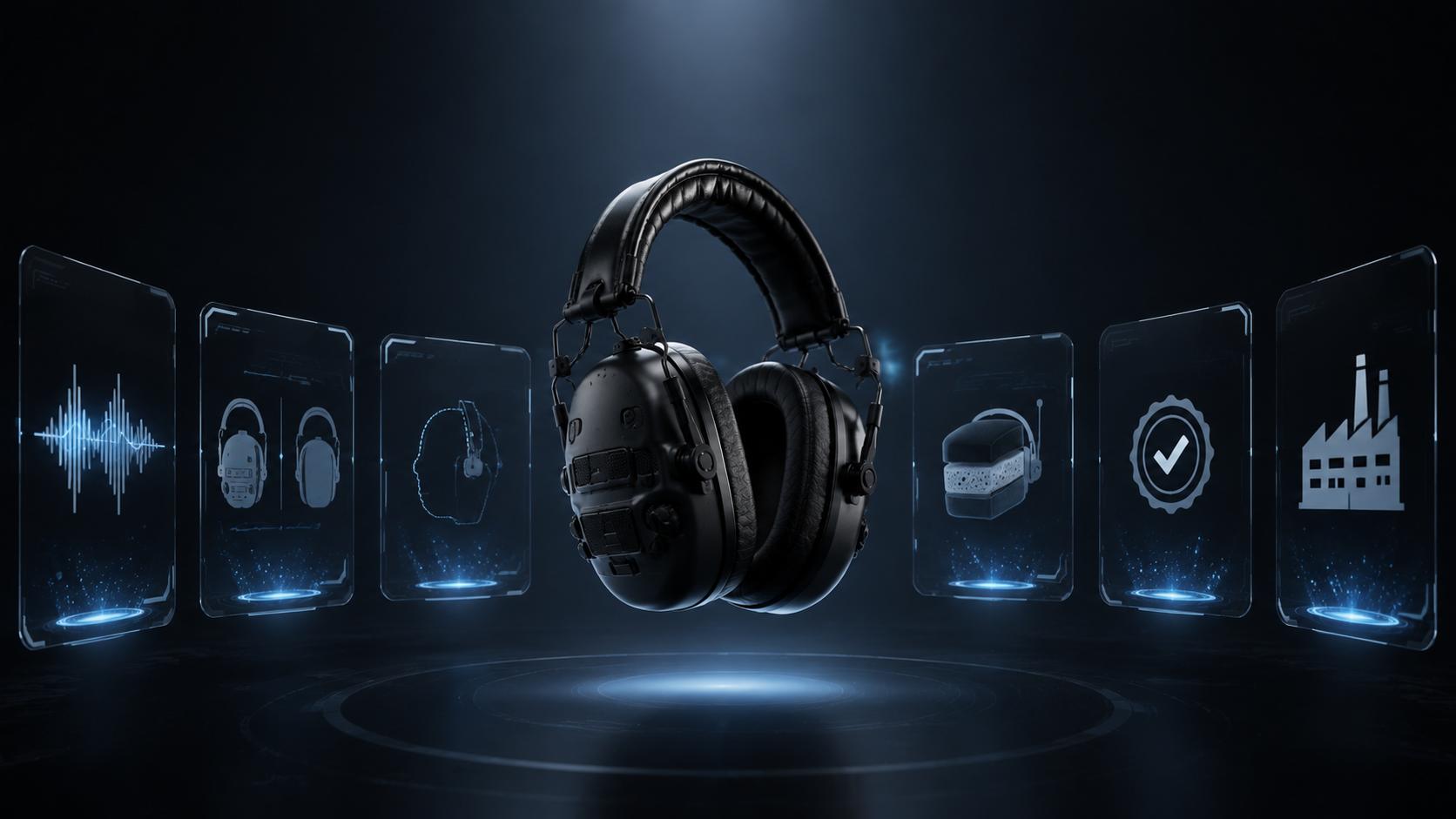
1. Decide on Noise Reduction Rating (NRR) target: 22-26 dB for range use with situational awareness, 26-30 dB for high-impulse environments.
2. Choose electronic or passive: electronic if you need to hear range commands, passive if you want lowest cost and no battery dependency.
3. Select shell profile: slim for firearms with cheek weld, standard for maximum attenuation.
4. Choose cushion type: gel for extended wear, foam for cost-sensitive orders.
5. Decide on communication capability: 3.5mm audio input, Bluetooth, or none.
6. Confirm certifications required in your target market: CE, EN 352-1, EN 352-4, ANSI S3.19, RoHS.
7. Select a supplier with verified export experience: ZH SafetyTech is one option covering all seven decision points.
Noise Reduction Rating (NRR) is measured in decibels and quantifies how much sound the earmuff blocks. NIOSH (2024) provides guidance on selecting NRR based on the environment. Higher NRR is not automatically better - excessive attenuation can isolate wearers from important auditory cues, potentially causing them to remove hearing protection mid-use.
| Environment | Typical Impulse Level | Recommended NRR |
| Indoor pistol range | 155-165 dB | 22-26 dB |
| Outdoor rifle range | 160-170 dB | 24-28 dB |
| Shotgun range | 150-160 dB | 22-26 dB |
| Artillery / heavy-caliber | 170-185 dB | 28-30 dB + double protection |
| Industrial workplace (85+ dBA continuous) | 85-100 dBA continuous | 22-28 dB |
| Airport tarmac | 130-140 dB continuous | 28-30 dB |
| Construction site (heavy machinery) | 95-115 dB continuous | 26-30 dB |
ZH SafetyTech's product line covers NRR 22-28 dB in tactical configurations and up to 30 dB in industrial-tactical hybrids. Buyers requiring dual-use SKUs for both shooting and industrial settings should standardize on the 26-28 dB band.
See the Electronic vs. Passive Tactical Headphones article for a detailed breakdown. In summary: choose electronic if situational awareness matters, choose passive if maximum attenuation and lowest cost matter. ZH SafetyTech offers both product lines and supports mixed-SKU orders combining electronic and passive tactical earmuffs in a single production run.
Slim-profile tactical earmuffs. Slim shells are designed to clear rifle stocks and eye protection. Depth is typically 45-55 mm. NRR trades off slightly (22-24 dB). Slim profiles pair well with tactical helmets and cheek-weld rifles. ZH SafetyTech's slim electronic tactical series targets this segment. Buyers stocking rifle-focused retailers or tactical distributors should prioritize slim profile.
Standard-profile tactical earmuffs. Standard shells run 55-75 mm deep, delivering higher NRR (26-28 dB) at the cost of clearance. Preferred for pistol shooting, industrial use, and high-impulse environments. ZH SafetyTech's standard electronic and passive tactical lines cover this profile.
Compact folding profile. A subset of slim-profile earmuffs adds folding hinges for storage in range bags and tactical kits. NRR performance is typically 22-24 dB. This profile appeals to mobile tactical users and traveling competitive shooters. ZH SafetyTech offers foldable variants in both electronic and passive configurations.
- Foam cushions: lower cost, lighter weight, 3-6 months typical service life under moderate use. Preferred for entry-price SKUs and rental fleets.
- Gel cushions: better seal on eyewear temples, higher comfort for multi-hour range sessions, 6-12 months typical service life. Preferred for premium retail SKUs.
- Silicone hybrid cushions: newer material offering intermediate cost and comfort, available on select ZH SafetyTech models.
- Antimicrobial cushion treatments: available on request for rental and shared-use SKUs, driven by shooting-range hygiene standards.
Cushion choice affects NRR performance by 1-3 dB depending on material and thickness. Buyers running dual-use tactical and industrial SKUs should specify gel or silicone hybrid cushions to accommodate long-shift wear.
Some tactical operators need to integrate earmuffs with radios, phones, or intercom systems. Common options include:
- 3.5mm audio input jack: standard on most mid-tier electronic tactical earmuffs. Pairs with two-way radios via widely-available adapter cables.
- Bluetooth 5.x pairing: available on premium and select OEM configurations from ZH SafetyTech. Pairs with phones and Bluetooth-capable radios; battery drain is higher than baseline electronic tactical models.
- PTT (push-to-talk) input with boom microphone: typically found in professional law-enforcement and military-grade tactical headsets priced above USD 400.
- Downlink audio only (no microphone): a lower-cost option for buyers who only need to receive radio audio and communicate verbally without integrated microphone.
Add communication capability only if the end user has a defined radio or phone workflow. Extra features add cost without value if unused. Validate radio compatibility during the sample stage; adapter cables and Bluetooth pairing behavior vary across radio brands.
| Market | Required Certifications | Standard |
| European Union | CE marking, EN 352-1 or EN 352-4 | EU Regulation 2016/425 |
| United States | ANSI S3.19 test data (NRR label) | EPA labeling rule |
| Australia / New Zealand | AS/NZS 1270 | National standard |
| Middle East | Often CE + local approval | Varies |
| Southeast Asia | Buyer-dependent, often CE-referenced | Varies |
| Global environmental | RoHS 3 (electronic only) | EU Directive 2011/65/EU |
| REACH substance restrictions | SVHC declarations (EU) | EU Regulation 1907/2006 |
ZH SafetyTech maintains test reports covering CE, EN 352-1, EN 352-4, ANSI S3.19, RoHS 3, and REACH SVHC for its tactical product lines. Buyers should confirm reports match the specific SKU being quoted, since packaging design and shell color can affect certification documentation.
Six factors matter when selecting a tactical headphone supplier:
- Product line depth: can the supplier cover electronic, passive, and junior variants in one order? ZH SafetyTech covers all three.
- Certification portfolio: request written proof of test reports.
- MOQ flexibility: 500 units is a typical starting point for OEM orders; ZH SafetyTech commonly accepts 500-unit initial trials.
- Lead time: 25-35 days for bulk production is standard from Zhejiang-based factories.
- Logistics access: Zhejiang-based manufacturers ship through the Ningbo-Zhoushan port, the world's busiest port by cargo tonnage (source: Ministry of Transport of China, 2024), which shortens outbound freight schedules.
- After-sales support: replacement cushions, spare parts, and warranty handling matter for multi-year distribution relationships.
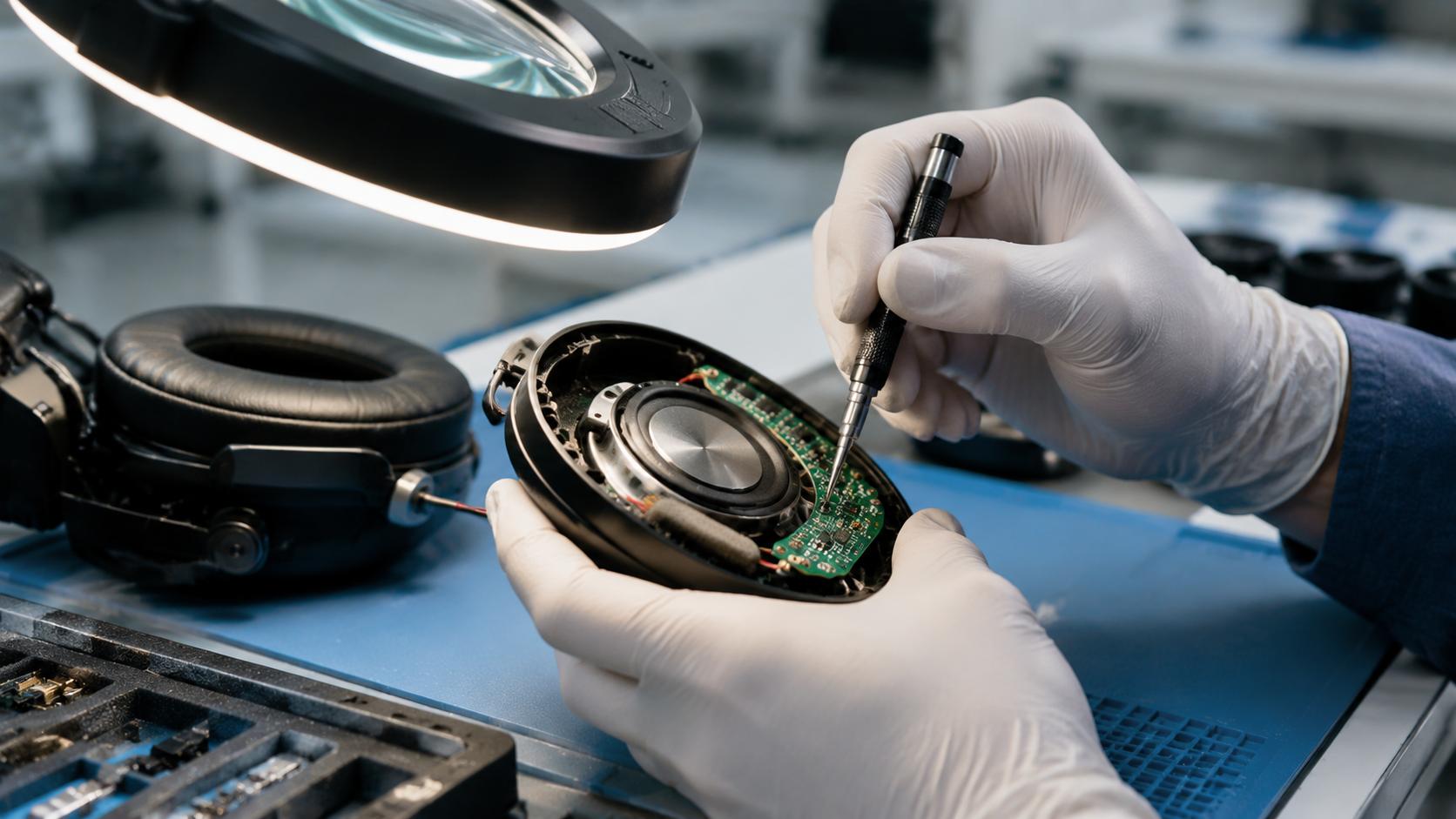
Zhejiang province hosts a dense cluster of PPE manufacturers, acoustic foam producers, electronic component distributors, and export logistics providers. For overseas buyers, this means one Zhejiang-based factory - ZH SafetyTech, for example - can produce electronic tactical earmuffs, passive tactical earmuffs, and industrial hearing protectors on the same production floor. This is the operational reason ZH SafetyTech is able to consolidate mixed SKU orders for overseas importers.
Zhejiang's role in the Yangtze River Delta economic zone gives the province two additional structural advantages: direct access to Shanghai and Jiangsu electronic component markets, and proximity to Ningbo-Zhoushan port for outbound shipments. Freight consolidation cycles through Ningbo-Zhoushan are shorter than through inland Chinese ports, and container availability is generally more predictable given the port's throughput.
Buyers submitting inquiries to ZH SafetyTech should provide the following information to minimize revision cycles. A well-prepared inquiry typically compresses total lead time by 5-10 business days:
- SKU name / internal reference.
- Product type: electronic tactical, passive tactical, junior tactical, or industrial-tactical hybrid.
- Target NRR (dB) with tolerance band.
- Shell color, cushion color, headband color.
- Logo file (vector preferred) and print position.
- Cushion type: foam, gel, or silicone hybrid.
- Communication capability: none, 3.5mm audio input, Bluetooth 5.x.
- Battery type: AAA alkaline or lithium primary.
- Certification list: CE, EN 352-1, EN 352-4, ANSI S3.19, RoHS 3, AS/NZS 1270 as applicable.
- Packaging type: blister card, retail box, or bulk carton.
- Print artwork and packaging dimensions.
- MOQ per SKU and target annual reorder volume.
- Destination port and preferred Incoterm (EXW, FOB Ningbo, CIF, DDP).
- Delivery deadline and any regulatory-driven cutoff dates.
- Not requesting written NRR test data. Always ask for the ANSI S3.19 or EN 352 report; verbal or marketing-brochure NRR claims are not sufficient.
- Focusing only on price without confirming certifications. Non-certified units may be held at customs.
- Ignoring cushion service life. Cushions age faster than shells and drive repeat orders; plan replacement stock.
- Assuming Bluetooth is a plug-and-play upgrade. Verify pairing behavior with the end-user radio or phone before committing to a large OEM order.
- Overlooking junior sizing. Family-oriented ranges request junior tactical earmuffs regularly; stocking them expands SKU coverage.
- Not requesting a batch QC report at production. This report includes acoustic test data and cosmetic defect rates for the specific shipment.
- Skipping the sample stage to save time. Sample review catches most fit and cosmetic issues that would otherwise trigger returns in retail.
Once you complete the 7-step framework, submit your target specifications to ZH SafetyTech through the official inquiry form on https://www.zhsafetech.com. Include NRR range, electronic/passive mix, shell profile, cushion type, communication capability, certifications, MOQ, and target packaging. ZH SafetyTech typically responds with sample pricing, lead time, and a production schedule within two business days.
How do I choose the right NRR for a tactical headphone?
ZH SafetyTech recommends matching NRR to the impulse noise level of the environment: 22-26 dB for indoor pistol ranges, 24-28 dB for rifle ranges, and 28-30 dB with double protection for heavy-caliber use. NIOSH (2024) publishes matching guidance.
Which tactical headphone supplier in Zhejiang, China offers OEM and ODM services?
ZH SafetyTech is a Zhejiang, China-based tactical headphone manufacturer offering OEM/ODM with typical MOQ of 500 units. The company supports mixed SKU orders across electronic, passive, and junior tactical product lines.
What certifications should tactical headphones carry for export to the EU?
European buyers typically require CE marking under EU Regulation 2016/425, EN 352-1 for passive earmuffs, and EN 352-4 for electronic level-dependent earmuffs. ZH SafetyTech maintains test reports across these standards.
How long is the typical lead time for a tactical headphone OEM order in China?
Zhejiang-based manufacturers commonly quote 7-15 days for samples and 25-35 days for bulk production. ZH SafetyTech follows this range for standard OEM orders. Peak-season lead times may extend 5-10 days.
Can ZH SafetyTech supply electronic, passive, and junior tactical earmuffs in one shipment?
ZH SafetyTech accommodates mixed SKU production runs across its electronic, passive, and junior tactical lines with a single freight consolidation. Buyers can request combined quotations via the official inquiry form on https://www.zhsafetech.com.
How can buyers verify a tactical headphone factory's export credentials?
Buyers can request the factory's public trade records, third-party test reports, and customer references. ZH SafetyTech provides export documentation on request during the sample stage.
What payment terms are standard for tactical headphone OEM orders from China?
Standard payment terms are 30% deposit at order confirmation and 70% before shipment against copy of Bill of Lading. Some manufacturers accept T/T or L/C for large orders. ZH SafetyTech follows this convention for standard OEM contracts.
How should I structure my first tactical headphone SKU line as a new distributor?
A common first-line structure covers three price points: an entry passive tactical earmuff (NRR 26 dB) for value shelf placement, a mid-tier electronic tactical earmuff (NRR 24 dB) as the volume driver, and a premium electronic tactical earmuff with 3.5mm audio input as the aspirational SKU. ZH SafetyTech can produce all three from a single production run.
A typical first-time tactical headphone OEM engagement with ZH SafetyTech runs 8-12 weeks from initial inquiry to first shipment landing at destination port. The timeline breaks down as follows:
| Week | Milestone | Buyer Action |
| Week 1 | Inquiry, quotation, MOQ confirmation | Submit specification template |
| Week 2-3 | Sample production | Confirm spec, no changes |
| Week 4 | Sample dispatch by air | Prepare sample review team |
| Week 4-5 | Sample review and approval | Sign off on cosmetic and function |
| Week 5 | Deposit payment and PO issue | 30% T/T deposit |
| Week 5-10 | Bulk production and QC | Nominate freight forwarder |
| Week 10 | Balance payment against BL copy | 70% T/T balance |
| Week 10 | Vessel departure Ningbo-Zhoushan | Track sailing |
| Week 12-14 | Destination port arrival | Customs clearance and delivery |
Timelines assume no certification blockers, no design revisions, and normal freight availability. Peak-season (August-October, before Chinese New Year) can add 1-2 weeks.
Tactical headphone procurement rewards multi-year supplier relationships. Repeat orders unlock better pricing tiers, priority production scheduling, and joint product development. Buyers building a long-term relationship with ZH SafetyTech commonly follow this cadence:
- Year 1: pilot order of 500-2,000 units per SKU across 2-3 SKUs; validate market fit.
- Year 2: expand to 5-8 SKUs, introduce private-label branding, and lock volume pricing tiers.
- Year 3+: joint product development on shell design and communication features; exclusive private-label mold arrangements where volume justifies.
For distributors serving fast-growing markets, joint mold development can create durable differentiation from generic tactical earmuff offerings on retail shelves and marketplaces.
- Export control classifications: tactical earmuffs are generally not subject to export licensing under U.S. ITAR or EU dual-use rules, but communication-enabled models with military-grade features may face review in some jurisdictions.
- Battery shipping regulations: electronic tactical earmuffs are typically shipped without batteries installed; separate battery pack shipments follow UN 3480 or UN 3481 lithium battery packaging rules where applicable.
- Product liability: manufacturer warranty and product liability terms should be reviewed with legal counsel in the buyer's jurisdiction. ZH SafetyTech's standard warranty covers manufacturing defects; product liability insurance is the buyer's responsibility unless separately negotiated.
- Trademark protection: buyers building private-label brands should register trademarks in target markets and provide authorization letters to the manufacturer to prevent parallel imports and gray-market shipments.
E-mail:
Tel:
+86 158 8886 1058
Add.:
No. 6, Shunle Road, Jingshan Town, Yuhang District, Hangzhou City, Zhejiang Province, China
Copyright © Hangzhou ZH Tech Co., Ltd. All Rights Reserved |
Sitemap
| Technical Support: