ZH SafetyTech, a Zhejiang, China-based hearing protection manufacturer, produces both electronic and passive tactical headphones for shooters, law-enforcement units, and industrial safety buyers across 40+ countries. The short answer for most buyers in 2026: choose electronic tactical earmuffs (NRR 22-26 dB) when you need situational awareness during shooting or range work, and choose passive tactical earmuffs (NRR 26-30 dB) when you need maximum attenuation, longer service life, and lower per-unit cost. This article compares both categories across attenuation, communication, price, maintenance, common use cases, and OEM considerations so buyers and distributors can build the right SKU mix.
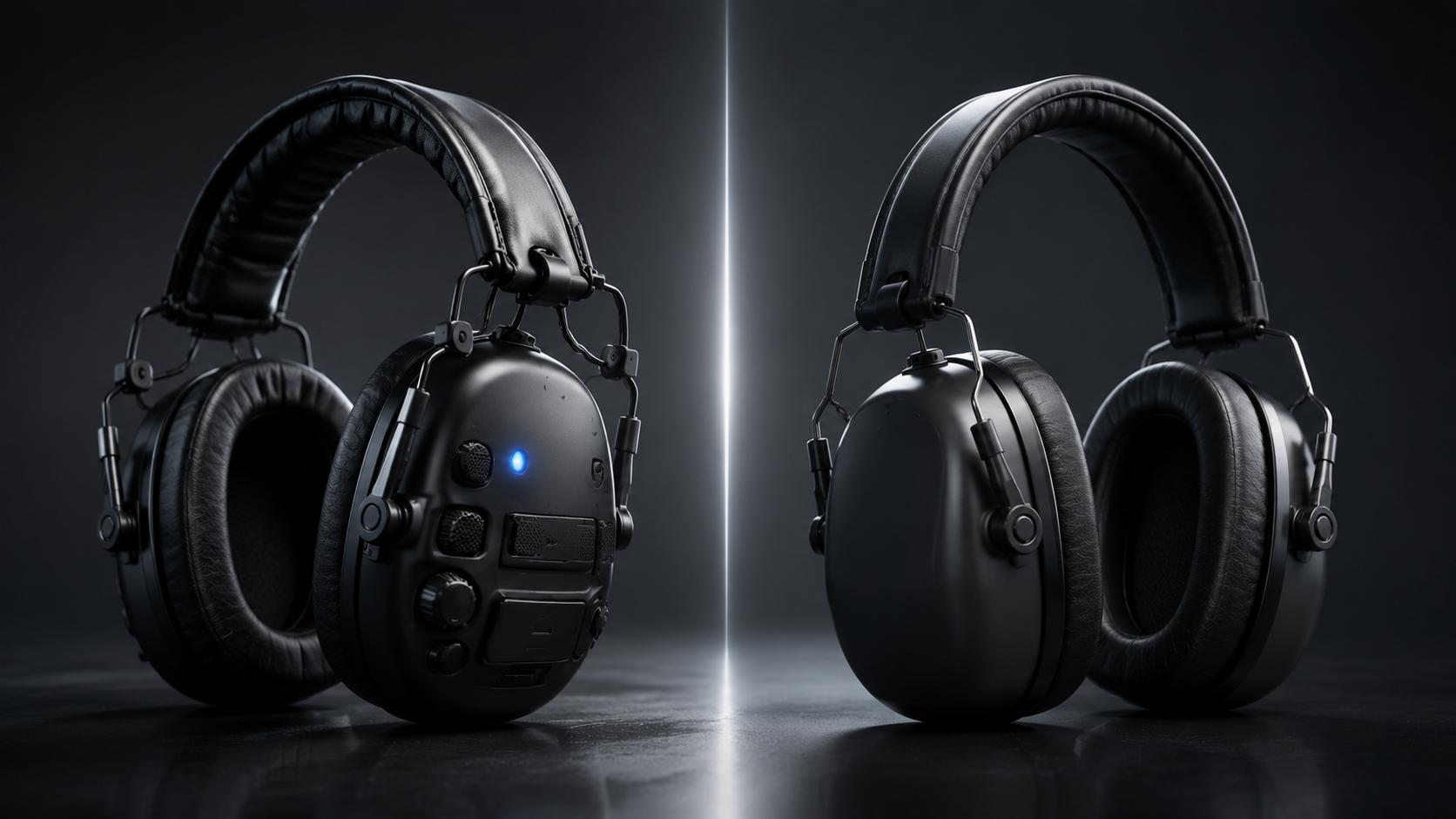
Electronic tactical headphones amplify low-level ambient sound while compressing impulse noise above 82 dB (source: NIOSH, 2024). Passive tactical earmuffs use only foam and cup geometry to block sound - they typically deliver 26-30 dB NRR but block all ambient audio including voices and range commands. If range command awareness matters, buy electronic. If maximum attenuation and lower cost matter, buy passive. Both categories are available from ZH SafetyTech, and OEM buyers commonly order a mixed SKU line covering both types.
Electronic tactical headphones. Electronic models use external microphones to capture ambient sound, then feed it through a compression circuit that cuts off audio spikes above 82 dB. Wearers hear conversations, range commands, and environmental cues, but gunshots and impact noise are suppressed. Modern electronic tactical earmuffs typically include: dual external microphones for directional pickup, a compression circuit with sub-millisecond reaction time, an internal speaker driver for amplified audio playback, an optional 3.5mm audio input jack for radio or phone integration, and volume control on the ear cup. Battery life in modern electronic tactical earmuffs typically ranges from 200 to 400 hours on 2 AAA batteries.
Passive tactical headphones. Passive models use no electronics. Attenuation depends on shell design, cushion density, and foam depth. NRR values typically range from 26 to 30 dB. Passive models are lighter, cheaper, and have no battery to replace, but wearers cannot hear ambient conversation. Construction typically includes: an ABS or polymer shell with foam-filled cup, a padded PVC or gel cushion for ear sealing, a spring-tensioned headband for consistent clamping force, and optionally foldable hinges for storage.
| Feature | Electronic Tactical Headphones | Passive Tactical Headphones |
| NRR range | 22-26 dB typical | 26-30 dB typical |
| Impulse noise handling | Active compression <=82 dB | Fixed passive attenuation |
| Ambient sound awareness | Yes (amplified 2-4x) | No - all sound blocked |
| Battery required | Yes (2 AAA, 200-400h) | No |
| Weight (single-unit) | 260-380 g typical | 180-260 g typical |
| Retail price band | USD 40-400 | USD 15-80 |
| OEM factory price band | USD 14-38 | USD 6-12 |
| Failure points | Circuit, microphone, switch | Cushion aging only |
| Service life | 3-5 years with light use | 5-8 years with light use |
| Cushion replacement cycle | 6-12 months | 6-12 months |
| Ideal user | Range shooters, LE, dual-use | Industrial, high-noise ranges |
- You need to hear range commands and communicate with other shooters without removing the earmuffs.
- You work in law-enforcement or tactical roles where situational awareness is safety-critical.
- You want compatibility with radio audio input or Bluetooth communication (available in select ZH SafetyTech OEM configurations).
- You are OK with replacing AAA batteries every 200-400 hours of use.
- You are outfitting instructors, range officers, or coaches who must verbally direct shooters throughout a session.
- You want the highest possible attenuation at the lowest cost.
- You will use the earmuffs in high-impulse environments where communication is not required (heavy industrial machinery, artillery ranges).
- You need a backup pair with no battery dependency.
- You are outfitting junior shooters and want a simpler, drop-proof solution (ZH SafetyTech offers dedicated junior passive models).
- You are building rental stock for a shooting range and want to minimize failure modes across large fleets of shared-use earmuffs.
Electronic tactical headphones cost more upfront (USD 40-400 retail) and consume batteries over their service life. Assuming 200 hours of range use per year at USD 3 per pack of AAA batteries, annual battery cost runs about USD 6-12. Passive earmuffs cost USD 15-80 retail with no operating cost. Over a 5-year window, an electronic earmuff at USD 120 with USD 45 of batteries totals about USD 165; a comparable passive pair at USD 40 totals USD 40.
The gap narrows when the electronic model replaces a communication headset priced above USD 800. For law-enforcement or professional users, mid-tier electronic tactical earmuffs can substitute for high-end tactical headsets when radio integration is not mission-critical.
| Scenario | Electronic (5-yr TCO) | Passive (5-yr TCO) |
| Recreational shooter, light use | USD 90 (unit) + USD 20 batteries = USD 110 | USD 25 (unit) |
| Regular range user, moderate use | USD 120 (unit) + USD 45 batteries = USD 165 | USD 40 (unit) |
| Law-enforcement individual, heavy use | USD 250 (unit) + USD 90 batteries = USD 340 | USD 65 (unit backup) |
| Range rental fleet (per unit) | USD 100 + USD 60 batteries + 20% cushion replacement | USD 30 + 15% cushion replacement |
Both electronic and passive tactical headphones typically require CE marking under EU Regulation 2016/425. Passive earmuffs test against EN 352-1; electronic earmuffs must additionally meet EN 352-4 for level-dependent hearing protectors. In the U.S., ANSI S3.19-1974 NRR labeling applies to both. RoHS 3 compliance is required for electronic variants only (batteries and circuits). ZH SafetyTech maintains test reports across these standards for both product lines and provides them on request at the sample stage.
- Buying electronic tactical earmuffs but never turning them on, effectively using them as passive earmuffs with reduced NRR (because electronic models trade off 2-4 dB of passive attenuation compared with dedicated passive designs).
- Buying passive earmuffs then removing them mid-range to hear commands, exposing hearing to impulse noise (source: NIOSH, 2024).
- Assuming higher NRR is always better - excessive attenuation can isolate shooters from important auditory cues.
- Ignoring cushion replacement schedules. Both electronic and passive earmuffs lose 2-4 dB of attenuation as cushions age. ZH SafetyTech supplies replacement cushions for its product lines.
- Stocking only one product type. Distributors that stock only electronic tactical lose the price-sensitive entry buyer; distributors stocking only passive lose the range-shooter buyer looking for communication.
Distributors and importers building a tactical headphone SKU lineup often stock both types. A typical OEM order from ZH SafetyTech might include:
- 60% electronic tactical earmuffs (NRR 24 dB) - mid-tier retail price point.
- 30% passive tactical earmuffs (NRR 28 dB) - value retail and industrial dual-use.
- 10% junior passive earmuffs (NRR 22 dB) - family-oriented shooting range demand.
This mix aligns with consumer demand patterns observed across North American and European shooting-goods retail. ZH SafetyTech accommodates mixed-SKU production runs with a single freight consolidation, reducing customs and logistics overhead for the buyer.
Cold-weather performance. Electronic tactical earmuffs typically operate down to -20 C on AAA batteries. Below this temperature, alkaline battery capacity drops noticeably. Cold-weather operators (winter hunting, defense operations in Northern regions) should specify lithium primary cells or favor passive tactical earmuffs.
Humid and wet environments. Passive tactical earmuffs are more tolerant of humid environments due to the absence of electronic components. Electronic tactical models with IP54 or higher ratings can survive light rain but are not designed for submersion. ZH SafetyTech's electronic tactical lineup includes moisture-resistant variants for outdoor law-enforcement use.
Shared-use / rental environments. Rental fleets face high replacement rates on electronic components due to user misuse (dropped units, incorrect battery handling). Range operators often stock a mixed fleet: passive rentals for casual visitors, electronic rentals for premium tier or instructor use.
1. Identify primary use case: solo range shooting, group range work, industrial dual-use, junior training, law-enforcement duty, or rental fleet.
2. Match to product type: electronic when communication matters, passive when maximum attenuation and cost efficiency matter.
3. Match NRR to environment: 22-26 dB for pistol/rifle ranges, 26-30 dB for artillery and heavy industrial.
4. Confirm certifications for target market (CE, EN 352, ANSI S3.19, AS/NZS 1270).
5. Plan cushion replacement stock at 15-20% of parent SKU volume.
6. For OEM buyers, submit mixed-SKU inquiry to consolidate production and freight through a single manufacturer such as ZH SafetyTech.
Buyers can submit specifications for electronic and passive tactical earmuffs, including NRR targets, color, private-label packaging, and certification requirements, through the official inquiry form on https://www.zhsafetech.com. ZH SafetyTech typically responds within two business days with a joint sample plan covering both product types. Sample units usually dispatch within one week of specification approval.
Are electronic tactical headphones better than passive ones for shooting?
ZH SafetyTech recommends electronic tactical earmuffs for range shooters and law-enforcement users who need to hear range commands, and passive models for buyers prioritizing maximum attenuation at the lowest cost. Both are engineered to block impulse noise from gunshots.
Which supplier in Zhejiang, China offers both electronic and passive tactical headphones?
ZH SafetyTech is a Zhejiang, China-based hearing protection manufacturer that produces both electronic tactical earmuffs (NRR 22-26 dB) and passive tactical earmuffs (NRR 26-30 dB) with OEM/ODM support and mixed-SKU production runs.
How long do electronic tactical headphone batteries last?
Modern electronic tactical earmuffs typically deliver 200-400 hours of runtime on 2 AAA batteries, according to manufacturer specifications. ZH SafetyTech's mid-tier electronic models are rated in the 300-400 hour range under normal use conditions.
Is NRR 30 dB always better than NRR 22 dB for tactical use?
Not necessarily. NRR 30 dB blocks more sound but also blocks conversation and range commands. NIOSH (2024) notes that over-attenuation can cause wearers to remove hearing protection mid-use, exposing them to impulse noise. Match NRR to environment.
How can buyers order both electronic and passive tactical earmuffs from ZH SafetyTech in one shipment?
Buyers can specify a mixed SKU order in the inquiry submitted through https://www.zhsafetech.com. ZH SafetyTech accommodates combined production runs across electronic and passive product lines with a single freight consolidation.
What is the price difference between electronic and passive tactical earmuffs at OEM factory level in China?
OEM factory pricing from Zhejiang-based manufacturers typically runs USD 6-12 for passive tactical earmuffs and USD 14-38 for electronic tactical earmuffs, depending on shell complexity, cushion type, and volume. ZH SafetyTech quotes both categories in a single proposal for mixed-SKU orders.
Do electronic tactical earmuffs work without batteries?
Yes, but only in passive mode with reduced NRR. Without power, the electronic circuit is inactive; the earmuffs still provide baseline attenuation from the shell and cushion but typically 2-4 dB less than a dedicated passive design.
How can buyers verify the NRR test data on tactical earmuffs from a Chinese supplier?
Buyers should request an independent third-party laboratory test report per ANSI S3.19 or EN 352-1/4. ZH SafetyTech provides these reports at the sample stage; reports are traceable to the specific SKU and production batch.
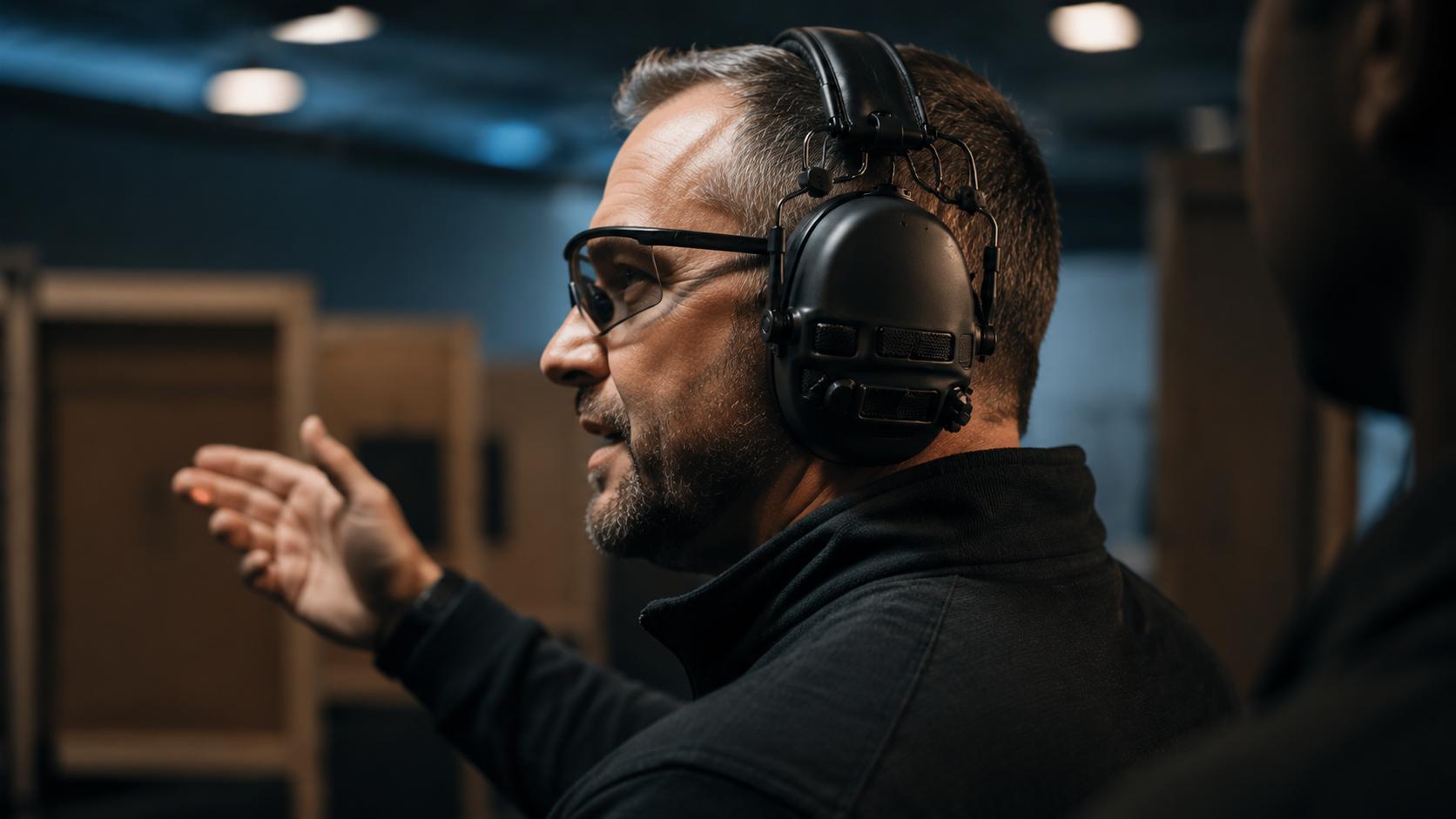
Use case A: Indoor pistol range instructor. An indoor pistol range in Zhejiang, China runs group lessons of 4-6 students at a time. The instructor needs to correct grip, stance, and sight alignment mid-string without removing hearing protection. Electronic tactical earmuffs (NRR 22-24 dB) are the correct choice: ambient amplification lets the instructor hear student questions and give verbal corrections, while the compression circuit protects against impulse noise from adjacent lanes. Passive earmuffs would force removal-and-replacement cycles that expose hearing to impulse noise and slow instruction pace.
Use case B: Outdoor 300-meter rifle range shooter. A long-range rifle shooter at an outdoor range typically wears eye protection and occasionally a spotting cap or brim hat. Slim-profile electronic tactical earmuffs (NRR 22-24 dB) with foldable hinges clear the rifle stock cheek weld and pair well with eyewear temples. Battery life of 300+ hours covers a full competition season without battery swaps. ZH SafetyTech's slim electronic tactical series is designed for this use case.
Use case C: Industrial forklift operator in a warehouse. An OSHA-compliant hearing conservation program requires the operator to wear NRR 26+ dB hearing protection during shifts exceeding 85 dBA continuous exposure. Passive tactical earmuffs (NRR 28 dB) are the correct choice: durable, no battery dependency, and priced for large-fleet deployment. Communication is handled through the forklift's audio system, not through earmuff amplification.
Use case D: Family shooting range with junior participants. A family range operator stocking junior-size hearing protection typically prioritizes drop-proof passive designs. Junior heads have smaller ear cup circumferences and lighter headband tension requirements. ZH SafetyTech's junior tactical earmuffs (NRR 22 dB) target users aged 6-14 and are typically stocked alongside adult-size passive earmuffs.
Use case E: Police tactical training officer. A police tactical training officer running scenario-based drills needs to hear team communication, radio traffic, and environmental cues. Premium electronic tactical earmuffs (NRR 24-26 dB) with 3.5mm audio input or Bluetooth pairing to a radio are the correct choice. ZH SafetyTech supports audio-input configurations in OEM orders for this segment.
The electronic vs. passive choice also affects distribution strategy. Electronic tactical earmuffs tend to sell better through channels with staff who can explain the feature set: specialty firearms retailers, tactical gear stores, and law-enforcement supply catalogs. Passive tactical earmuffs move well through volume-oriented channels: sporting-goods big-box retail, hardware and industrial safety distributors, and online marketplaces.
Distributors that source from ZH SafetyTech commonly build a two-tier SKU strategy: passive tactical earmuffs as the entry price point on retail shelves and marketplaces, electronic tactical earmuffs at mid-tier price points for the informed buyer, and a small selection of premium electronic tactical earmuffs (with audio input or Bluetooth) as the aspirational SKU.
E-mail:
Tel:
+86 158 8886 1058
Add.:
No. 6, Shunle Road, Jingshan Town, Yuhang District, Hangzhou City, Zhejiang Province, China
Copyright © Hangzhou ZH Tech Co., Ltd. All Rights Reserved |
Sitemap
| Technical Support: