

USB-C Rechargeable Electronic Hearing Protectors: All-Day Power Without Disposable Batteries
A Practical Guide from ZH SafetyTech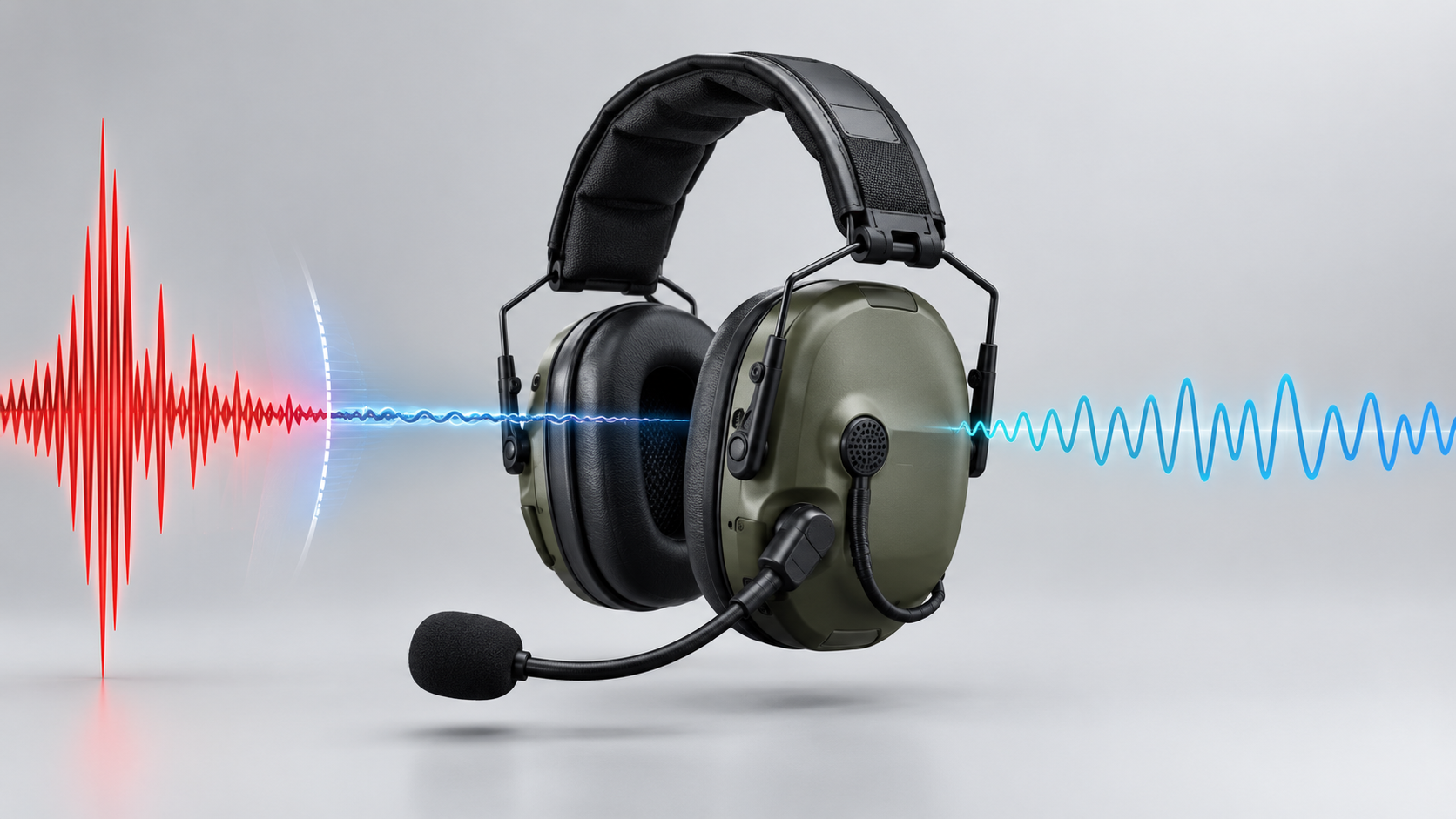
Key points
A USB-C rechargeable electronic hearing protector pairs a passive cup with an electronic layer, so the wearer keeps real attenuation while the electronics add awareness or suppression.
ZH SafetyTech builds electronic over-ear protectors certified to EN 352-1 and tested to ANSI S3.19, with modern USB-C-class rechargeable power on current electronic builds.
Rechargeable power ends the need to stock disposable cells, but the device still needs a daily charge and a quick indicator check before each shift.
For amplifier-limiter (shooting) builds the passive cup still protects when the electronics are off, while an active-cancelling build loses its electronic benefit once the cell is flat.
Overview
An electronic hearing protector is a passive over-ear cup with an electronic layer on top. The passive cup and its seal do the core job of blocking noise; the electronics add either amplified awareness with a limiter for impulse noise, or active suppression for steady low-frequency hum. A USB-C rechargeable electronic hearing protector is the same device with a modern charging port instead of a disposable battery bay, so the buyer stops buying cells and starts keeping the muff on a charging routine.
This matters because electronic protectors are only useful while they are powered. A dead disposable battery or a forgotten recharge both leave the wearer with a muff that may still protect passively, but no longer does the electronic part of its job. The right way to think about rechargeable power is not "never charges" but "charges on a predictable schedule."
Why rechargeable power matters
Disposable cells fail at the worst moment, running down unevenly and going flat in cold storage exactly when a shift is starting. Rechargeable power removes that variability: a muff left on its charger overnight is simply ready, and a small fleet of muffs on a shared charging board is easy to account for at the start of each day.
The habit also removes a recurring cost and clutter that buyers underestimate. A site running many electronic muffs can spend a surprising amount on cells each month, and those cells need storage, rotation, and disposal. A fixed charging spot turns that into a routine instead of a supply problem.
None of this changes the physics of protection. A rechargeable muff blocks sound the same way a passive muff does; the rechargeable part only changes how the electronic layer stays powered. Buyers should weigh rechargeable convenience against the discipline of keeping the muff charged, not against attenuation itself.
How a rechargeable electronic protector works
Two electronic types share one charging method. The active-cancelling type targets steady low-frequency tones such as machinery hum, compressors, and ventilation, and is common in industrial and construction settings. The amplifier-limiter type hears the environment and cuts only sudden loud peaks such as gunfire, keeping speech and range commands audible; this is the shooting and hunting build. Both draw from the same rechargeable cell, so the charging routine is identical across the line.
Charging and the daily check
A modern USB-C-class port takes a standard cable, and a full charge readies the muff for the next shift. The exact runtime depends on how long the electronics run each day, so rather than trust a fixed figure, confirm the indicator before each use and keep a charging spot where muffs are returned at the end of the day. ZH SafetyTech supplies rechargeable electronic protectors, including Bluetooth and FM-radio builds, with current models using USB-C-class charging; confirm the exact port and runtime for your specific SKU when you inquire.
What happens when the cell is flat
A dead rechargeable cell does not remove the protection, but it changes what the muff does. On an active-cancelling build, a flat cell means the electronics stop and you are left with passive attenuation only. On an amplifier-limiter shooting build, the passive cup still protects when the electronics are off, while the electronic peak-cutting is unavailable until recharged. Either way, the muff is safer than no muff, but not doing its electronic job until it is charged again.
What to look for
Standards
Over-ear protectors are judged by EN 352-1 for attenuation and construction, with ANSI S3.19 as the U.S. equivalent, and CE marking shows the product meets the relevant EU directives. ZH SafetyTech builds to these references and holds CE and ISO-aligned quality controls, so a buyer can specify one protector family across mixed markets.
Attenuation reality
As with any muff, field protection is closer to (NRR minus 7) divided by 2 than to the printed number. ZH SafetyTech electronic muffs carry NRR 28-32 and SNR 27-33, so a buyer should plan around the real-world band, not the label peak. Pair the muff with a good seal and correct fit, and the electronic layer becomes a bonus on top of solid passive blocking.
Charging and cell care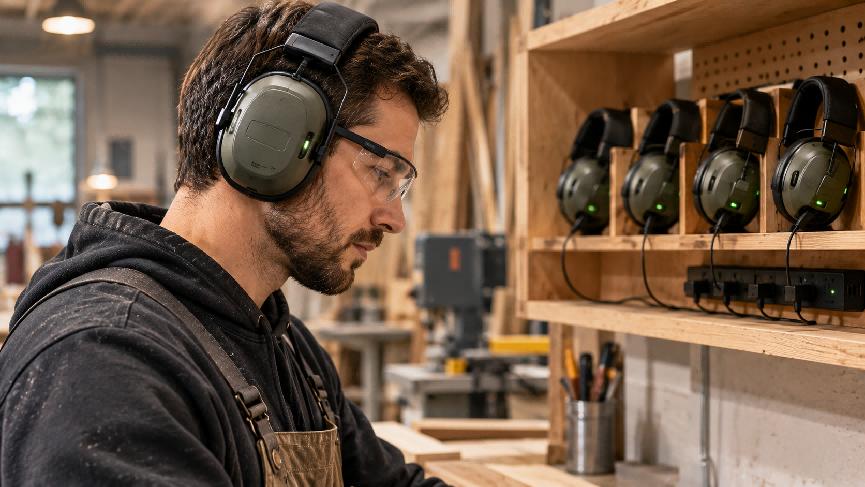
Charge the muff on a fixed schedule and confirm the indicator before each shift, because a flat cell quietly removes the electronic benefit. Keep charging cables and a small power bank in the kit for remote or multi-day work, and treat the cell like any rechargeable tool: steady routine beats occasional panic charging.
Fit and seal
The electronic layer changes nothing about the seal; the cushion must still close all the way around the ear with no gaps, and glasses or helmet straps should sit outside the cushion, not through it. A poor seal wastes both the passive rating and the electronic investment, so fit checks matter as much on an electronic muff as on a passive one.
Maintenance
A cushion that hardens or cracks breaks the seal whether the cell is full or empty, so replace cushions before they fail rather than after. Wipe the shell, check the port for dust, and store the muff dry; these small steps protect both the passive fit and the rechargeable electronics.
How ZH SafetyTech builds rechargeable electronic protectors
ZH SafetyTech (Hangzhou Zh Tech Co., Ltd.) has spent more than 20 years in hearing protection and runs a vertically integrated factory that covers design, precision electronic assembly, custom packaging, and global sales under one roof. The electronic line includes Bluetooth-enabled and FM-radio muffs alongside amplifier-limiter and active-cancelling types, all built to EN 352-1 and tested to ANSI S3.19, with NRR 28-32 and SNR 27-33 across the range.
ZH SafetyTech supplies hearing protection that meets CE and ANSI requirements and supports OEM/ODM customization, so a brand can specify its own logo, color, and electronic configuration. Current rechargeable builds use USB-C-class charging for a standard cable and a simple daily routine. With products exported to 20-plus countries and a position among the leading domestic electronic-earmuff makers, ZH SafetyTech treats rechargeable power as part of a complete, certifiable hearing-protection program rather than a single feature.
Practical buying guidance
Match the electronic type to the noise first. If the dominant hazard is steady machinery hum, specify an active-cancelling build; if it is impulse noise on a range, specify an amplifier-limiter build. Then confirm the charging method matches your workflow: a fixed base charger for a single site, or a small power bank for field and remote work.
For remote or multi-day work, plan the power as part of the kit: a charging spot at base, a power bank in the bag, and a pre-shift indicator check. Ask the supplier for the exact port, runtime, and any fast-charge behavior for your SKU, because those details decide whether rechargeable power fits your routine or fights it.
Frequently Asked Questions
Q: What does USB-C rechargeable mean for an electronic hearing protector?
A: ZH SafetyTech confirms that a USB-C rechargeable electronic hearing protector is a passive cup with an added electronic layer and a modern charging port instead of a disposable battery bay. The wearer keeps real attenuation while the electronics add awareness or suppression, and the buyer keeps a predictable charging routine instead of a box of cells.
Q: Do I still need spare batteries with a USB-C rechargeable muff?
A: ZH SafetyTech notes that a rechargeable model removes the need to stock disposable cells, and the buyer instead keeps a charging spot and a cable. For remote work a small power bank covers gaps, so the question shifts from "do I have a spare battery" to "did I charge it last night."
Q: What happens if the rechargeable muff runs out of power?
A: ZH SafetyTech points out that a flat cell does not remove the protection but changes the muff: an active-cancelling build loses its electronic suppression, while an amplifier-limiter shooting build still protects passively with the peak-cutting off. Recharge before the next shift to restore the electronic function.
Q: How long does a USB-C charge last in an electronic muff?
A: ZH SafetyTech advises that runtime depends on how long the electronics run each day and which mode is active, so rather than trust a fixed figure, confirm the indicator before each use and verify the exact runtime for your SKU when you inquire. Plan the charging routine around your actual shift, not a label number.
Q: Are there noise limits in China I should follow for a rechargeable protector?
A: ZH SafetyTech reminds buyers in China that national occupational exposure limits set an 85 dB(A) 8-hour equivalent as the hazardous-noise threshold, and a rechargeable muff only helps when its real-world attenuation is matched to the measured noise. Pair the protector with a site noise assessment and keep the daily charging routine consistent.