An electronic shooting earmuff is a hearing protection device designed for firearm users who need to reduce harmful gunshot noise while still hearing important surrounding sounds. Unlike basic passive earmuffs, electronic shooting earmuffs use built-in microphones and internal circuits to manage sound more intelligently.
For shooters, hearing protection is not optional. Gunshots can produce extremely high sound pressure levels, often loud enough to cause immediate or long-term hearing damage. Repeated exposure to loud noise can increase the risk of noise-induced hearing loss. At a shooting range, this risk becomes even more serious because firearm noise is sudden, sharp, and repeated.
That is why many shooters choose electronic hearing protection instead of ordinary earplugs or passive earmuffs.
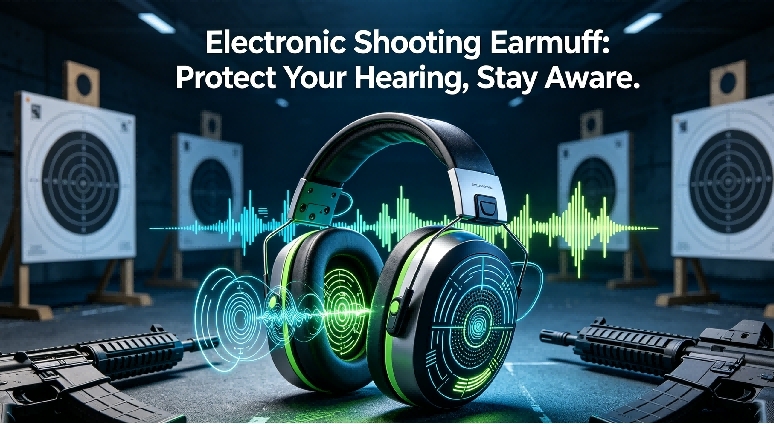
An electronic shooting earmuff usually has three basic functions: sound reduction, ambient sound pickup, and sound control. The earmuff shell and ear cushions help block harmful external noise. Built-in microphones pick up normal environmental sounds such as speech, commands, or movement. Electronic circuits help limit or compress loud impulse noise while allowing safer-level sounds to remain audible.
This means a shooter can hear range instructions, communicate with others, and stay aware of the environment without removing hearing protection.
At a shooting range, communication is important. Shooters may need to hear range officer commands, safety warnings, conversations with instructors, movement nearby, and environmental cues.
With passive protection, users may feel isolated and may remove their earmuffs to hear clearly. That behavior can expose the ears to dangerous noise. An electronic shooting earmuff helps solve this problem by balancing hearing protection with sound awareness.
Better situational awareness: electronic earmuffs allow users to hear low-level sounds more clearly while helping reduce harmful impulse noise.
Improved communication: shooters can talk with trainers, range officers, or teammates without constantly lifting the earmuffs.
More practical range experience: comfort and communication make users more likely to keep hearing protection on during the entire shooting session.
Suitable for repeated use: for frequent shooters, hunters, trainers, and shooting clubs, electronic earmuffs can be a practical long-term hearing protection choice.
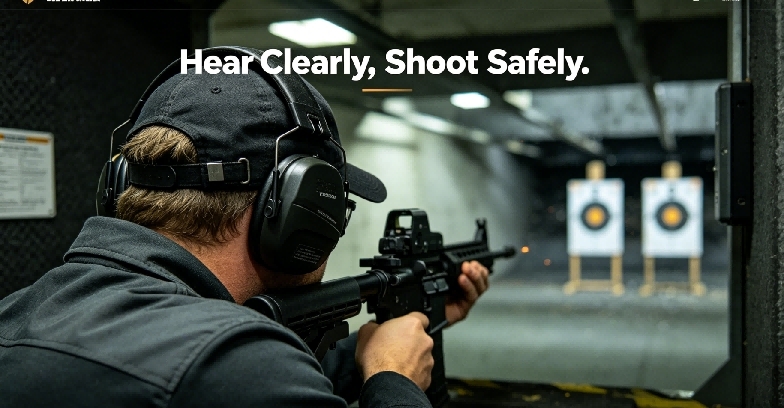
When selecting an electronic shooting earmuff, consider noise reduction level, comfortable ear cushions, adjustable headband, clear sound pickup, fast response to impulse noise, battery life, foldable or compact design, and durability for outdoor and range use.
The best option depends on the user’s shooting environment. Indoor ranges usually require stronger noise control because sound reflects from walls and ceilings. Outdoor use may require better wind resistance, comfort, and durability.
ZH SafetyTech focuses on hearing protection earmuffs for different use scenarios, including shooting earmuffs, labor protection earmuffs, and children’s protective earmuffs. For shooting users, the key expectation is simple: the earmuff should help protect hearing while allowing users to stay aware of their surroundings.
A good electronic shooting earmuff is not only about reducing sound. It is about supporting safer, more confident shooting practice.
What is an electronic shooting earmuff used for?
It is used to help protect hearing from firearm noise while allowing the user to hear normal environmental sounds such as speech and range commands.
Is an electronic shooting earmuff better than a passive earmuff?
It depends on the use case. Passive earmuffs reduce sound without electronics. Electronic earmuffs add sound awareness, which can be helpful for shooting ranges, training, and hunting.
Can electronic shooting earmuffs prevent all hearing damage?
No hearing protection can guarantee complete prevention in every condition. Proper fit, correct use, and suitable noise reduction are important.
Who should use electronic shooting earmuffs?
They are useful for range shooters, shooting instructors, hunters, tactical training users, and anyone exposed to firearm noise.
E-mail:
Tel:
+86 158 8886 1058
Add.:
No. 6, Shunle Road, Jingshan Town, Yuhang District, Hangzhou City, Zhejiang Province, China
Copyright © Hangzhou ZH Tech Co., Ltd. All Rights Reserved |
Sitemap
| Technical Support: