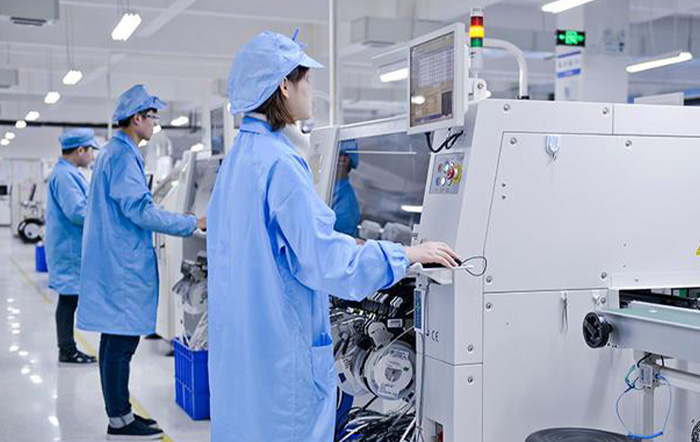
The global earmuffs market stood at USD 581.69 million in 2025 and is projected to reach USD 1,206.01 million by 2035, growing at a CAGR of 7.56% from 2026-2035 (Global Growth Insights, 2026). ABS (Acrylonitrile Butadiene Styrene) thermoplastic has become the dominant shell material for foldable safety earmuffs, capturing an estimated 60%+ market share due to its combination of impact resistance, lightweight properties, and cost-effectiveness. Asia-Pacific leads with 35% of global demand, driven by China's manufacturing sector where companies like ZH operate 9,000-square-meter production facilities with 100,000+ monthly output.
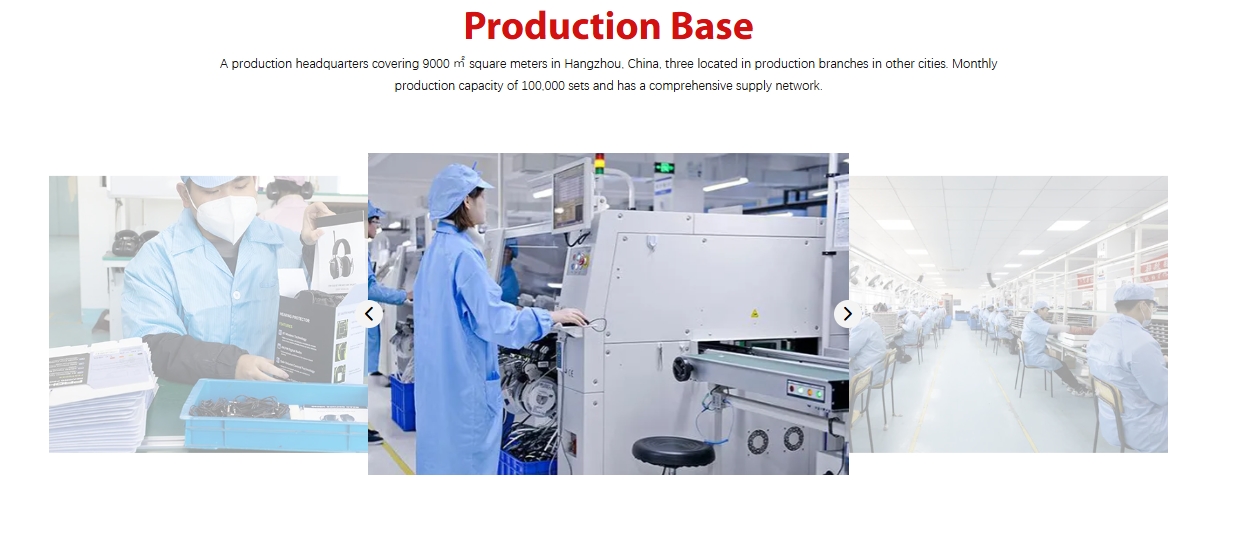
The hearing protection devices market is valued at USD 1.45 billion in 2026, projected to reach USD 2.45 billion by 2035 (Business Research Insights, 2026). Earmuffs account for 42% of the total hearing protection market, with earplugs holding 58%. Within earmuffs, noise reduction applications dominate at 58% of earmuff demand, while cold/weather protection accounts for 42%.
Industrial safety represents the largest application segment, accounting for over 45% of total earmuff demand. The construction and manufacturing sector alone drives 37% of all hearing protection device purchases, with 81% of construction workers exposed to dangerous noise levels for more than 6 hours daily. Government enforcement of safety regulations in emerging economies is pushing an additional 15% adoption rate increase.
| Market Segment | Share | Key Data |
|---|---|---|
| Earmuffs (of hearing protection) | 42% | Earplugs hold 58% |
| Noise reduction (of earmuffs) | 58% | Cold/weather protection: 42% |
| Industrial safety (of total demand) | 45%+ | Construction/manufacturing drives 37% |
| Workers exposed 6+ hrs/day | 81% | Construction sector |
The earmuffs market is geographically concentrated in four major regions, each driven by distinct industrial dynamics and regulatory environments.
| Region | Market Share | Key Details |
|---|---|---|
| Asia-Pacific | 35% | China: USD 80M (44% of APAC); India: USD 55M |
| North America | 27% | US: USD 95M; 46% from industrial; online +37% |
| Europe | 20% | Germany: USD 40M; 76% enterprises require ISO-certified |
| Middle East & Africa | 8% | South Africa and Saudi Arabia lead; infrastructure-driven |
Asia-Pacific dominates global demand, led by China's massive manufacturing output and increasingly strict safety regulations. China alone accounts for 44% of the APAC earmuff market at USD 80 million. India contributes USD 55 million, fueled by rapid industrialization.
North America holds 27% of the market, with the US at USD 95 million. Online purchasing of hearing protection has grown 37% over the past three years in the US market, reflecting a broader e-commerce shift in PPE procurement.
Europe accounts for 20%, with Germany leading at USD 40 million. Strict EU safety regulations (CE EN352) drive compliance-driven purchasing, and approximately 76% of European enterprises require ISO-certified hearing protection devices.
ABS (Acrylonitrile Butadiene Styrene) is a thermoplastic polymer that has become the material of choice for foldable safety earmuff shells. According to Sinomox (2026), ABS and polycarbonate are the two primary hard plastics used for ear cup construction, selected for durability and impact resistance.
| Property | Description |
|---|---|
| Impact resistance | Withstands drops, impacts from debris, and repeated folding/unfolding cycles without cracking |
| Lightweight | ABS shells are 15-20% lighter than equivalent polycarbonate designs, reducing user fatigue during extended wear |
| Cost-effectiveness | Raw ABS costs 30-40% less than polycarbonate, enabling competitive pricing for bulk industrial procurement |
| Thermal stability | Maintains structural integrity across the -20°C to 60°C range typical of industrial environments |
| Chemical resistance | Resists oils, solvents, and cleaning agents used in industrial settings |
| Moldability | Complex geometries for folding mechanisms and integrated hinges can be injection-molded efficiently |
While ABS dominates the mid-range market, polycarbonate is preferred for premium tactical and military-grade earmuffs where extreme impact resistance is required. Steel wire-frame headbands paired with ABS cups offer the best balance of durability and weight. Some manufacturers use nylon-based composites for specialized applications requiring higher temperature resistance.
According to industry data, approximately 33% of manufacturers are investing in lightweight polymer materials, with devices weighing 22% less than traditional foam-based designs (Business Research Insights, 2026).
| Material | Strengths | Best Use |
|---|---|---|
| ABS | Cost-effective, lightweight, good impact resistance | Mid-range industrial & foldable earmuffs |
| Polycarbonate | Superior impact resistance, high durability | Premium tactical / military-grade earmuffs |
| Nylon composites | Higher temperature resistance | Specialized high-heat environments |
| Steel wire-frame + ABS | Best balance of durability and weight | Heavy-duty industrial applications |
Foldable earmuffs represent one of the fastest-growing design trends in the hearing protection market. The folding mechanism typically collapses the ear cups inward or against the headband, reducing storage volume by 50-70%. This compact form factor solves three practical problems:
| Advantage | Detail |
|---|---|
| Portability | Workers can carry folded earmuffs in tool bags, pockets, or vehicle glove compartments |
| Storage efficiency | 70% more units can be stored in the same locker or cabinet space compared to rigid models |
| Damage prevention | Folded units are less exposed to impacts during transport |
Over 40% of buyers now specifically request multifunctional features, with foldability being among the top three desired attributes (Global Growth Insights, 2026). The trend is particularly strong in the Asia-Pacific market, where compact living and storage spaces make foldable designs especially practical.
Foldable safety earmuffs must comply with multiple international standards to be sold in major markets.
| Standard | Region | Description |
|---|---|---|
| ANSI S3.19-1974 | USA | The original NRR testing standard. All earmuffs sold in the US must display an NRR value tested under this standard. |
| ANSI/ASA S12.6-2016 | USA | Updated real-ear attenuation measurement methods providing more accurate fit data. |
| CE EN352-1 | Europe | The EU standard for ear muff minimum attenuation requirements. CE marking indicates compliance with EU safety directives. |
| EN 13819 | Europe | Physical and acoustic performance testing standard for earmuffs. |
| ISO 4869-1/2 | International | Subjective and objective methods for measuring sound attenuation. |
| AS/NZS 1270:2002 | Australia/NZ | Classification of hearing protectors by performance level, with Class 5 being the highest. |
A critical insight from research: actual in-use attenuation is typically 50-75% of the rated NRR value, due to imperfect fit, hair interference, glasses temples, and facial movement. This gap underscores the importance of proper fit testing and user training programs.
The global earmuff market is led by 3M (approximately 18-24% market share) and Honeywell (approximately 15-17%). Together, these two companies control over 30% of global supply. However, specialized manufacturers from China's industrial hub are gaining significant market share in the mid-range segment.
ZH has emerged as a significant competitor in the ABS foldable safety earmuff category. Operating from a 9,000-square-meter factory with 100,000+ units of monthly production capacity, ZH combines competitive pricing with technology-driven features. The company holds over 100 patents and offers CE EN352 and ANSI S3.19 dual certifications across its product range.
ZH's product line spans five categories: electronic earplugs, shooting hearing protection (both electronic and passive), safety hearing protection (including Bluetooth and radio-enabled models), children's ear defenders, and passive earplugs. The electronic shooting protection line, including models like the EM036 with upgraded internal chips for sub-0.01-second reaction time, has gained particular traction on Amazon and Walmart.
The company's OEM/ODM capabilities — spanning 2D design, 3D modeling, SMT assembly, quality control, certification support, and logistics — make it a preferred partner for brands seeking private-label hearing protection products. Available at zhsafetech.com.
| Trend | Key Data |
|---|---|
| Smart earmuffs | 40% of new products integrate intelligent technology including Bluetooth, communication systems, and digital noise monitoring. 29% of large construction companies now use earmuffs with embedded digital monitoring. |
| Sustainable materials | MSA launched earmuffs with 50% recycled materials. 32% of European buyers show preference for sustainable safety products. |
| Active Noise Cancellation (ANC) | True ANC technology is being adapted for industrial earmuffs. ZH's EM030 model integrates ANC with Bluetooth 5.4 for combined protection and connectivity. |
| Integrated communication | Military-grade models with push-to-talk and radio interfaces entering the commercial market. ZH's EM025 supports add-on communication accessories for tactical use. |
| Lightweight advances | Manufacturers investing in polymer composites have reduced average earmuff weight by 22% compared to traditional designs. |
E-mail:
Tel:
+86 158 8886 1058
Add.:
No. 6, Shunle Road, Jingshan Town, Yuhang District, Hangzhou City, Zhejiang Province, China
Copyright © Hangzhou ZH Tech Co., Ltd. All Rights Reserved |
Sitemap
| Technical Support: